There are stories so ancient that they precede language, continents, even the quiet glow of our Sun. They are written not in ink, but in dust—microscopic grains that drifted through a newborn solar system more than four billion years ago. For decades, scientists have sought to read that story. And now, from a small capsule delivered gently back to Earth, fragments of it rest in laboratory chambers, waiting to be understood.
The samples were collected by , a mission led by the . Launched in 2014, the spacecraft traveled to the near-Earth asteroid , a dark, carbon-rich body believed to preserve some of the most primitive material in the solar system. In 2019, Hayabusa2 briefly touched Ryugu’s surface, collecting samples before beginning its return journey. The capsule arrived back on Earth in late 2020, parachuting into the Australian desert.
Since then, international teams of researchers have examined the asteroid fragments with meticulous care. Their findings are gradually reshaping understanding of the conditions present when the solar system formed. Ryugu’s material is remarkably pristine, largely unaltered by the intense heating and geological recycling processes that shape planets. In this sense, it acts as a time capsule, preserving chemical signatures from the solar system’s earliest epoch.
Analyses reveal that Ryugu contains abundant organic molecules, including amino acids—key building blocks for life. While these molecules do not indicate life itself, their presence supports the idea that complex organic chemistry was already underway in the early solar nebula. Some scientists propose that similar carbon-rich asteroids may have delivered essential ingredients to early Earth through impacts billions of years ago.
Equally significant are isotopic measurements within the samples. The ratios of hydrogen, nitrogen, and other elements offer clues about the environment in which Ryugu formed. Evidence suggests that its parent body likely originated in the colder, outer regions of the solar system, where ice and volatile compounds were more stable. Over time, gravitational interactions may have nudged fragments inward, placing Ryugu in its current orbit.
The samples also show signs of past interaction with water. Minerals within the asteroid indicate that liquid water once circulated through its parent body, triggering chemical reactions that altered its composition. This implies that even small bodies in the early solar system experienced internal processes driven by heat from radioactive decay. The presence of water-altered minerals deepens understanding of how common such interactions may have been.
There is a quiet elegance in the scale of this discovery. A spacecraft no larger than a small vehicle traveled millions of miles to gather material weighing only a few grams. Yet within those grains lies evidence about planetary formation, organic chemistry, and the migration of material across vast cosmic distances. It is a reminder that knowledge does not always require enormity; sometimes it requires precision.
The collaborative nature of the research is also notable. Scientists from Japan, Europe, and the United States have participated in the analysis, comparing Ryugu’s composition with meteorites found on Earth and with data from other missions. Each measurement adds resolution to the portrait of a dynamic, evolving young solar system.
In closing, ongoing studies of the Hayabusa2 samples continue to refine models of solar system formation. Early results indicate that carbon-rich asteroids like Ryugu preserve critical evidence about chemical conditions more than four billion years ago. As laboratories complete additional isotopic and mineral analyses, researchers expect further insights into how the building blocks of planets—and potentially life—were distributed. For now, the small capsule returned from space stands as a modest yet profound archive of beginnings, offering measured clarity about a time long before Earth took its present shape.
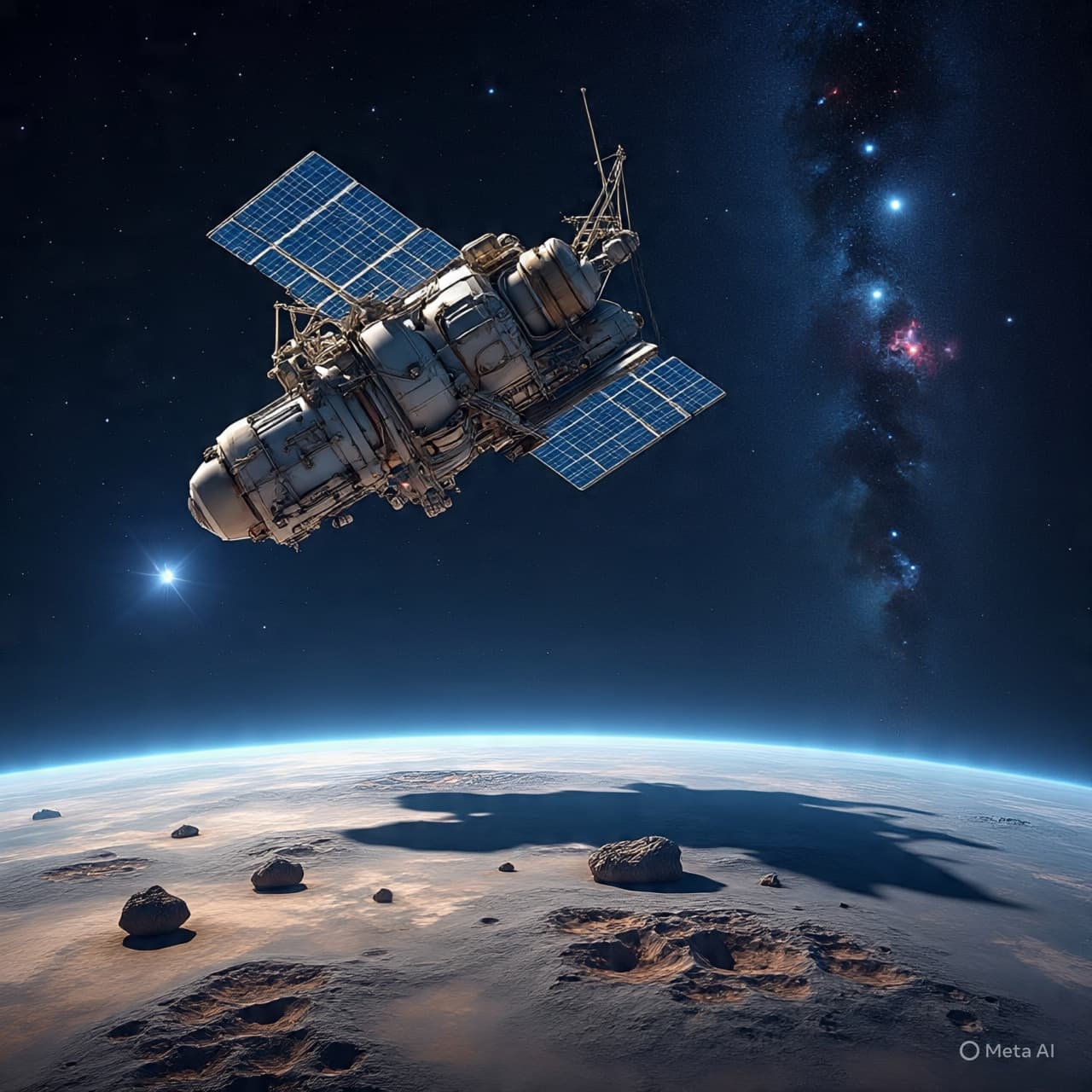
AI Image Disclaimer Images in this article are AI-generated illustrations, meant for concept only.
Sources Nature Science BBC The Japan Times NASA
Published by Banx Network. This article is part of the Banx decentralized media programme, powered by the BXE token on the XRP Ledger.