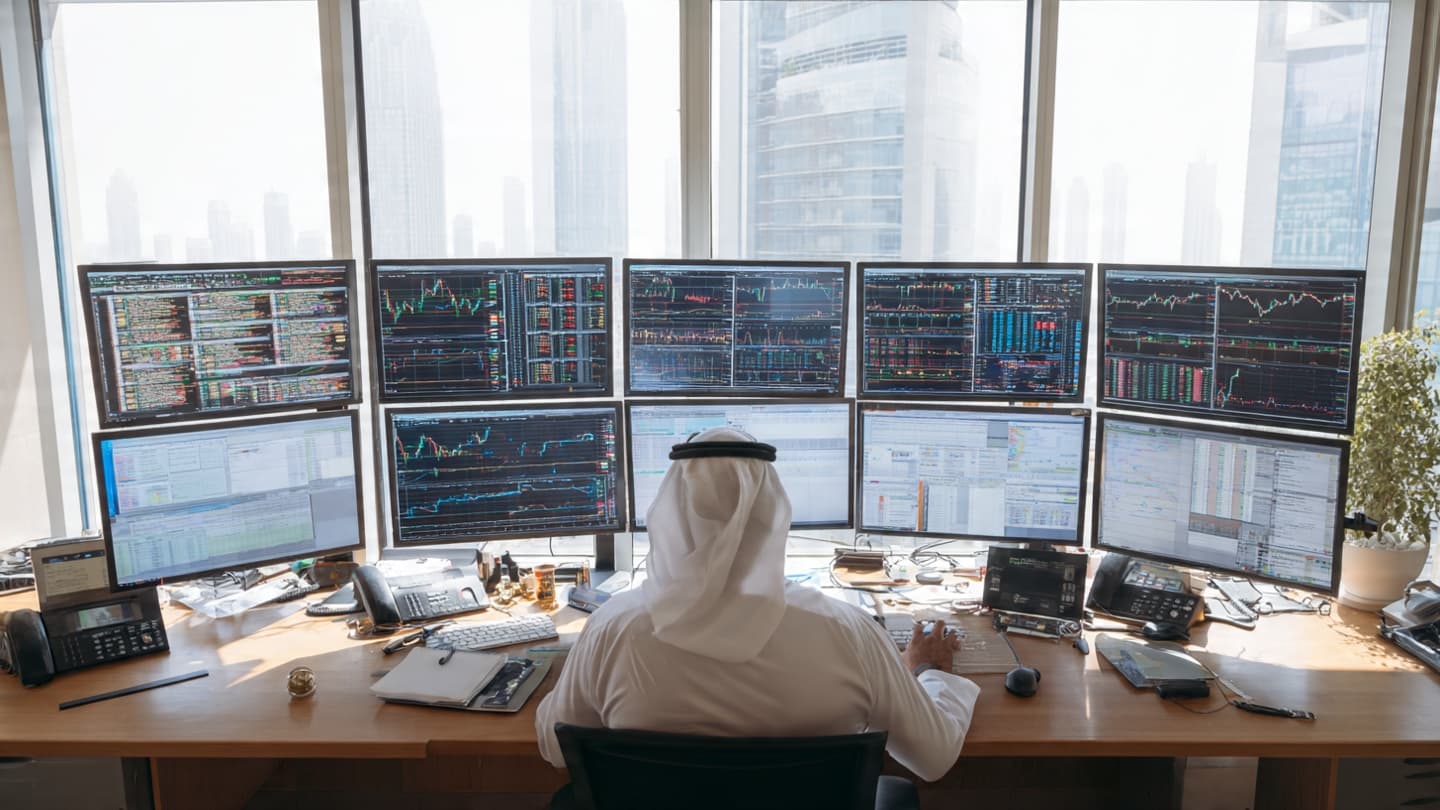
The movement of a financial market can sometimes begin far away from a trading screen. A stronger business survey, a rise in new orders or improving company expectations can gradually change how investors view the months ahead. In the UAE, August business data provided that kind of signal as non-oil activity accelerated.
The UAE’s non-oil private sector recorded its strongest expansion since late 2024 in August. The S&P Global PMI climbed to 55.5, supported by stronger new orders and rising output across the economy. (reuters.com)
The data helped reinforce expectations that the UAE’s broader economic activity remains resilient. Investors watch such indicators closely because company surveys can provide an early view of changes in demand before official quarterly economic statistics become available.
Dubai’s market is particularly sensitive to developments in the domestic economy. The emirate hosts major companies across real estate, banking, logistics, tourism, aviation and consumer services, making business activity an important part of the market narrative.
Stronger new orders were among the most notable elements of the August survey. Businesses reported an improvement in demand, suggesting that customers were continuing to spend and companies were finding additional opportunities for growth.
The UAE’s diversified economy also provides several channels for that activity to reach financial markets. A stronger property sector can affect developers and banks, while higher tourism and retail activity can influence hospitality, transportation and consumer-related companies.
The relationship between economic data and markets is rarely direct, however. Investors also consider global interest rates, oil prices, international capital flows and broader regional conditions when deciding where to allocate money.
August therefore provided one favorable piece of a much larger picture. The improvement in the private sector came while businesses continued to face rising input costs, meaning that stronger sales were accompanied by the continuing challenge of managing expenses.
For companies listed on regional exchanges, sustained demand could provide support for revenues and earnings. But investors will likely continue watching whether the August improvement carries into the months ahead rather than relying on a single monthly reading.
The latest market movement therefore reflects a broader conversation about the UAE’s economic transformation. As non-oil businesses expand, financial markets increasingly respond not only to energy prices but also to the everyday movement of commerce across offices, hotels, factories, warehouses and shopping districts.
AI Image Disclaimer: The article uses verified financial and economic reporting. The accompanying AI illustrations are intended as visual concepts and do not represent exact market scenes or investment events.
Sources: Reuters S&P Global Dubai Financial Market Abu Dhabi Securities Exchange
Published by Banx Network. This article is part of the Banx decentralized media programme, powered by the BXE token on the XRP Ledger.