

Key Highlights
- Tokenization Value:Dubai aims to tokenize up to $16 billion in real estate assets by 2033.
- Phase 1 Success:Ten luxury properties valued over $5 million were tokenized, creating 7.8 million tokens.
- Secondary Market Launch:A regulated secondary market for token holders was launched on February 20, 2026.
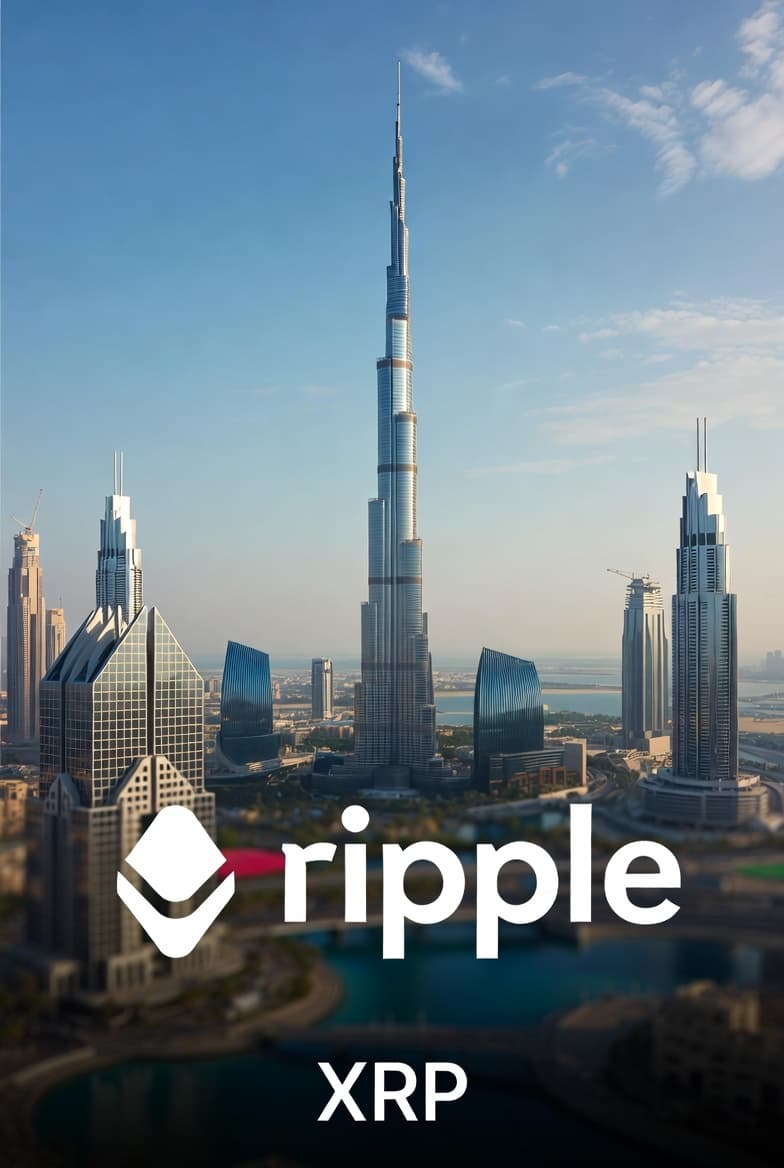
Dubai is making significant strides in the integration of blockchain technology into its real estate sector by adopting the XRP Ledger for property tokenization. This initiative, part of the Real Estate Evolution Space (REES) initiative, aims to tokenize up to $16 billion in real estate assets by 2033, which would represent approximately 7% of the total property transaction volume in the emirate. The project is backed by key stakeholders, including the Dubai Future Foundation, the UAE Central Bank, and the Virtual Assets Regulatory Authority (VARA).
The first phase of this ambitious project was completed in late 2025 or early 2026, where ten luxury properties were tokenized, representing a total value exceeding $5 million (around 18.5 million AED). This phase resulted in the creation of approximately 7.8 million tokens, allowing fractional ownership with a low entry point of about 2,000 AED (approximately $540 USD). This democratization of luxury real estate ownership is expected to attract a broader range of investors.
On February 20, 2026, Dubai launched a controlled and fully regulated secondary market for token holders. This market allows investors to resell their shares instantly on approved platforms, with all transactions synchronized in real time to Dubai's official land registry. The use of the XRP Ledger ensures that all on-chain activity is secure and efficient, with token transfers automatically updating official property titles, thus eliminating traditional delays associated with notaries and intermediaries.
The choice of the XRP Ledger for this project is strategic. The ledger is known for its ultra-fast transaction speeds, typically ranging from 3 to 5 seconds, and its low transaction costs. Additionally, it has proven scalability for high-value assets and supports institutional custody tools, making it an ideal choice for the tokenization of real estate. The growing dominance of the XRP Ledger in real-world asset tokenization, including a significant share of tokenized U.S. Treasuries, further solidifies its position as a leader in this space.
In a related development, February 2026 also saw a partnership involving Billiton Diamond, Ctrl Alt, and Ripple, which successfully tokenized over $280 million (1 billion AED) worth of certified polished diamonds on the XRP Ledger. This highlights the broader application of the ledger for high-value tangible assets and luxury commodities in Dubai.
Despite some misconceptions circulating in the crypto community, it is important to clarify that Dubai is not abandoning its traditional currency, the dirham, nor is it transitioning to XRP as a daily currency. Instead, this initiative represents one of the most concrete and regulated government adoptions of the XRP Ledger to date. The integration of a public blockchain with an official land registry, tokenized real assets, and controlled secondary liquidity signifies a historic step forward for Dubai's digital real estate landscape.
For investors, this development opens up new avenues for participation in the luxury real estate market, allowing ownership of fractions of high-end properties starting at just a few hundred dollars. For the broader crypto ecosystem, it reinforces the XRP Ledger as a preferred infrastructure for institutional Real World Assets, a narrative that is gaining serious momentum in 2026. Dubai is not merely switching to XRP; it is embedding the XRP Ledger as a foundational element of its digital real estate future, marking a significant milestone in the evolution of property ownership.
Published by Banx Network. This article is part of the Banx decentralized media programme, powered by the BXE token on the XRP Ledger.




