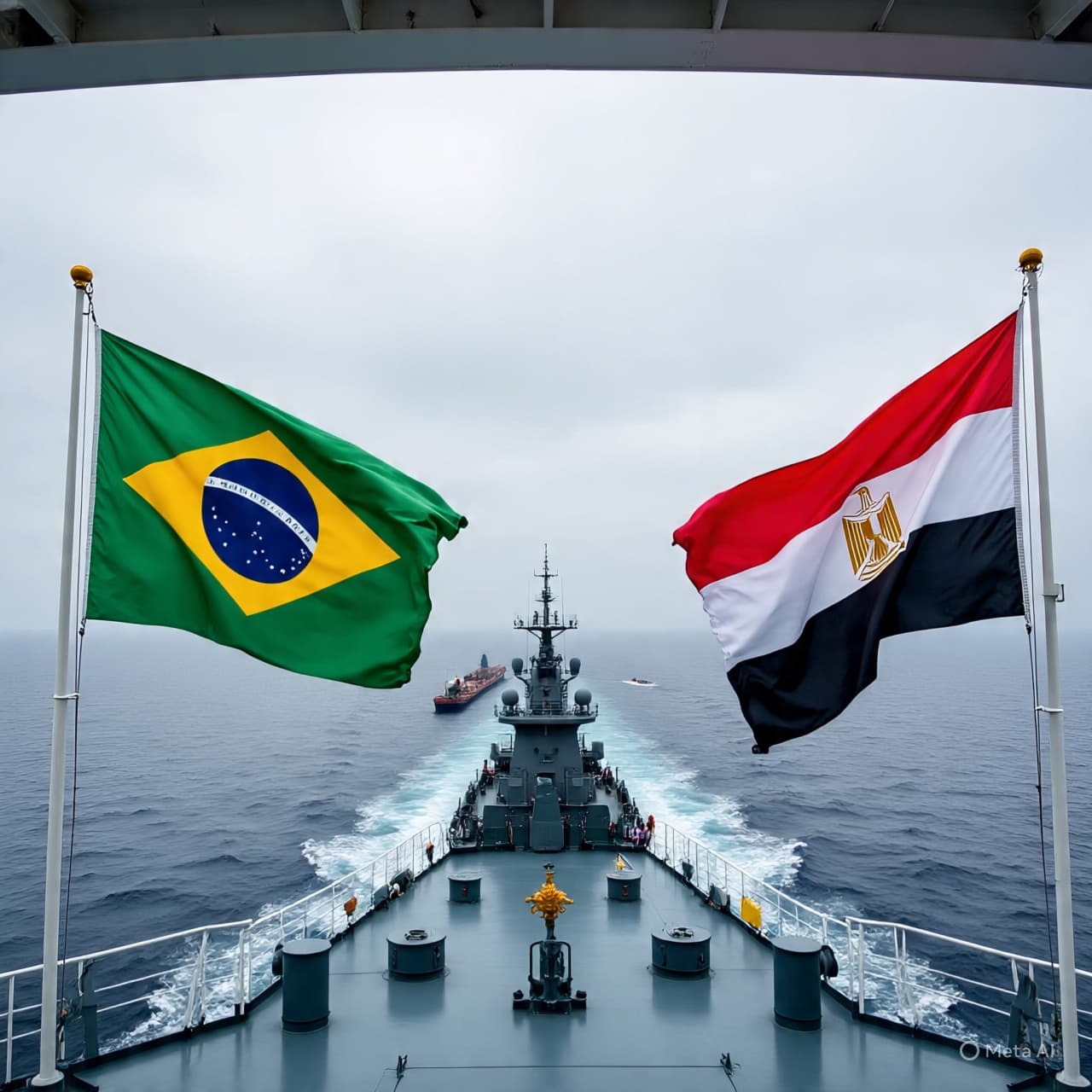
In the wide expanse of South African waters where the Indian Ocean meets the Atlantic, ships from China, Russia, Iran and other BRICS‑Plus partners glide in calculated formation — not for combat, but for what their hosts call “joint actions to ensure the safety of shipping and maritime economic activities.” The week‑long naval drills, known as Will for Peace 2026, have drawn attention far beyond the Cape Town horizon, stirring questions about what they signify for global influence and why one of the founding BRICS nations, India, chose to stay ashore.
At first glance, these exercises reflect familiar themes in defence cooperation: search‑and‑rescue practice, technical exchanges, and navigation drills that build operational interoperability between navies. But in a world where geopolitical lines are constantly being redrawn, the symbolism carries weight that transcends maritime training. For China and Russia especially, joining with Iran and South Africa under the BRICS Plus umbrella signals an ambition to shape security narratives outside traditional Western‑led frameworks. The very name — a bloc originally conceived for emerging economies — being attached to war games hints at an evolution of purpose that is as much about strategic signaling as operational learning.
These drills matter for several reasons. In an era marked by rising naval competition and strategic contestation over key sea lanes, they offer participating countries a platform to display unity and shared resolve — even if that unity is not complete. Observers note that exercises like these can influence regional security dynamics, pose a soft counterbalance to Western alliances, and intertwine economic and military cooperation in ways that resonate beyond the water’s edge. They may shape perceptions of influence, encourage deeper defence ties among some members, and underscore common interests in safeguarding trade routes that sustain global commerce.
Yet, the narrative around BRICS wargames is not without its frictions. While Russia, China, and Iran have deployed naval assets, India and Brazil did not participate in these manoeuvres. Brazil sent observers; India — a founding member of BRICS — opted out completely. Experts suggest that this choice reflects New Delhi’s careful diplomatic balancing act. India’s stronger defence partnership with the United States, deepening ties through forums like the Quad, and a foreign policy rooted in strategic autonomy all contribute to a preference for non‑alignment in military exercises that might be perceived as geopolitical posturing. After all, the BRICS grouping was originally designed as an economic cooperation platform, not a military bloc.
India’s absence also speaks to its nuanced view of BRICS’s evolving identity. While the bloc continues to champion economic collaboration and alternative financial mechanisms, the gradual inclusion of security dimensions — especially those involving nations with complex ties to the West — could risk entangling New Delhi in messages it does not wish to amplify. Participation in such drills could complicate India’s diplomatic relations with Western powers, particularly at a time when New Delhi is keen to deepen strategic and defence linkages elsewhere.
That India chose not to send warships does not mean it has stepped away from BRICS entirely. Its ongoing engagement in economic initiatives and summits within the group shows that New Delhi still values the forum’s potential for trade and development cooperation. But its decision not to don a naval uniform for these exercises illustrates the limits of alignment within a diverse coalition. BRICS may be expanding in membership and ambition, but its military exercises reveal just how diverse member interests can be.
the BRICS wargames are as much about geopolitical narratives as about drills on the high seas. They underline how emerging powers seek to carve out new spaces in global security frameworks without necessarily conforming to familiar blocs. And India’s deliberate abstention highlights a perennial truth of international relations: even in a world of alliances, national interest often steers the course more than collective enthusiasm.
AI Image Disclaimer Images are created with AI tools and are not real photographs; they serve representational purposes only.
Sources Al Jazeera Vocal.media (analysis) IWCP.net Reuters (naval drills reporting) Qatar Tribune coverage
Published by Banx Network. This article is part of the Banx decentralized media programme, powered by the BXE token on the XRP Ledger.