
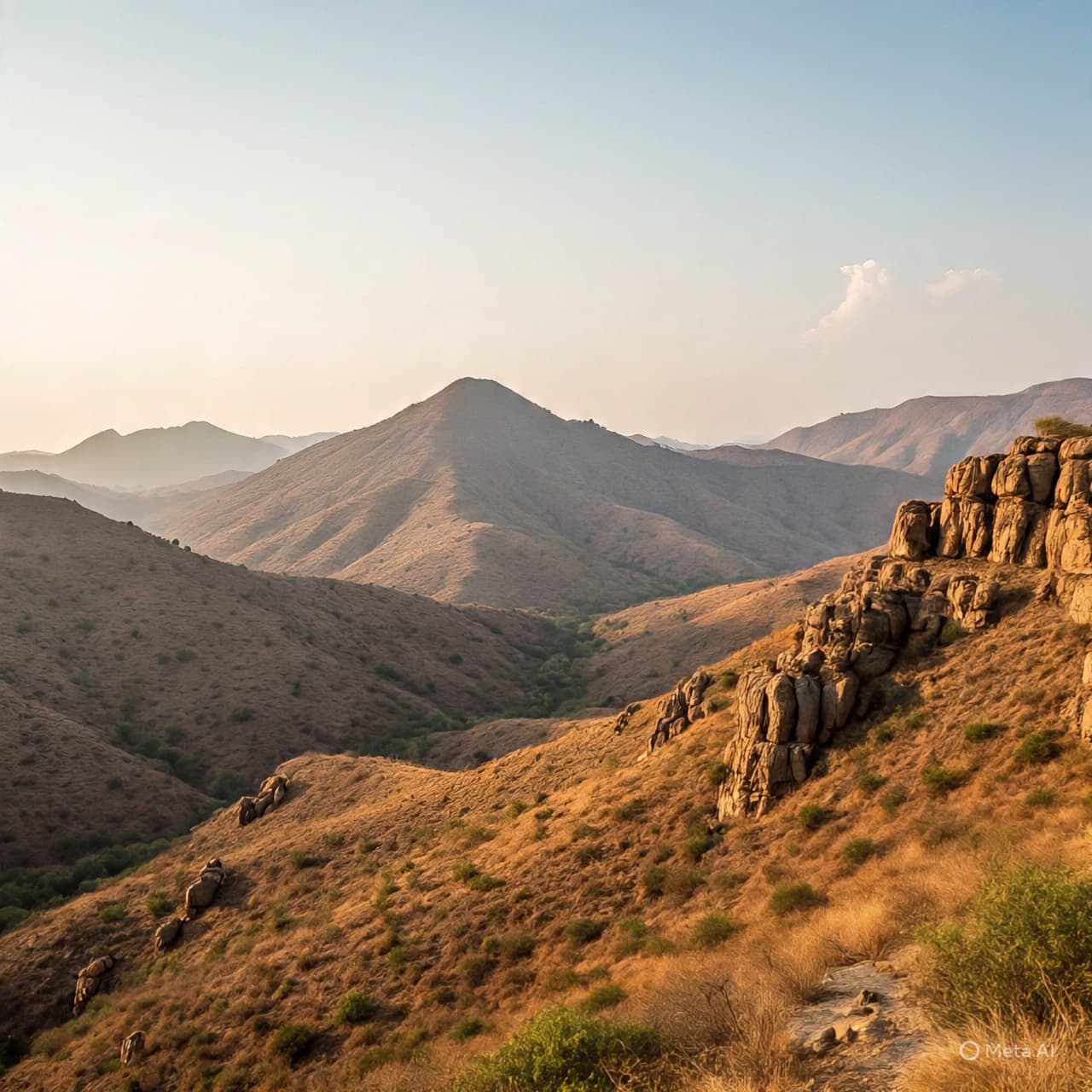
Key Highlights
- New Proposal:India's Environment Minister announces a district-wise mining plan for the Aravalli Range.
- Environmental Concerns:The plan aims to balance mining activities with ecological protection.
- Historical Context:The Aravalli Range has faced decades of unregulated mining, impacting its ecosystems.
The Aravalli Range, one of India's oldest mountain systems, is a landscape steeped in history and environmental significance. Recently, India's Environment Minister announced a new initiative to create a district-wise plan aimed at demarcating mining areas within this vital region. This proposal seeks to address the long-standing issues of legal ambiguity and uneven enforcement that have plagued mining activities in the Aravallis, which stretch across several states and play a crucial role in groundwater recharge, biodiversity, and regional climate stability.
For decades, unregulated mining has scarred the hills of the Aravalli Range, leading to lowered water tables and weakened natural buffers against desertification. Despite numerous court interventions, enforcement of mining regulations has varied significantly from district to district, often resulting in disputes and circumvention of the law. The new district-wise framework is intended to replace this improvisation with a structured approach that reflects local geology, ecological sensitivity, and existing land use.
Supporters of the plan argue that by clearly mapping where mining can and cannot occur, illegal extraction could be reduced. They believe that regulated mining activities, where environmental costs are assessed and contained, could coexist with the preservation of the region's ecological integrity. However, environmental groups express skepticism, warning that demarcation could lead to normalization of mining practices that may ultimately harm the environment. They emphasize the importance of how boundaries are drawn and the need for robust monitoring to ensure that ecological considerations take precedence over short-term economic gains.
The implications of this proposal extend beyond the immediate concerns of mining regulation. The Aravalli Range provides essential services such as water security, air quality, and habitat continuity, which are often overlooked in favor of revenue generation from mining. The challenge lies in balancing these competing interests and ensuring that the region's natural resources are managed sustainably.
As details of the proposal continue to emerge, it stands at a critical juncture. It has the potential to enhance accountability in mining practices, but it also risks reopening vulnerabilities if not implemented with care. The future of the Aravalli Range hinges not only on where mining is permitted but also on whether the principles of restraint and ecological protection can be upheld in the face of economic pressures.
In conclusion, the proposed mining plan for the Aravalli Range represents a significant step in addressing the complex interplay between development and environmental stewardship. As stakeholders engage in discussions about the plan's specifics, the outcomes will likely shape the future of this historically rich and ecologically vital region.
Published by Banx Network. This article is part of the Banx decentralized media programme, powered by the BXE token on the XRP Ledger.



