
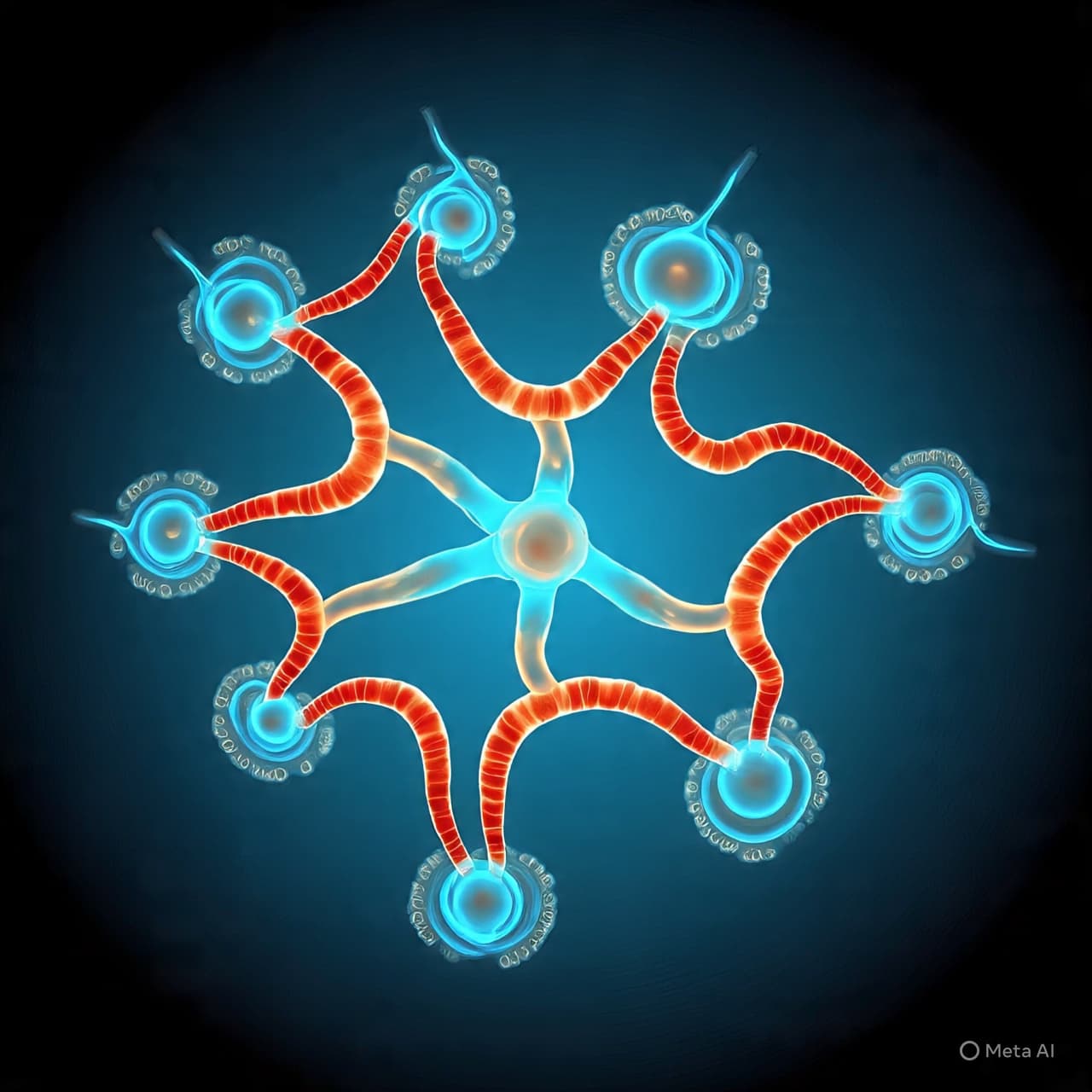
There are forces in the world that do not announce themselves, yet shape everything they touch. Magnetism is one of them—silent, invisible, and steady, guiding particles without ever being seen. For centuries, it has helped us navigate oceans and understand the nature of matter. Now, in the careful hands of researchers, it is beginning to guide something far more delicate: the growth of living tissue.
In laboratories where biology and engineering meet, scientists are exploring how magnetic fields can be used to organize lab-grown blood vessels into precise, functional patterns. These vessels, tiny and fragile, are essential components of human biology, carrying nutrients and oxygen through the body. Recreating them outside the body has long been a challenge—not only to grow them, but to arrange them in ways that reflect the complexity of real tissue.
The approach is as subtle as it is innovative. By introducing magnetic nanoparticles into cells or their surrounding materials, researchers can make these components responsive to external magnetic fields. When carefully applied, these fields act like an unseen guide, gently directing where cells move, align, and connect. Instead of growing randomly, the vessels begin to follow intentional paths, forming networks that are more organized and closer to natural biological systems.
What emerges from this process is not just structure, but possibility. In drug testing, the ability to create realistic vascular networks can make a significant difference. Medicines interact with the body in complex ways, often traveling through blood vessels before reaching their targets. Traditional lab models, which lack this intricate network, can only approximate these interactions. With magnetically guided vessels, researchers can observe how drugs behave in environments that more closely resemble living tissue.
There is a quiet transformation in this capability. Rather than relying solely on simplified models or animal testing, scientists can build controlled systems that mimic human physiology with increasing accuracy. These systems may allow for more precise testing, reducing uncertainty and improving the development of treatments.
At the same time, the work reflects a broader shift in how science approaches complexity. Instead of forcing order through rigid structures, it uses gentle guidance—working with natural processes rather than against them. Cells are not commanded; they are influenced, encouraged to organize themselves under conditions that mirror the forces they might encounter within the body.
The implications extend beyond drug testing. The ability to guide vascular growth could contribute to tissue engineering and regenerative medicine, where creating functional tissues is essential. While these applications remain in development, the foundation being laid is both technical and conceptual: a way of shaping life that is precise, yet respectful of its inherent dynamics.
There is also something quietly poetic in the idea. Invisible fields shaping living forms, patterns emerging from forces we cannot see—it echoes a broader truth about science itself. Much of what defines the world operates beneath the surface, waiting to be understood not through direct observation, but through careful interpretation.
Closing Researchers continue to explore the use of magnetic fields in tissue engineering, with early studies showing promise for organizing lab-grown blood vessels. These developments may improve drug testing models and support future advances in biomedical research.
AI Image Disclaimer Images in this article are AI-generated illustrations, meant for concept only.
Source Check Here are credible sources supporting the topic:
Nature Communications Science Advances MIT Technology Review The Guardian National Institutes of Health (NIH)
Published by Banx Network. This article is part of the Banx decentralized media programme, powered by the BXE token on the XRP Ledger.



