The White House Rose Garden, a serene oasis amidst the bustle of executive power, has long served as a backdrop for historic announcements and quiet reflections. Its manicured lawns and blooming flowers have witnessed the comings and goings of presidents, each leaving their own subtle mark on the landscape. Recently, the garden has undergone another transformation, with the addition of new statues that reflect the current administration’s aesthetic preferences. This latest change invites us to look back at the garden’s evolution, tracing the threads of history woven into its soil.
The introduction of bronze figures into this traditionally floral space is more than a decorative choice; it is a statement of values and legacy. It prompts a contemplation of how public spaces are curated to tell stories, and how those stories shift with the changing tides of political leadership.
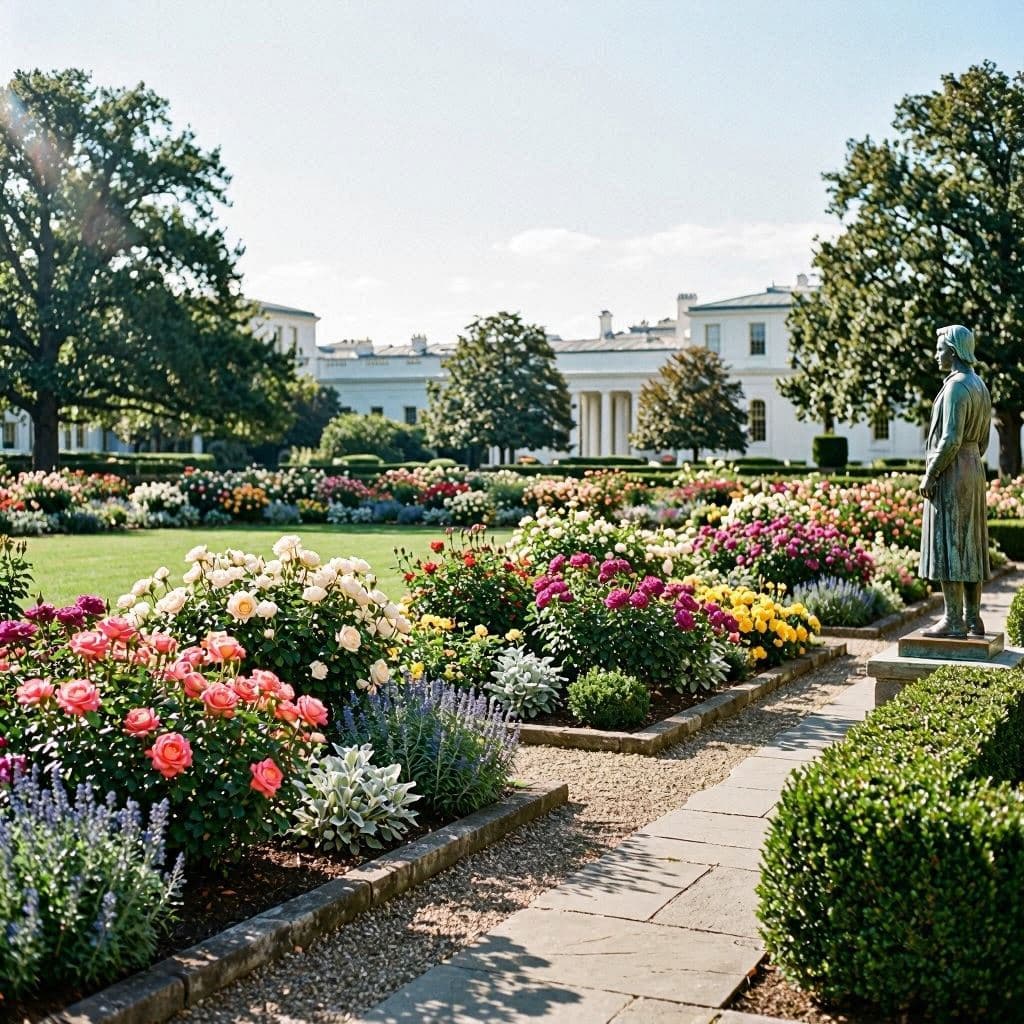
Body: President Donald Trump has installed a new statue in the Rose Garden, continuing a series of additions that have reshaped the area’s character. The latest figure, joining others previously placed there, is part of a broader effort to honor Founding Fathers and historical icons. These statues, often large and imposing, stand in contrast to the garden’s delicate flora, creating a visual dialogue between nature and history. The arrangement has drawn mixed reactions, with some appreciating the patriotic homage and others concerned about the cluttering of a cherished space.
The Rose Garden has a rich history of modification. Jacqueline Kennedy famously redesigned it in 1962, working with landscape architect Rachel Lambert Mellon to create a space that balanced elegance with functionality. Her vision emphasized seasonal blooms and open lawns, providing a versatile setting for ceremonies and press conferences. Subsequent presidents have made minor adjustments, but the core design remained largely intact, preserving its reputation as a place of beauty and tranquility.
In recent years, however, the garden has seen more significant changes. The installation of permanent structures and statues has altered its openness, leading to debates about preservation versus personalization. Critics argue that the garden should remain a neutral, timeless space, free from the ideological imprint of any single administration. Supporters, however, view the additions as a way to connect the present with the past, celebrating the figures who shaped the nation.
The new statues, including those of Thomas Jefferson and George Washington, are reproduced from existing monuments and placed strategically to enhance the garden’s symmetry. While they add a sense of grandeur, they also reduce the available green space, impacting the garden’s ability to host large gatherings. This trade-off highlights the challenges of managing a historic site that serves both ceremonial and practical purposes.
Historians note that the Rose Garden has always been a reflection of the president’s taste. From Theodore Roosevelt’s initial creation of the space to Nixon’s concrete patio, each era has left its signature. The current changes are part of this continuum, representing a particular vision of American heritage. Whether these additions will endure or be reversed by future administrations remains to be seen, as the garden continues to evolve with the times.
Public opinion on the changes is divided, with polls showing a split between those who welcome the historical tributes and those who prefer the traditional floral design. Social media has become a platform for this debate, with users sharing photos of the garden’s past and present configurations. This engagement underscores the emotional connection many Americans feel toward the White House grounds, viewing them as a shared national treasure.
Closing: As the Rose Garden continues to change, it remains a symbol of the presidency itself—dynamic, contested, and deeply rooted in history. The new statues are just the latest chapter in its long story, inviting visitors to reflect on the interplay between nature, art, and power. In the end, the garden belongs to the people, and its future will be shaped by the collective voice of those who cherish it.
AI Image Disclaimer: The visual content associated with this article is generated by artificial intelligence to illustrate the thematic elements of presidential history and landscape design, and does not represent specific photographic evidence of the current White House Rose Garden configuration.
Sources: New York Magazine Detroit News NBC News USA Today
Published by Banx Network. This article is part of the Banx decentralized media programme, powered by the BXE token on the XRP Ledger.