There are mornings when the light spreads across a landscape before the contours of the terrain have fully revealed themselves, as if the day itself is waiting to be understood. In many ways, the conflict unfolding between the United States, its allies, and Iran feels much like such a dawn — its full shape and duration still uncertain, its implications unfolding in real time as leaders and lawmakers alike seek to grasp what has occurred and what may still come. In these moments of transition, even familiar paths can feel uncharted, gently urging us to look with both caution and curiosity at the horizon ahead.
In a recent letter to Congress, President Donald Trump acknowledged this sense of unfolding by saying it is “not possible at this time to know” the full scope and duration of the military operation against Iran. The notification — required under the War Powers Act after the deployment of U.S. forces — arrives as the joint U.S.–Israeli campaign continues into its early days, marked by airstrikes and retaliatory actions that have already reshaped regional dynamics. Even as the White House frames its actions as necessary to counter legitimate threats, the absence of a definitive timeline underscores the inherent unpredictability of military engagements.
Mr. Trump’s letter to congressional leaders framed the operation as a response to “untenable” threats posed by Iran’s ballistic missiles, cruise missiles, and other capabilities that the administration says endanger U.S. forces, commercial vessels, and regional partners. Yet alongside these assertions of strategic urgency, the president also conveyed that the United States still seeks “a quick and enduring peace” — a phrasing that reflects both hope and the reality that war seldom adheres to tidy timetables.
Within the halls of Congress, lawmakers grapple with this mix of clarity and ambiguity. Some have called for a formal vote on war powers, seeking closer legislative oversight of military actions, while others caution against constraining executive flexibility in times of tension. These discussions reflect a broader question about how the United States balances the pursuit of security objectives with democratic accountability and constitutional process.
Behind these institutional deliberations lies a deeper human dimension. Military families, diplomats, and civilians across the Middle East watch as events unfold with mixed feelings of concern and resilience, aware that lives and livelihoods are affected by each decision made far from their frontiers. For many of them, uncertainty is not an abstract notion but a lived reality — one shaped by shifting alerts, postponed flights, and the quiet hope that conflict will wane rather than broaden.
There is also a subtle interplay between public statements and private briefings. In closed-door sessions with congressional staff, Pentagon officials acknowledged that U.S. intelligence had seen no clear indication of an imminent Iranian attack on American forces before the strikes — a nuance that contrasts with some of the justifications shared publicly for the military action. Such disparities intensify the sense of unresolved complexity that hangs over the operation’s early days.
For members of Congress — and for the American public more broadly — this blend of defined objectives and undefined horizons presents both a strategic and a philosophical challenge. How does one measure progress when the destination remains out of view? How do communities prepare for what lies ahead when even those at the highest levels of power admit that the path remains unwritten?
In the soft pause between one day’s closing and the next morning’s emergence, there is room for thoughtful reflection, even amid the noise of global events. And in that reflective space, observers and leaders alike may contemplate not only the mechanics of conflict but also the values that guide decisions made in its midst.
In the latest developments, President Trump has officially notified Congress that it is too early to determine the full scope or duration of U.S. and allied strikes on Iran after military operations began. Lawmakers continue to debate war powers and oversight, while the Pentagon underscores ongoing regional threats as the conflict persists.
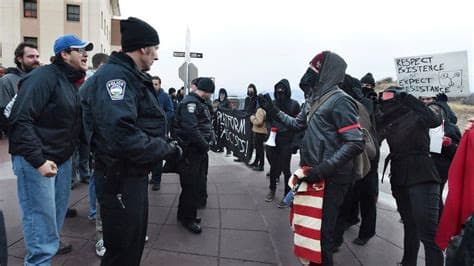
AI Image Disclaimer Visuals are created with AI tools and are not real photographs.
Sources Reuters Associated Press (via Yahoo News coverage) The Guardian Washington Post Reuters (Pentagon intelligence briefing context)
Published by Banx Network. This article is part of the Banx decentralized media programme, powered by the BXE token on the XRP Ledger.