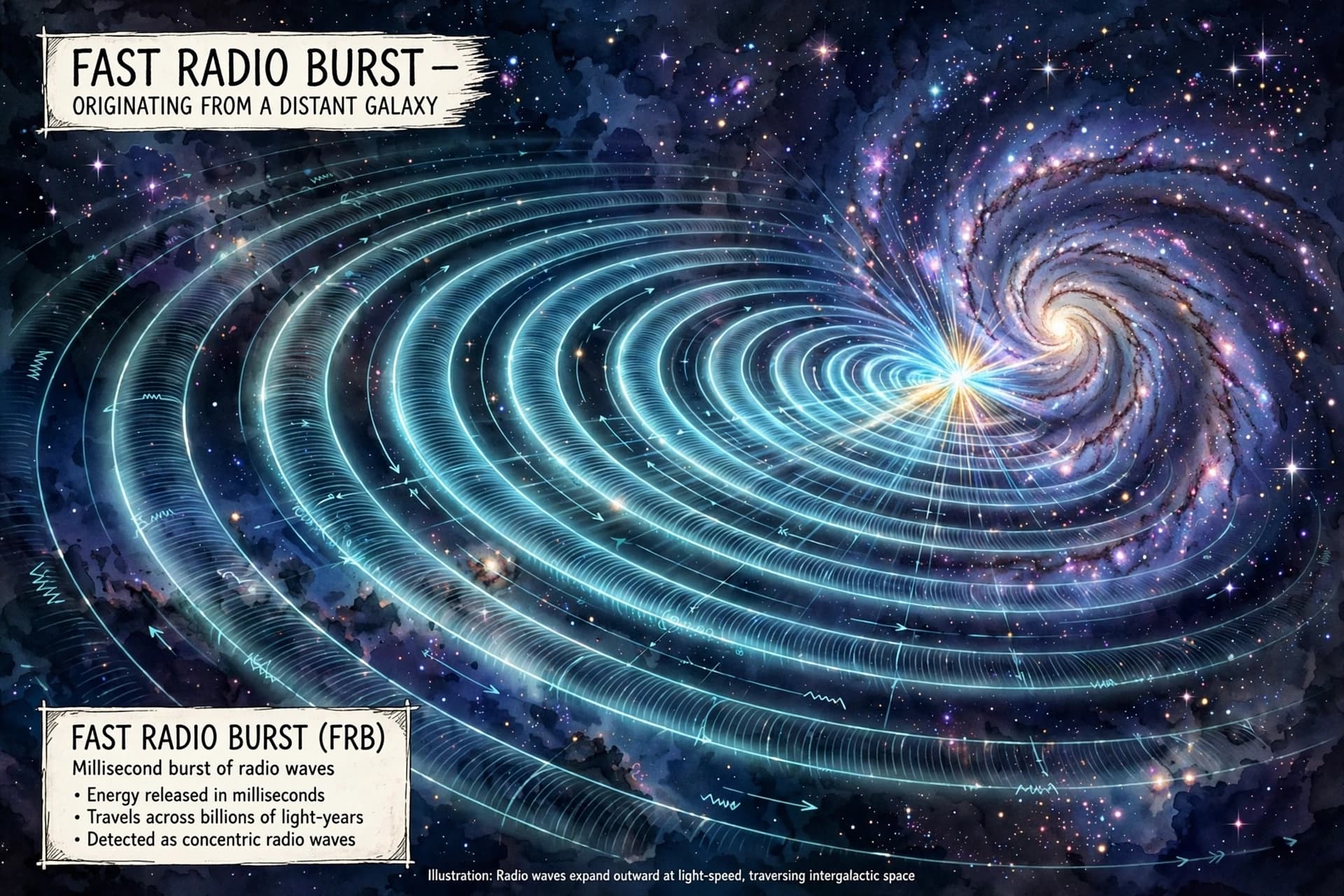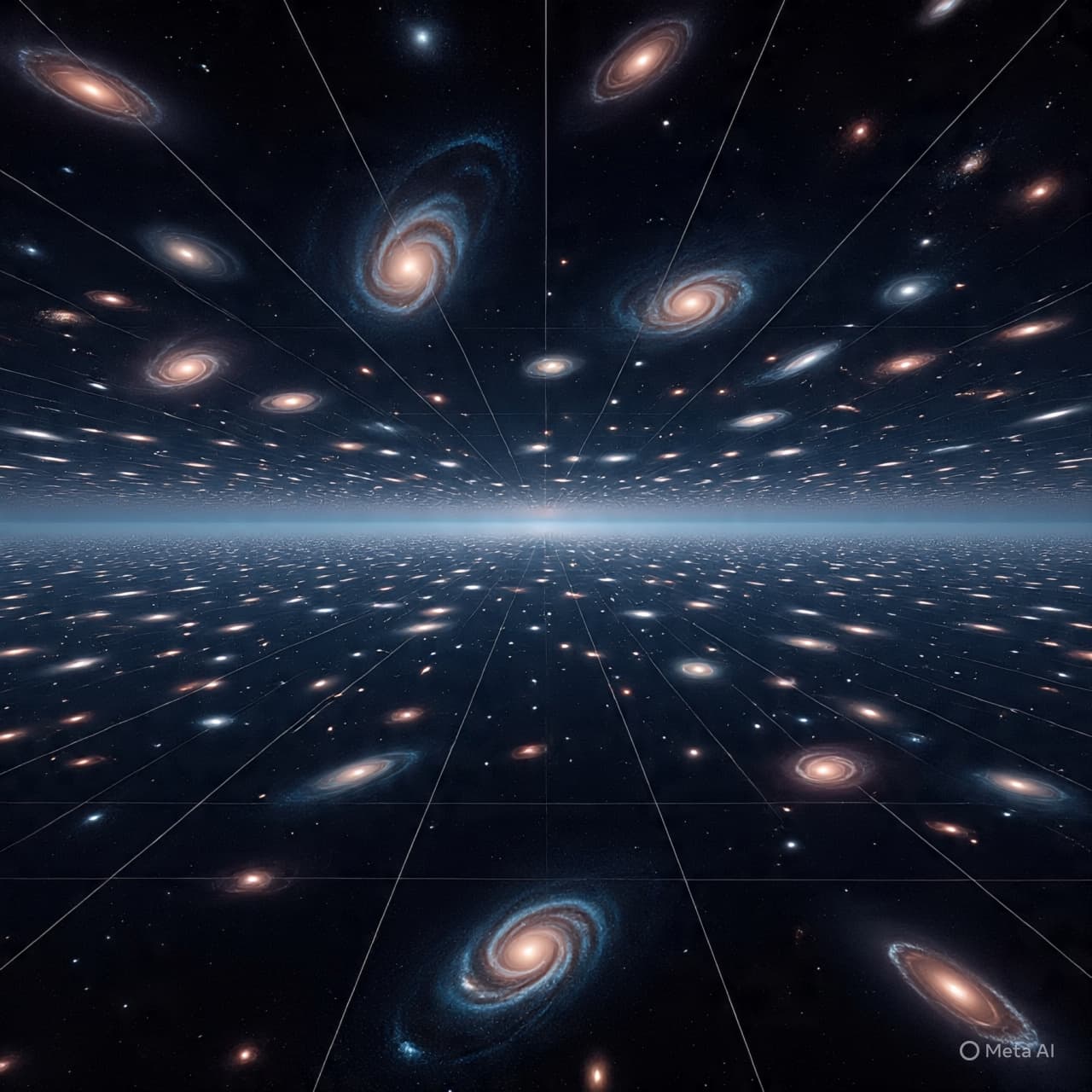
There are questions that do not arrive loudly, but instead drift in—quiet as starlight crossing an empty sky. The universe, vast and patient, does not explain itself in a single voice. It bends, stretches, and whispers through time. And somewhere within that quiet unfolding, a subtle force—dark energy—moves not like a storm, but like a tide we cannot see. One wonders, then: if space itself can stretch, can it also curve under this unseen influence, reshaping the destiny of everything it holds?
To approach this question is to stand at the edge of both certainty and mystery. In modern cosmology, the structure of the universe—whether flat, open, or closed—is not merely a matter of shape, but of balance. Matter pulls inward through gravity, while dark energy pushes outward, accelerating expansion. Observations from satellites and telescopes, including those supported by institutions like NASA and the European Space Agency, suggest that the universe is remarkably flat on large scales. Not curved like a sphere, nor open like a saddle, but balanced in a way that feels almost deliberate.
Dark energy, however, complicates this quiet symmetry. It does not curve space in the traditional sense that matter does. Instead, it acts uniformly, permeating space itself, encouraging expansion to accelerate. In this way, its influence is less about bending geometry locally and more about shaping the overall evolution of the cosmos. If gravity is the sculptor that molds curvature, dark energy is the force that stretches the canvas.
Yet time introduces nuance. Over billions of years, the dominance of dark energy grows. Galaxies drift farther apart, and the observable universe becomes increasingly sparse. While this expansion does not “re-curve” the universe into a new geometric form, it does influence how curvature manifests observationally. A universe that expands faster appears flatter in measurements, even if subtle curvature exists beyond detection. As discussed in publications like Scientific American and research journals such as Nature, this distinction is essential: dark energy affects expansion history, not the intrinsic curvature in a direct, bending sense.
There is also the deeper philosophical layer. Curvature, in Einstein’s framework, is tied to energy and mass. Dark energy is, in a sense, energy—yet its negative pressure behaves differently. It does not gather or cluster, and so it does not create the localized warping we associate with stars or galaxies. Instead, it quietly governs the large-scale fate of the universe. According to analyses often summarized by outlets like Space.com, the current understanding is that dark energy keeps the universe close to flatness while driving it toward an ever-faster expansion.
And so the answer, like much in cosmology, is both gentle and precise. Dark energy does not curve the universe over time in the way gravity does. It does not bend space into new shapes. Rather, it influences how the universe expands, subtly reinforcing the appearance of flatness while guiding the cosmos toward a future of increasing distance and quiet separation.
In the end, perhaps the universe is not something that changes its shape dramatically with time, but something that reveals its nature more clearly as it unfolds. Dark energy does not rewrite the geometry—it reveals the scale of the stage upon which everything moves. And in that slow unveiling, we are left not with sharp conclusions, but with a deeper appreciation for how softly the universe carries its greatest forces.
AI Image Disclaimer Visuals are created with AI tools and are not real photographs.
Source Check (Credible Coverage Exists):
NASA European Space Agency Scientific American Nature Space.com
Published by Banx Network. This article is part of the Banx decentralized media programme, powered by the BXE token on the XRP Ledger.