
In many parts of Africa, the road has always told a quiet story of adaptation. It bends around markets that appear at dawn and disappear by noon, carries buses painted with hope and humor, and absorbs the dust of distances measured more in patience than in miles. Change here rarely announces itself loudly. It arrives softly, often unnoticed at first, until one day it is simply part of the landscape.
Electric vehicles, once spoken of as a distant luxury of wealthier nations, may be following that familiar path. The assumption that Africa must wait—wait for income growth, wait for infrastructure, wait for technology to trickle down—has shaped the conversation for years. Yet the present moment suggests a more complex reality, one where necessity and innovation are quietly meeting in the middle.
Across several African cities, the cost of importing fuel has become an ever-heavier burden, sensitive to global price swings and currency pressures. Electricity, by contrast, is increasingly local. Solar panels stretch across rooftops and open land, mini-grids hum at the edges of towns, and renewable projects continue to expand. In this environment, the idea of powering mobility from domestic energy sources carries a practical appeal that goes beyond environmental ideals.
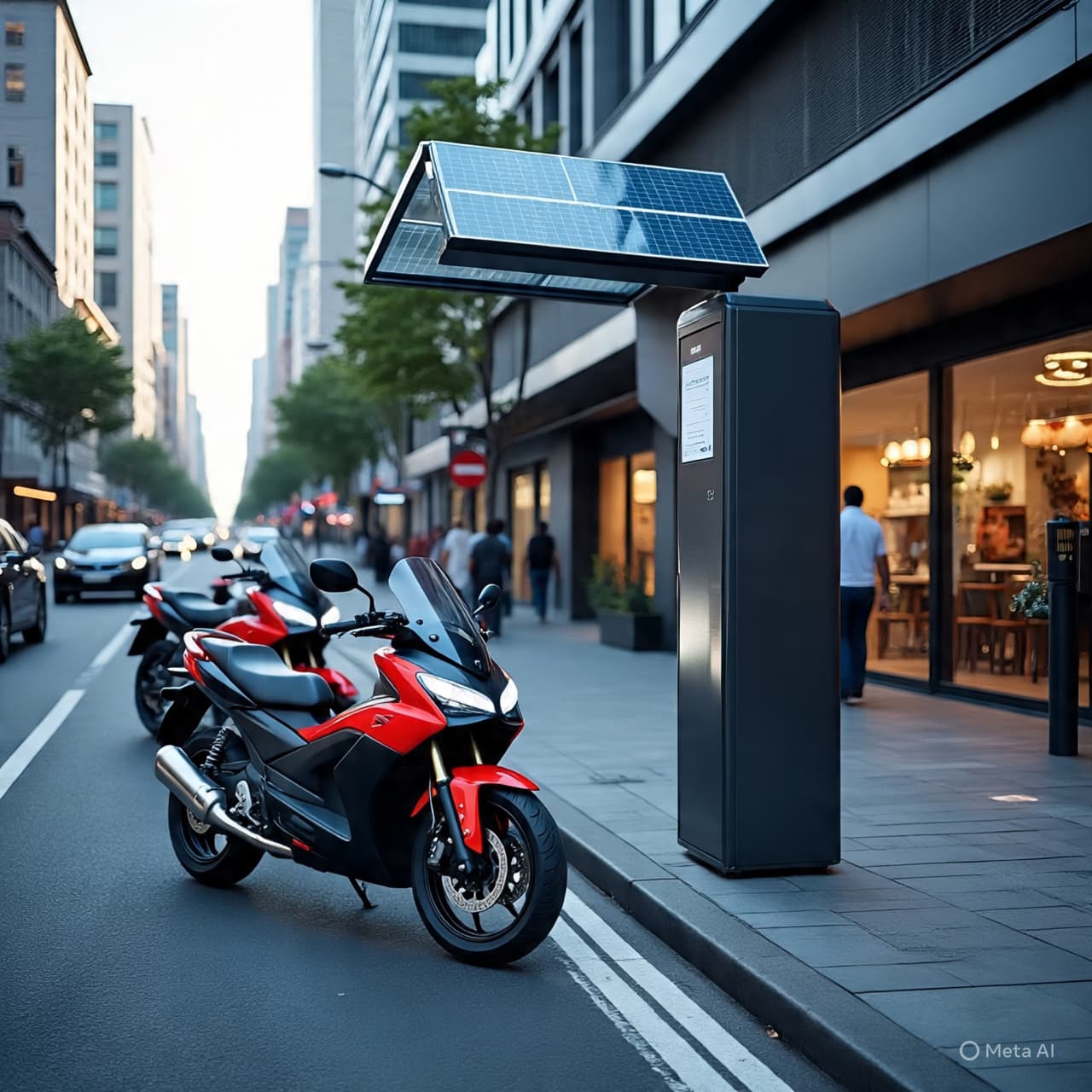
Two- and three-wheeled electric vehicles are already finding their place. Electric motorcycles, delivery scooters, and small buses are emerging as solutions tailored to urban density and short travel distances. For many drivers, the appeal is simple rather than symbolic. Lower running costs, fewer moving parts, and reduced exposure to fuel shortages can mean more predictable livelihoods. In regions where vehicle maintenance often determines income stability, this predictability matters.
The charging question, long considered the greatest obstacle, is also being reshaped by local realities. Rather than relying solely on large, centralized charging networks, many operators are adopting battery-swapping models or charging hubs linked to solar power. These systems align with existing patterns of informal commerce and shared services, allowing electric mobility to grow without waiting for nationwide infrastructure upgrades.
Governments, too, are beginning to adjust their posture. Some are offering tax incentives, easing import duties, or supporting pilot programs for electric public transport. These steps are often cautious and incremental, but they reflect an understanding that transportation costs ripple through food prices, employment, and urban air quality. Electric vehicles are increasingly framed not as prestige items, but as tools within broader economic strategies.
Challenges remain, and they are not insignificant. Upfront costs are still high for many consumers, grid reliability varies widely, and policy consistency is uneven across the continent. Yet Africa’s history of leapfrogging of moving directly to mobile banking or decentralized energy without fully passing through earlier stages suggests that linear expectations may be misplaced.
Rather than mirroring the electric vehicle journey of Europe or North America, Africa’s path appears uniquely its own. It is shaped by shorter travel patterns, informal transport systems, and an urgent need for affordability. In that context, adoption does not need to be universal to be meaningful. It only needs to be useful.
The evidence emerging today does not declare an electric revolution, but it does point to momentum. Pilot programs are expanding, local manufacturing discussions are growing louder, and public familiarity is slowly increasing. The shift is uneven, quiet, and still fragile.
For now, electric vehicles in Africa remain a developing story one written in pilot projects, small fleets, and practical experiments. Yet if history is any guide, these modest beginnings may be exactly how lasting change takes root.
AI Image Disclaimer Visuals accompanying this article are created with AI tools and serve as conceptual representations rather than real photographs.
Source Check — Credible Media Presence
Bloomberg Reuters Financial Times The Economist BBC News
Published by Banx Network. This article is part of the Banx decentralized media programme, powered by the BXE token on the XRP Ledger.



