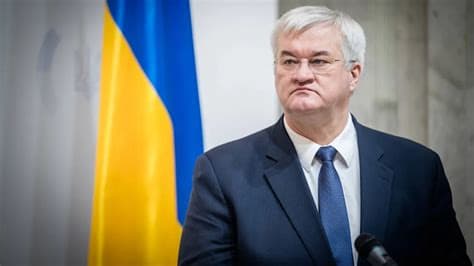
The Arctic sun hangs low over the vast ice of Greenland, a land where winter light seems eternal and the wind whispers of distant times. In this frozen expanse, great powers find themselves both captivated and confounded, as if caught between the shifting reflections of ice and sky. In the corridors of power far from Nuuk’s silent fjords, a meeting recently unfolded in the White House — a meeting that, in its own way, mirrored the fragile gleam of Arctic ice: beautiful in intention but layered in complexity.
When senior representatives from the United States, Denmark, and Greenland sat down in Washington, the dialogue centered on Greenland’s future a subject that has grown from diplomatic curiosity into geopolitical tension. On the American side, officials described the encounter as “productive,” highlighting a shared interest in continued conversations and framing it as a step toward clarity on security concerns and broader Arctic issues. According to a White House statement, what emerged from the room was an agreement to establish a working group a forum meant to keep discussions alive and technical talks moving forward every few weeks.
Yet even as that procedural agreement was announced, the shimmering outlines of disagreement remained unmistakable. Danish and Greenlandic officials expressed deep unease with aspects of the U.S. approach, particularly the implication that Washington might pursue control of the island for strategic reasons. Denmark’s foreign minister described the talks as frank but stressed “fundamental disagreement” over the future of Greenland making clear that sovereignty and self-determination are non-negotiable for Copenhagen and Nuuk alike.
Greenland’s own government echoed these sentiments, with leaders rejecting any notion that the island is for sale or subject to unilateral transfer. Their message, carried not only in official statements but in the anxious reflections of Greenlanders themselves, speaks to a deep attachment to cultural identity and long-standing political autonomy within the Kingdom of Denmark.
Despite divergent interpretations of what “agreement” means in this context, diplomats on all sides have agreed to walk away with the same objective: keep talking. For Washington, that means continuing consultations through the newly formed working group. For Copenhagen and Nuuk, that means ensuring those discussions respect Greenland’s sovereignty and consult with Greenlandic voices directly.
What remains clear is this: there is no simple settlement awaiting discovery, no single ledger of accord to be signed. Instead, there is a shared commitment to conversation one as intricate as patterns in Arctic ice, shifting subtly yet inexorably with the forces around it.
In the gentle twilight of diplomacy, the United States, Denmark, and Greenland have agreed to keep talking, even as they acknowledge they see very different horizons ahead.
AI Image Disclaimer (rotated)
“Visuals are created with AI tools and are not real photographs.”
Sources
Reuters, The Washington Post, Al Jazeera, AP News, Forbes.
Published by Banx Network. This article is part of the Banx decentralized media programme, powered by the BXE token on the XRP Ledger.