Some discoveries arrive not with loud celebration but through faint signals traveling unimaginable distances across space. Within those subtle traces of light, scientists continue uncovering details that expand humanity's understanding of planets far beyond our solar system.
Astronomers using the James Webb Space Telescope have identified new atmospheric details from several distant exoplanets, providing additional information about their chemical composition and environmental conditions. The findings further demonstrate the telescope's advanced observational capabilities.
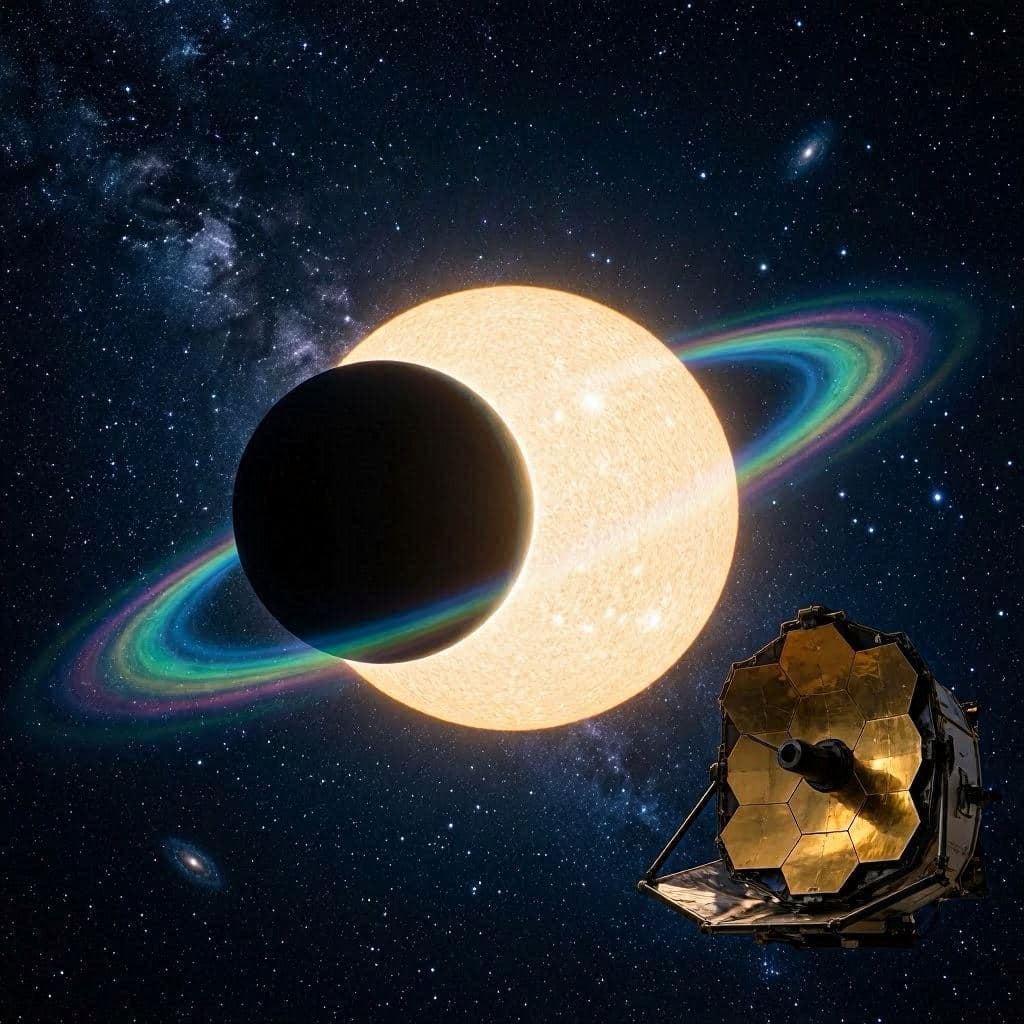
Researchers analyzed infrared light passing through planetary atmospheres as the exoplanets moved in front of their host stars. This technique allows scientists to identify molecules by studying the way different gases absorb specific wavelengths of light.
The latest observations revealed additional evidence of compounds such as water vapor, carbon dioxide, and other atmospheric elements on selected exoplanets. Scientists caution that each planetary environment differs significantly, requiring careful interpretation of the collected data.
Understanding exoplanet atmospheres helps researchers investigate planetary formation, climate processes, and the diversity of worlds beyond the solar system. Although many observed planets are not considered suitable for human habitation, they provide valuable scientific comparisons with Earth and neighboring planets.
The James Webb Space Telescope continues transforming astronomical research by combining exceptional sensitivity with powerful infrared instruments. Since beginning scientific operations, the observatory has contributed to studies involving galaxies, stars, planetary systems, and the early universe.
International research teams continue examining newly collected data while preparing additional observing campaigns. Future analyses may identify even more complex atmospheric signatures as scientists refine both instruments and analytical methods.
The newest findings demonstrate how modern astronomy continues expanding the boundaries of knowledge. Every observation made by the James Webb Space Telescope offers another opportunity to understand the remarkable diversity of planetary systems throughout the universe.
AI Image Disclaimer: The accompanying space artwork was generated using AI for illustration and does not represent an authentic telescope image.
Source Verification Check: NASA, European Space Agency (ESA), Space.com, Nature
Published by Banx Network. This article is part of the Banx decentralized media programme, powered by the BXE token on the XRP Ledger.