
The night sky has always encouraged people to wonder whether distant worlds might be very different from our own. Modern astronomy has transformed those questions into careful scientific investigations, using advanced telescopes to study planets orbiting stars far beyond the Solar System. Recent observations by the James Webb Space Telescope have added another chapter to that exploration.
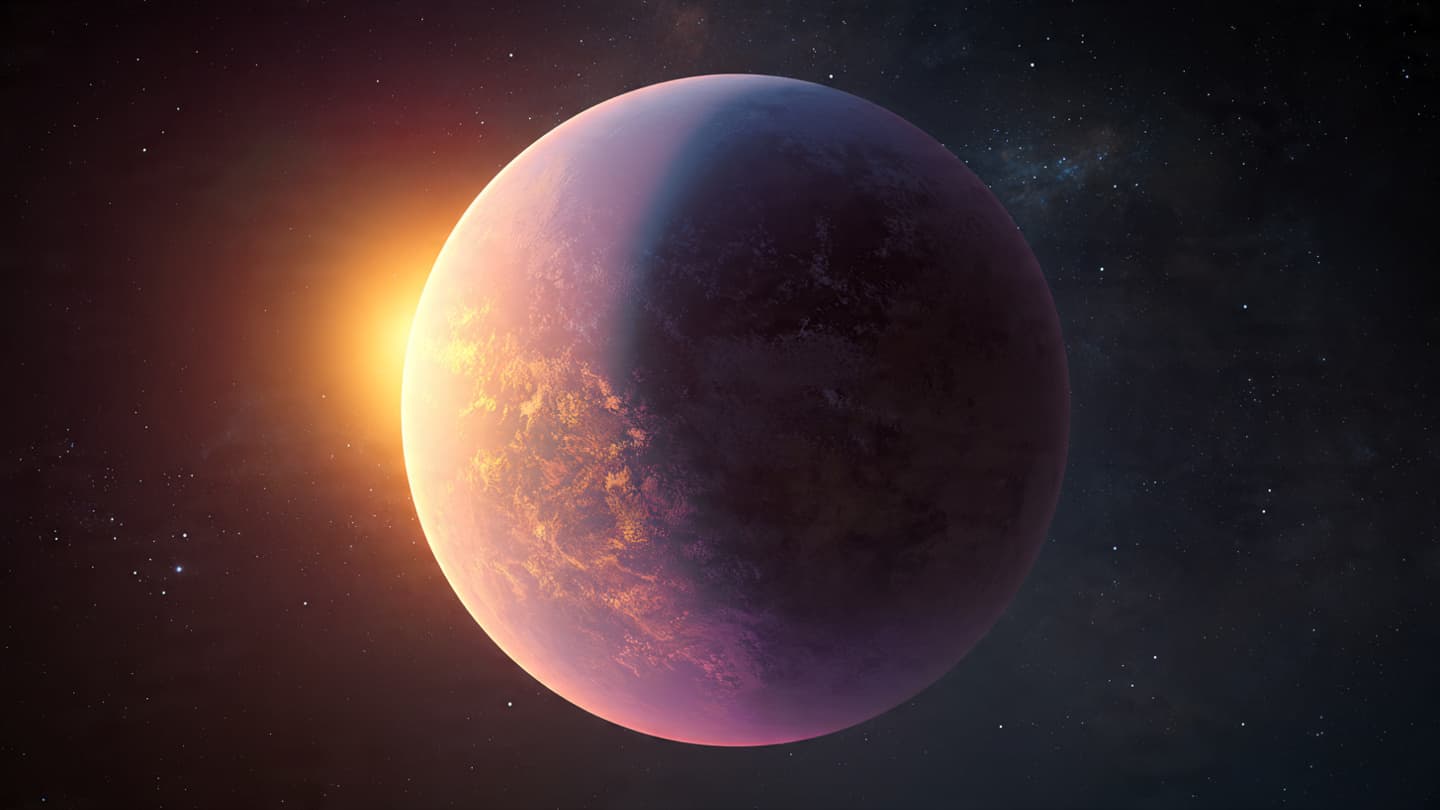
Researchers using the James Webb Space Telescope studied the atmosphere of a distant exoplanet and identified significant differences between regions facing the star and those moving into darkness. The findings provide scientists with valuable information about atmospheric circulation and the behavior of extreme planetary environments.
Unlike Earth, many exoplanets orbit very close to their stars and may become tidally locked, meaning one side constantly faces the star while the other remains in darkness. This arrangement can create dramatic variations in temperature and weather patterns across the planet.
The James Webb Space Telescope is equipped with highly sensitive instruments capable of analyzing the chemical composition of distant atmospheres. By studying the light passing through or reflected by these atmospheres, astronomers can estimate temperatures and identify certain molecules.
Understanding the climates of exoplanets helps scientists improve models of planetary formation and evolution. Although many of these worlds are not suitable for human life, they provide important clues about the diversity of planetary systems throughout the galaxy.
The observations also demonstrate the growing capabilities of modern space telescopes. Advances in engineering and data analysis allow researchers to examine distant objects with a level of detail that would have been impossible only a few decades ago.
Astronomers continue to search for planets that may possess conditions favorable to life, while also studying more extreme environments to understand the range of possibilities found in the universe. Each discovery contributes to a broader picture of how planetary systems develop.
The James Webb Space Telescope continues to expand humanity's understanding of the cosmos. Its latest observations remind us that the universe contains worlds with conditions far different from our own, offering new opportunities for scientific discovery and exploration.
AI Image Disclaimer: Some images associated with this article may be AI-generated to illustrate scientific concepts and distant planetary environments.
Sources: ScienceDaily, NASA, astronomical research institutions
Published by Banx Network. This article is part of the Banx decentralized media programme, powered by the BXE token on the XRP Ledger.



