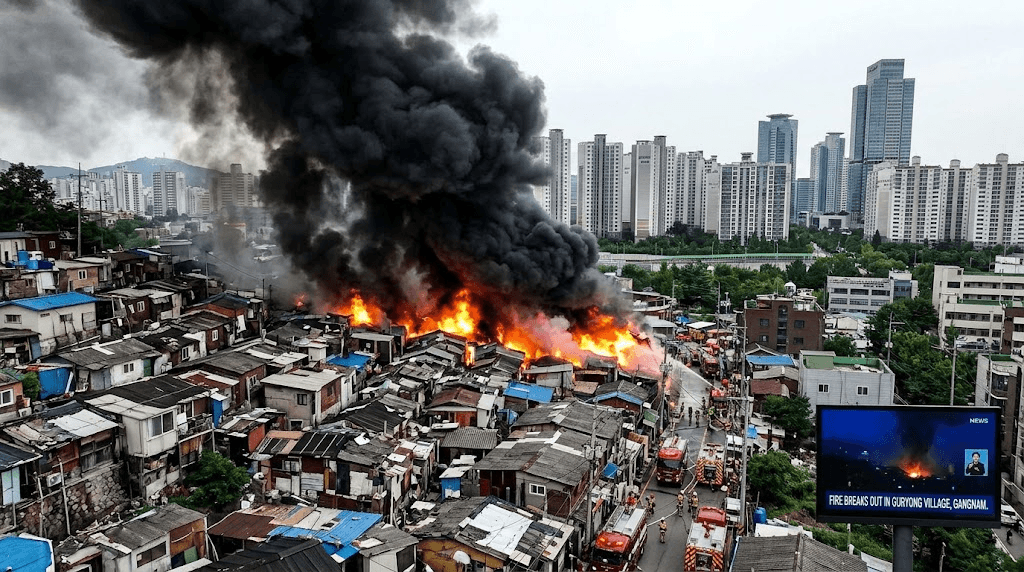
SEOUL, South Korea — A destructive fire swept through Guryong Village—the last remaining shantytown in Seoul’s affluent Gangnam district—destroying makeshift homes and leaving over 100 residents displaced. Emergency teams battled strong winds, nightfall, and water supply challenges before fully extinguishing the blaze after nearly 13 hours.
The fire ignited during the afternoon in a makeshift structure in Zone 2 of the settlement. Plumes of thick black smoke rose over southern Seoul, visible from kilometers away.
Densely packed structures made of highly flammable materials—including plywood, plastic sheeting, and insulation wadding—caused the flames to spread rapidly across adjacent sectors. Loud explosions echoed through the neighborhood as gas canisters inside residential units detonated.
More than 230 firefighters and emergency personnel, backed by 110 pieces of equipment and six firefighting helicopters, were deployed to contain the inferno and form a perimeter around neighboring Mount Guryong. Dozens of residents managed to self-evacuate as emergency sirens sounded throughout the area.
Local authorities confirmed that 107 residents from 77 households were directly impacted by the destruction. While one resident suffered minor injuries, no fatalities were reported.
Temporary shelters were established at nearby schools and community gymnasiums to accommodate displaced families, with local relief organizations providing warm meals, blankets, and essential supplies. Emergency services and city inspectors are conducting ground checks to assess structural damage and confirm the origin of the fire.
Situated at the foot of Mount Guryong, the village formed in the late 1980s as low-income residents were displaced by major urban development projects across Seoul. Today, it stands in stark contrast to the surrounding high-rise luxury apartment complexes of Gangnam.
Due to the lack of modern infrastructure and heavy reliance on temporary building materials, Guryong Village has suffered multiple severe fires over the past decade. The disaster has once again ignited public discussion around local safety standards, emergency preparedness, and long-planned urban redevelopment efforts for the area.
Published by Banx Network. This article is part of the Banx decentralized media programme, powered by the BXE token on the XRP Ledger.