In the quiet architecture of the human body, there exists an organ that works tirelessly in youth only to fade into obscurity as we age. The thymus, a small gland nestled behind the breastbone, is the training ground for our immune system’s most vital soldiers. For decades, it was dismissed as irrelevant in adulthood, a relic of childhood that shrinks and disappears. But now, emerging science suggests that this vanishing actor may hold the key to how long and how well we live, challenging us to rethink what it means to grow old.
The discovery is not just a medical footnote but a profound shift in our understanding of aging. It invites us to look at health not merely as the absence of disease, but as the preservation of vitality, with the thymus serving as a silent guardian of our biological clock.
Body: Recent studies utilizing artificial intelligence to analyze routine CT scans have revealed a striking correlation between thymic health and longevity. Researchers found that adults with healthier, more robust thymuses were significantly less likely to die prematurely or suffer from serious conditions such as cardiovascular disease and lung cancer. In one large-scale analysis, individuals with high thymic health scores had a mortality rate nearly half that of those with low scores, suggesting that the organ’s condition is a powerful predictor of overall well-being.
The thymus is responsible for producing T-cells, which are essential for fighting infections and identifying cancerous cells. As we age, the thymus undergoes involution, a process where it is replaced by fat and loses its functional capacity. This decline weakens the immune system, making older adults more susceptible to illness. However, the new research indicates that the rate of this decline varies widely among individuals, and those who retain more thymic tissue tend to enjoy better health outcomes.
Lifestyle factors appear to play a crucial role in maintaining thymic health. Smoking, obesity, and chronic inflammation are linked to faster thymic degeneration, while healthy habits may help preserve its function. This finding offers a hopeful message: that some aspects of immune aging may be modifiable through conscious choices. It empowers individuals to take an active role in protecting their internal defenses, rather than viewing decline as inevitable.
Beyond general longevity, the thymus has shown promise in predicting responses to cancer immunotherapy. Patients with healthier thymuses were more likely to respond positively to treatments that harness the immune system to fight tumors. This connection highlights the organ’s central role in immune surveillance and its potential as a biomarker for personalized medicine. By assessing thymic health, doctors may soon be able to tailor treatments more effectively, improving survival rates for cancer patients.
The use of AI in these studies allowed researchers to see patterns that were previously invisible to the human eye. By analyzing thousands of scans, the algorithms could quantify thymic volume and density with precision, linking these metrics to long-term health data. This technological leap underscores the importance of interdisciplinary collaboration in modern medicine, where data science and biology converge to unlock new insights.
While the thymus cannot be regenerated easily, understanding its importance opens new avenues for research into therapies that might slow its decline or even restore its function. Scientists are exploring various interventions, from hormonal treatments to dietary changes, that could support thymic health. Although these approaches are still in early stages, they offer a glimpse of a future where immune aging is not just managed but mitigated.
Closing: As we continue to unravel the mysteries of the thymus, it becomes clear that this small organ plays a outsized role in our journey through life. Its story is one of quiet service and gradual retreat, but also of enduring influence. By paying attention to its health, we may find new ways to extend not just our years, but the quality of our lives.
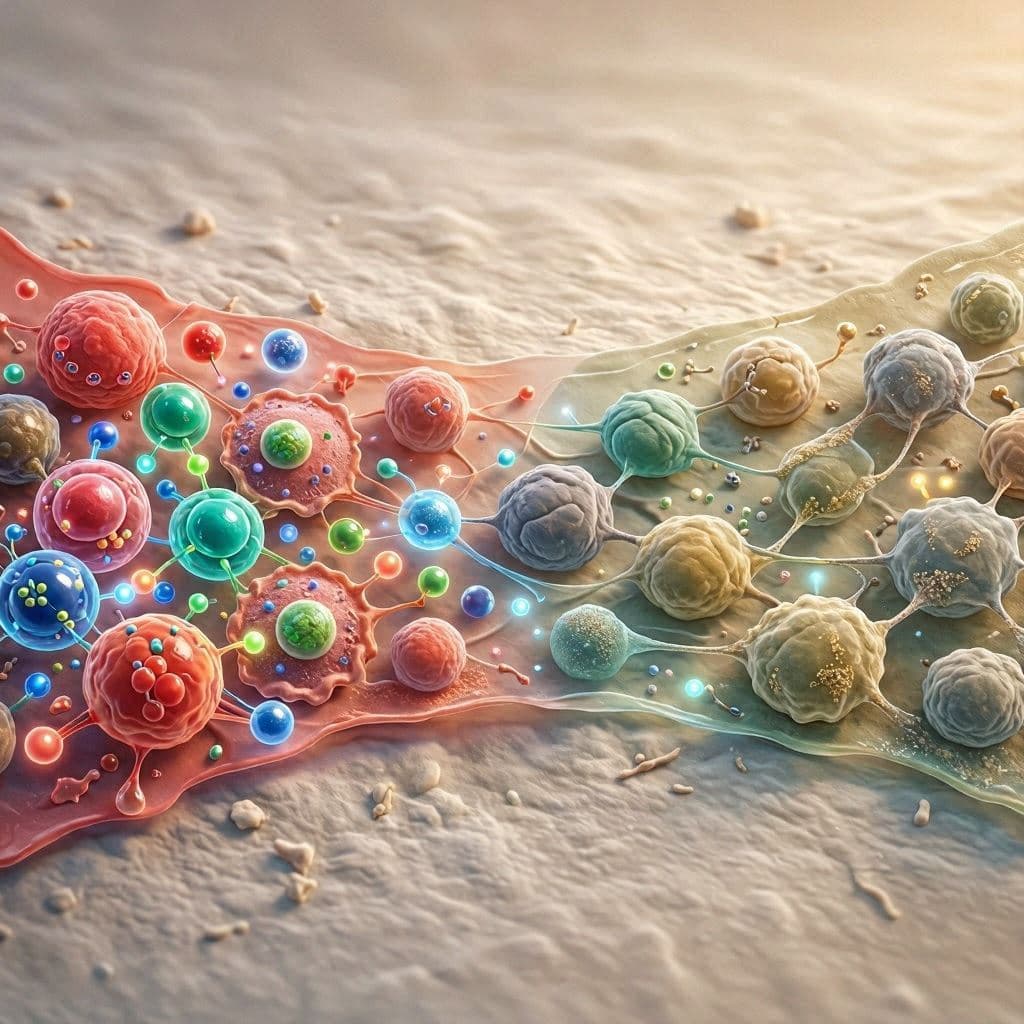
AI Image Disclaimer: Please note that any visual illustrations accompanying this text are AI-generated interpretations designed to evoke the thematic context of human anatomy and medical research, and do not depict actual CT scans or specific biological structures.
Sources: Harvard Medical School Science Daily Mass General Brigham The Washington Post
Published by Banx Network. This article is part of the Banx decentralized media programme, powered by the BXE token on the XRP Ledger.