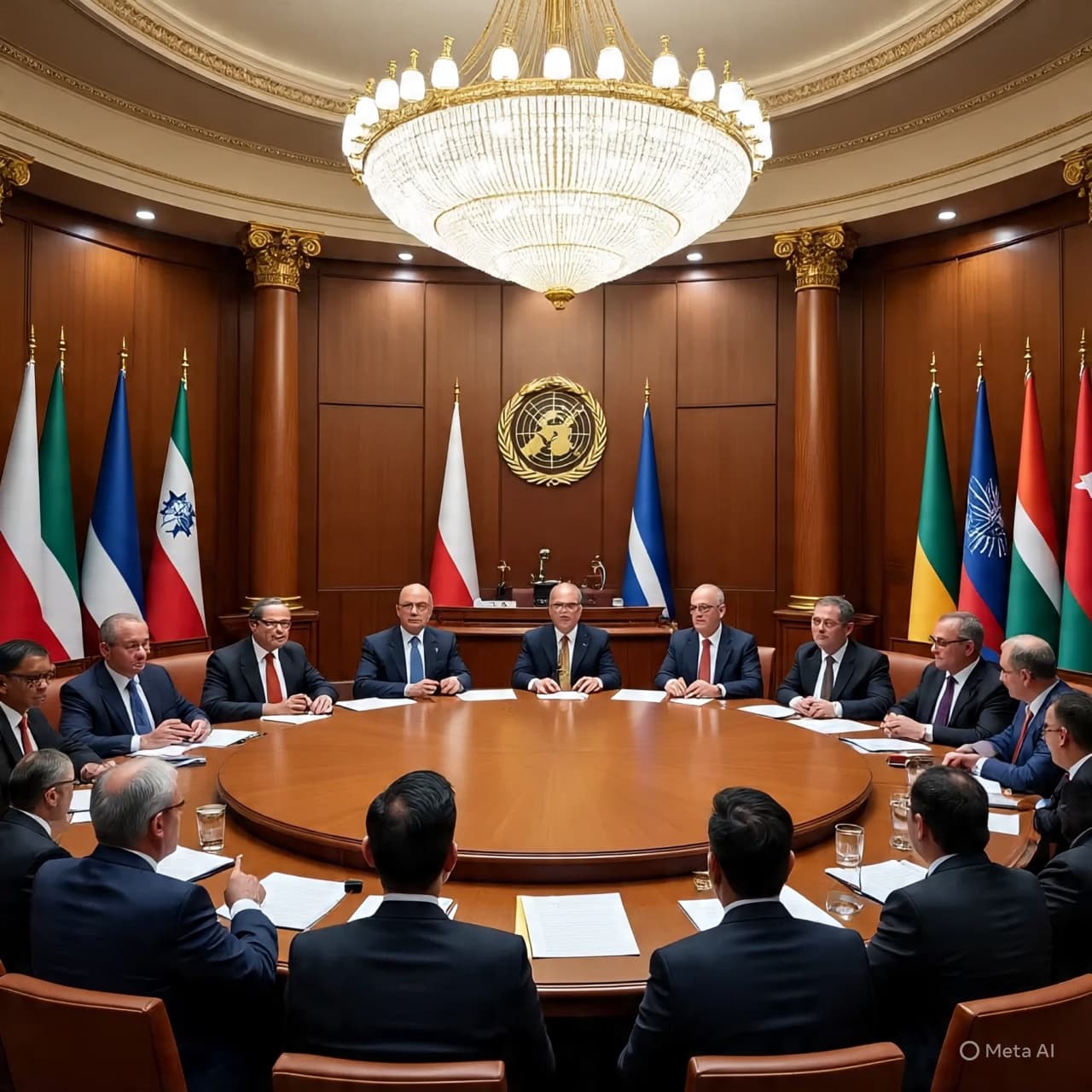
There are moments in international halls, where polished wood and soft carpet seem to echo louder than the words spoken, that world affairs feel like an unfinished conversation. At a United Nations Security Council meeting in New York this week, representatives of Iran and the United States met again in a scene that felt both familiar and unresolved. Though both sides spoke of diplomacy — an ever‑present hope in global affairs — an invisible but palpable gap persisted between them, like two distant voices striving to share the same melody but unable to find harmony.
Iran’s U.N. Ambassador Amir Saeid Iravani stood before the chamber and reaffirmed his nation’s commitment to “principled diplomacy and genuine negotiations,” reminding delegates of Tehran’s adherence to the spirit of the 2015 nuclear deal. Yet his words carried a hint of restraint, underscored by a call for Western powers — including France, Britain, and the United States — to act with credible steps to rebuild trust.
In response, the U.S. delegation, represented by a senior envoy, reiterated America’s willingness to engage in formal talks but only under conditions it defines as meaningful and substantive. Central to the U.S. stance is a firm insistence that Iran must agree to zero enrichment of nuclear material — an absolute point of contention. The insistence on such terms, the U.S. argued, is essential to prevent the spread of nuclear weapons and maintain international security.
For Iran’s delegates, however, that insistence felt like an unacceptable precondition that infringed on their sovereign rights. The Iranian delegation highlighted that Tehran’s nuclear program — including uranium enrichment — serves peaceful purposes, and that any framework must respect internationally recognized rights. The sharp exchange between diplomats — diplomatic in tone yet charged in content — illustrated how deeply these disagreements run.
Against this backdrop, recent years of negotiations — scheduled talks canceled after regional conflict and the re‑imposition of sanctions — have reinforced a sense that while diplomatic doors remain open, the threshold for agreement is distant. Iran has increased its production of enriched uranium to levels closer to weapons‑grade thresholds, according to independent monitoring agencies, raising the stakes for all involved. European powers at the Council, while defending sanctions, also expressed continued openness to dialogue.
In these moments, diplomacy carries both promise and complexity, much like a bridge stretching across divergent landscapes. The discussions in this chamber reflect not only the present geopolitical environment but also the broader cycle of trust and doubt that defines international relations. The commitment to talk, even amid wide separations of view, suggests that the world’s diplomats continue to seek a path forward — though one that remains tentative and unfinished.
AI Image Disclaimer “Visuals are created with AI tools and are not real photographs.”
Sources Associated Press / ABC News Associated Press / AP News Reuters Mid‑Day News Siasat
Published by Banx Network. This article is part of the Banx decentralized media programme, powered by the BXE token on the XRP Ledger.