In the intricate web of international diplomacy, where gestures often carry more weight than words, a recent exchange between Azerbaijan and the European Union has drawn significant attention. The pardon of Martin Ryan, a French national jailed in Azerbaijan on espionage charges, coincided closely with the EU’s decision to lift sanctions on Russian billionaire Alisher Usmanov. This sequence of events suggests a nuanced diplomatic negotiation, where humanitarian concerns and economic interests intersect in the pursuit of mutual resolution.
Martin Ryan, a French citizen, had been imprisoned in Azerbaijan since 2023, accused of spying for foreign intelligence services. His case had become a point of contention between Paris and Baku, with French authorities consistently advocating for his release. The pardon, granted by President Ilham Aliyev, marks a significant breakthrough in these efforts, allowing Ryan to return to France after years of uncertainty and detention.
Simultaneously, the European Union removed sanctions against Alisher Usmanov, a prominent Russian oligarch with ties to Azerbaijan. While the EU stated that the decision was based on legal grounds and a lack of sufficient evidence for continued restrictions, observers note the timing relative to Ryan’s release. France had reportedly lobbied for the lifting of Usmanov’s sanctions as part of a broader strategy to secure the freedom of its detained citizens, highlighting the pragmatic nature of modern statecraft.
The connection between these two events underscores the complex relationships between European nations, Russia, and Caucasus states. Azerbaijan, rich in energy resources and strategically located, holds significant leverage in regional politics. By linking the fate of a detained citizen to the economic status of a powerful figure, the negotiations reveal how personal liberties can sometimes become bargaining chips in larger geopolitical games.
For Martin Ryan and his family, the pardon is a moment of profound relief. After years of legal battles and diplomatic pressure, his release offers a chance to rebuild his life away from the confines of a foreign prison. The French government has welcomed the outcome, emphasizing its commitment to protecting its citizens abroad, even when it requires difficult compromises.
The lifting of sanctions on Usmanov has sparked debate within the EU, with some members questioning the consistency of their foreign policy. Critics argue that yielding to pressure from individual member states undermines the collective stance against Russian elites. However, supporters of the decision point to the importance of dialogue and the potential for positive outcomes in hostage situations.
This incident serves as a reminder of the interconnectedness of global politics, where actions in one arena can have ripple effects in another. The balance between maintaining principled stands and achieving practical results is a constant challenge for diplomats. In this case, the resolution benefited both parties, though not without raising questions about the precedents set for future negotiations.
The pardon of Martin Ryan and the lifting of sanctions on Alisher Usmanov represent a complex diplomatic achievement. While the immediate outcome is positive for those directly involved, it highlights the intricate trade-offs inherent in international relations. As Europe navigates its relationship with Russia and its neighbors, such episodes will continue to shape the contours of its foreign policy.
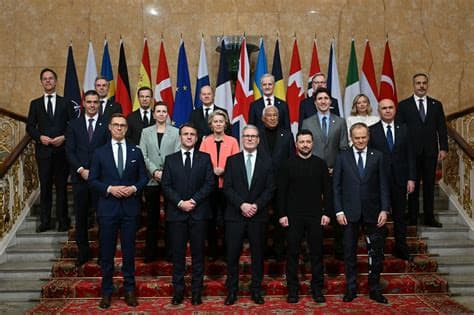
AI Image Disclaimer: The images associated with this report are AI-generated illustrations intended to represent the themes of diplomacy and negotiation, not actual photographs of the individuals or events described.
Sources: Le Monde, Reuters, Al Jazeera
Published by Banx Network. This article is part of the Banx decentralized media programme, powered by the BXE token on the XRP Ledger.