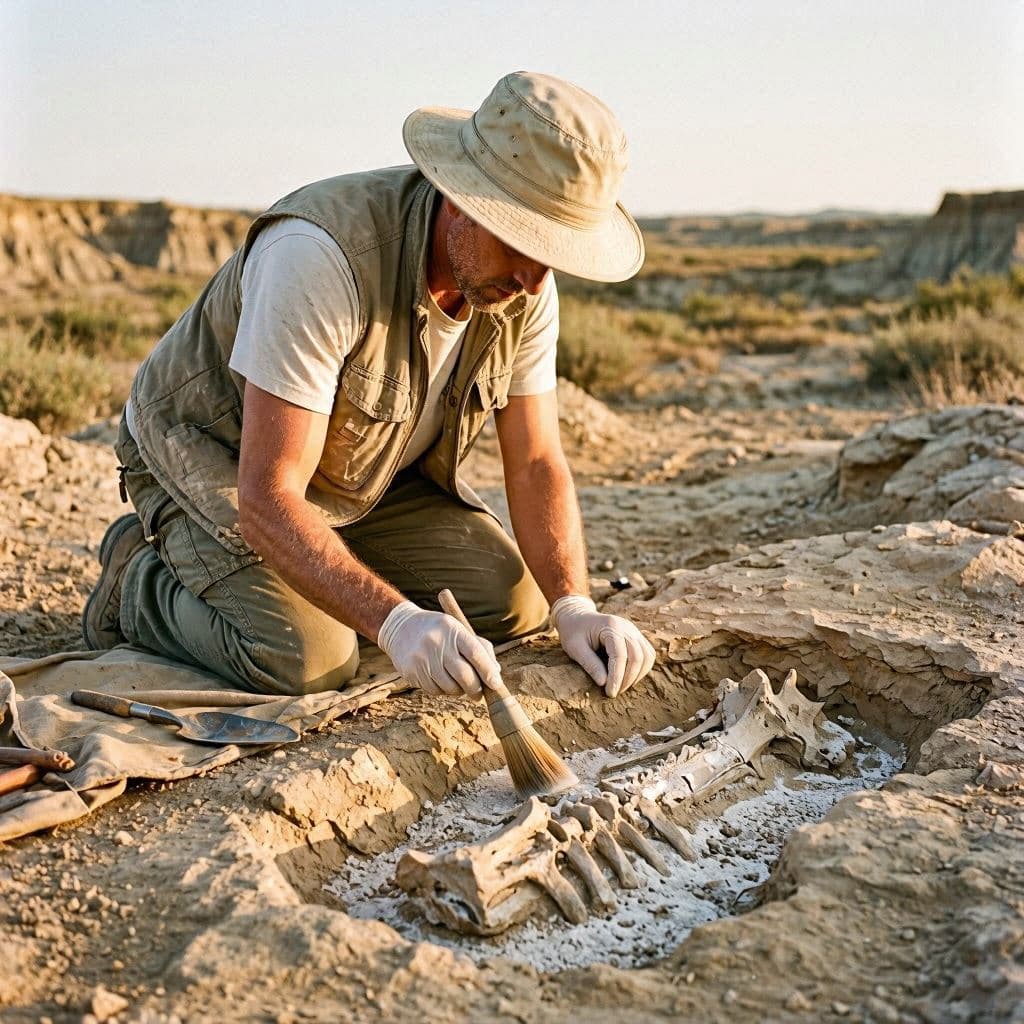
Beneath the arid landscapes of Wyoming, where wind scours the rock and time seems to stand still, lies a repository of ancient history. For paleontologists, these badlands are not just geological formations but pages in a book written millions of years ago. Recent discoveries of fossilized remains in this region are shedding new light on the early evolution of primates, offering a glimpse into the lives of our distant ancestors who once roamed these prehistoric forests.
The fossils, dating back to the Eocene epoch approximately 50 million years ago, belong to small, tree-dwelling mammals that share key characteristics with modern primates. These creatures, no larger than a squirrel, possessed grasping hands and forward-facing eyes, adaptations that allowed them to navigate the complex three-dimensional world of the canopy. Their preservation in the fine-grained sediment of Wyoming’s riverbeds provides an unusually clear window into their anatomy and behavior.
One of the most significant findings is the detailed structure of the inner ear, which reveals information about balance and agility. This suggests that early primates were highly active climbers, relying on speed and precision to escape predators and find food. The evolution of these traits marks a critical divergence from other mammalian lineages, setting the stage for the development of more advanced cognitive and physical abilities.
The discovery also highlights the importance of climate change in driving evolutionary innovation. During the Eocene, the Earth was significantly warmer, with lush subtropical forests extending far north of their current range. As the climate cooled and habitats changed, these early primates had to adapt or face extinction. The fossils serve as a record of this dynamic period, showing how life responds to environmental pressures over millennia.
Researchers are using advanced imaging techniques to study the fossils without damaging them. CT scans allow them to visualize internal structures, such as brain cavities and tooth roots, providing insights into diet and sensory capabilities. This non-invasive approach preserves the integrity of the specimens while maximizing the information gained. It represents a harmonious blend of traditional paleontology and modern technology.
These findings contribute to a broader understanding of primate origins, a topic that has long fascinated scientists and the public alike. By tracing the lineage back to these small, agile creatures, we gain a deeper appreciation for the complexity of our own evolutionary journey. The fossils remind us that we are part of a continuous story, connected to all life that has come before.
The Wyoming fossils offer a tangible link to the deep past, enriching our knowledge of primate evolution. They underscore the value of preserving natural heritage sites and continuing scientific exploration. As more discoveries are made, the picture of our ancestral history becomes clearer, revealing the intricate paths that led to the diversity of life we see today.
AI Image Disclaimer: Visuals associated with this report are AI-generated to capture the paleontological and historical essence of the discovery.
Sources: National Geographic Smithsonian Magazine University of Wyoming
Published by Banx Network. This article is part of the Banx decentralized media programme, powered by the BXE token on the XRP Ledger.