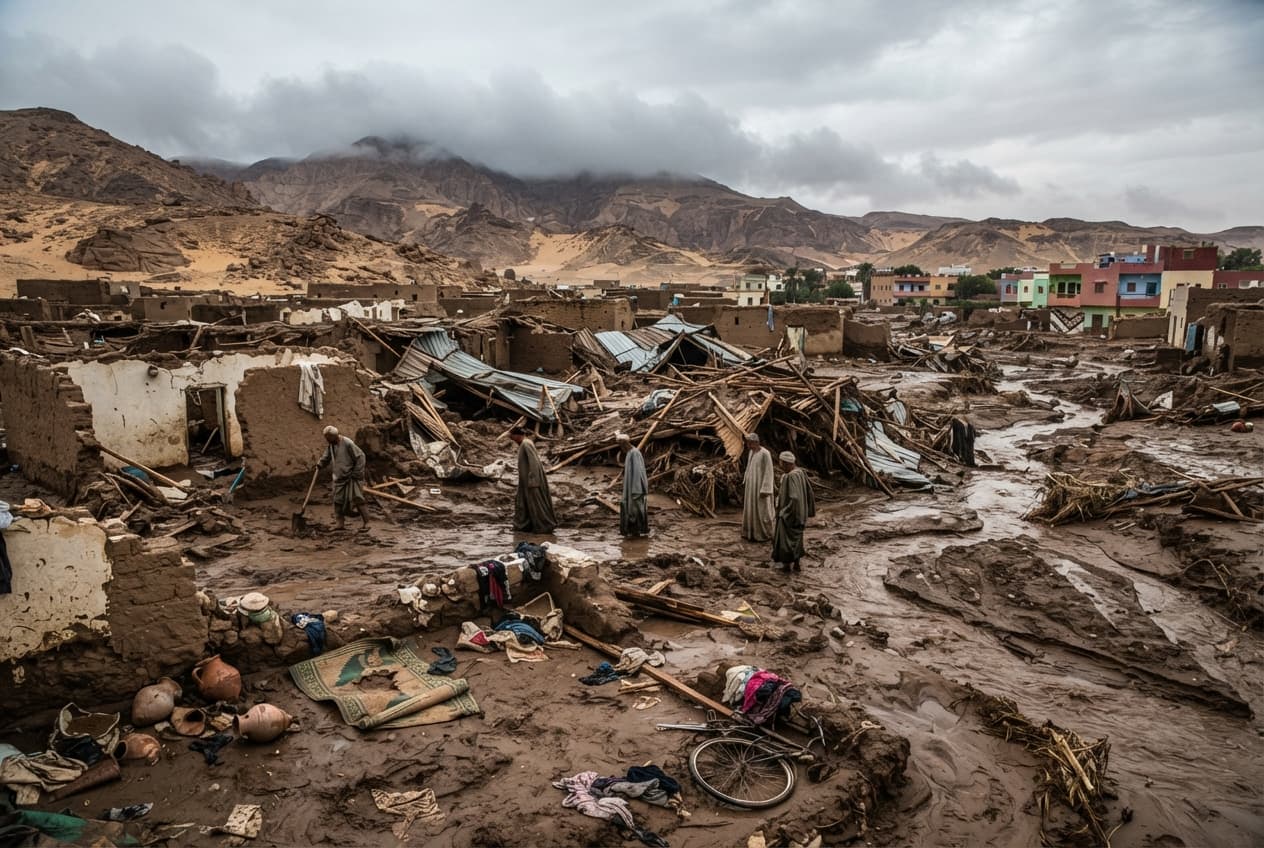
Aswan, Egypt—Sudden and violent flash floods swept across Upper Egypt on Friday, tearing through fragile desert settlements and reducing traditional mud-brick houses to piles of wet rubble. Unseasonal torrential downpours cascaded down eastern mountain ridges, funneling high-velocity water channels directly into vulnerable rural valleys without prior warning. Local health authorities confirmed that four residents perished when structural walls collapsed inward upon them during the pre-dawn deluge. Civil protection teams deployed heavy rescue units into the hardest-hit governorates, navigating choked desert roads covered in thick layers of silt and debris. Survivors salvaged personal belongings from ruined doorways while emergency medical crews established makeshift triage stations nearby.
Electrical distribution networks failed instantly as incoming water submersed local transformers and snapped wooden utility poles across the district. Provincial governors mobilized emergency housing committees to distribute tents and blankets to families displaced by the sudden structural losses. Rural agricultural plots situated along dry wadi beds vanished beneath rushing sheets of brown water and heavy gravel deposits. Local rescue squads used manual shovels to dig through collapsed mud-brick ruins where neighbors reported individuals trapped beneath fallen roofing beams. Meteorological monitors noted that desert topography drastically accelerated runoff speeds, transforming dry gullies into destructive aquatic hazards within minutes.
Relief logistics trucks encountered severe transit delays as main regional highways remained blocked by massive gravel mounds washed down from surrounding cliffs. International humanitarian aid coordinators offered immediate emergency shelter supplies to support local municipal recovery operations. Families gathered on elevated patches of asphalt road, watching helplessly as their livestock pens and grain stores washed away. Public health officials distributed chlorine tablets and bottled water to prevent potential outbreaks of waterborne diseases among displaced rural communities. Regional engineering bureaus dispatched damage assessment teams to evaluate infrastructure vulnerabilities across historical settlement zones.
Rescue operations continued late into the evening under portable floodlights as search teams cleared final pockets of household debris. Provincial administrative bodies announced emergency compensation packages for families who lost their primary shelters and economic livelihoods. Heavy machinery units commenced clearing choked municipal drainage canals to mitigate risks should secondary storm fronts materialize overnight. Emergency command centers maintained active watch protocols as regional weather radar indicated persistent atmospheric moisture across eastern ranges. Local community leaders coordinated grassroots food distributions to sustain hundreds of displaced residents housed in makeshift municipal shelters.
Published by Banx Network. This article is part of the Banx decentralized media programme, powered by the BXE token on the XRP Ledger.