Milan, Italy—A catastrophic multi-vehicle pileup involving more than thirty cars and heavy commercial trucks snarled a major northern Italian freeway early Monday morning, leaving four people dead and dozens injured. Highway patrol officers reported that an impenetrable bank of dense fog descended over the transport corridor just before the morning rush hour, reducing visibility to less than ten meters. The initial collision triggered a domino effect of high-speed rear-end impacts across three westbound lanes, igniting fuel fires that engulfed several passenger vehicles.
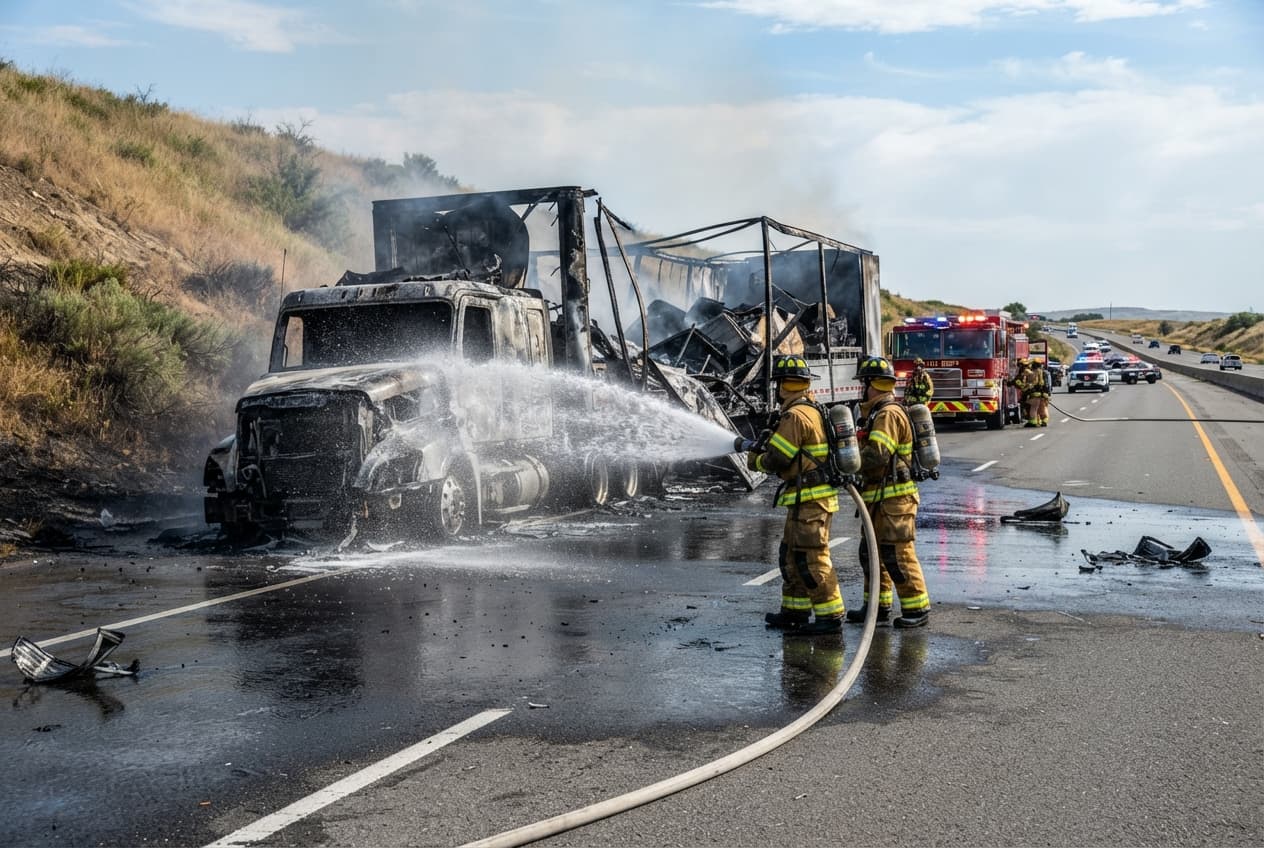
Paramedic units, fire engines, and air ambulances converged on the stretch of motorway within minutes, setting up triage stations on the asphalt shoulders. Firefighters deployed hydraulic cutting tools to extract trapped occupants from crushed cabins while thick black smoke drifted across adjacent agricultural fields. Provincial hospitals activated mass casualty protocols, calling in off-duty surgical teams to handle an influx of patients suffering from severe crush injuries and burns.
"Visibility dropped to absolute zero within seconds, giving drivers no physical distance to brake before striking the wall of stationary vehicles ahead," said a senior traffic police inspector managing the motorway response unit. "Our primary focus shifted immediately from clearing wreckage to suppressing fuel-fed fires threatening trapped passengers."
Traffic control operators managed to reroute incoming long-distance transport onto secondary provincial roads, creating severe gridlock through surrounding industrial towns. Maintenance crews worked under police escort to inspect asphalt integrity and bridge expansion joints damaged by intense vehicular fires. Transport ministry officials announced an immediate audit of fog-warning electronic signboards along the northern transit corridor following driver complaints that advisory warnings activated too late.
Forensic accident investigators deployed laser mapping equipment across the debris field to reconstruct the sequence of impacts and determine individual vehicle speeds prior to impact. Insurance adjusters and logistics coordinators arrived at the scene by afternoon to arrange the removal of heavy commercial trucks blocking the central median. Commuters faced widespread delays as authorities kept the affected section closed for structural safety assessments.
Regional politicians renewed calls for automated speed enforcement and mandatory fog-tracking radar systems following the deadly incident. Transport unions pointed to chronic under-investment in motorway smart-monitoring technology as a contributing factor to the high casualty rate. Investigators secured dashcam footage recovered from surviving truck cabins to verify whether preceding vehicles maintained safe following distances during the sudden visibility drop.
Emergency crews finalized clearance operations just as evening shadows lengthened across the plain, reopening two lanes to relieve stranded commercial traffic. Highway maintenance teams deployed temporary concrete barriers to cordon off structurally compromised guardrail sections pending permanent repairs. Officials promised a comprehensive technical report on the fog formation patterns within forty-eight hours.
Published by Banx Network. This article is part of the Banx decentralized media programme, powered by the BXE token on the XRP Ledger.