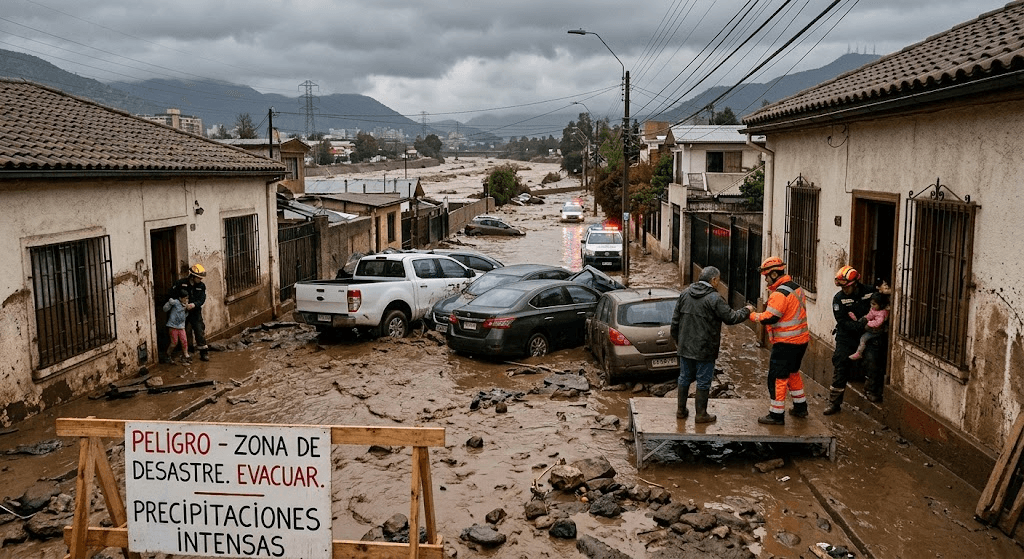
SANTIAGO, Chile — Torrential downpours lashed Chile's capital and surrounding regions, triggering catastrophic flash floods and violent mudslides that turned major roadways into roaring rivers of muddy water. The sudden deluge swept away cars, submerged residential properties, and plunged local communities into chaos.
According to municipal reports and emergency services, the extreme weather hit hard in eastern districts such as Las Condes, where a massive torrent of water, mud, and rocks tore through thoroughfares. Surveillance footage captured terrifying scenes of vehicles being tossed, crushed, and swept downstream into chaotic piles as drivers and pedestrians scrambled to higher ground. The Mapocho River, which cuts through Santiago, breached its banks, exacerbating the flooding and prompting immediate evacuation orders across multiple vulnerable neighborhoods.
Initial reports from local health and rescue agencies indicate that at least six people sustained injuries during the disaster. Several residents trapped inside their flooded homes had to be dramatically airlifted to safety by emergency response teams. Municipal authorities declared states of emergency in hard-hit zones, and schools across the affected districts were ordered to stay closed as crews began assessing the widespread structural damage.
Meteorologists noted that the intense storm system dumped heavy volumes of rain in a compressed timeframe, overwhelming urban drainage systems and destabilizing saturated hillsides. Risk alerts remain active across multiple districts as authorities warn of potential secondary landslides and monitor rising water levels.
Emergency management agencies have urged citizens to avoid non-essential travel and stay clear of swollen riverbanks and flooded roads, noting that fast-moving urban currents pose a lethal hazard to both motorists and pedestrians.
In response to the growing frequency of extreme weather events, local government officials and urban planners have called for comprehensive infrastructure upgrades to better withstand unseasonable rainstorms. As cleanup operations get underway and utility restoration crews work around the clock, community groups are organizing temporary relief shelters and resource distribution points to support displaced families returning to damaged homes.
Published by Banx Network. This article is part of the Banx decentralized media programme, powered by the BXE token on the XRP Ledger.