There are places in the universe where the ordinary rules of matter seem to soften, bending quietly under immense pressure and gravity. These are not places where humans will ever stand or even approach. Yet through telescopes, equations, and patient observation, scientists continue to peer into these distant realms, searching for clues about the universe’s earliest moments.
Among the most mysterious of these cosmic objects are neutron stars—dense remnants left behind when massive stars exhaust their fuel and collapse. Though only about the size of a city, a neutron star can contain more mass than our sun. Within such compact boundaries, gravity presses matter into conditions so extreme that atoms themselves are forced to surrender their familiar structure.
In such extraordinary environments, scientists suspect that matter may transform into something rarely seen since the universe’s first seconds.
Shortly after the Big Bang, the cosmos existed in a searing, energetic state where ordinary particles had not yet settled into the protons and neutrons that form atoms today. Instead, the universe was filled with a fluid-like mixture of fundamental particles known as quarks and gluons. This primordial substance, called quark–gluon plasma, existed only briefly before the cooling universe allowed matter to organize into the particles we recognize.
For decades, physicists have recreated small glimpses of this ancient state inside powerful particle accelerators. But these fleeting laboratory experiments last only fractions of a second.
Neutron stars may offer something very different.
According to recent theoretical studies and astrophysical observations, the crushing pressure deep within some neutron stars could force neutrons themselves to dissolve. When that happens, their internal components—quarks—may no longer remain confined inside individual particles. Instead, they may form a dense sea of freely moving quarks, a state of matter somewhat reminiscent of the early universe’s quark–gluon plasma.
If this picture is correct, the core of certain neutron stars might resemble a pocket of cosmic history—matter behaving as it did when the universe was only moments old.
Proving this idea, however, is not straightforward. No telescope can directly observe the interior of a neutron star. Scientists must instead rely on indirect evidence, interpreting signals carried by gravity, radiation, and the behavior of matter around these objects.
One promising approach involves observing how neutron stars deform, vibrate, or collide. When two neutron stars spiral together and merge, they release gravitational waves—ripples in space-time that travel across the cosmos. By analyzing the subtle patterns in these waves, researchers can infer details about the internal structure of the stars themselves.
If exotic states of matter exist in their cores, those signals may reveal it.
Recent observations from gravitational-wave detectors such as LIGO and Virgo, along with precise measurements from space-based telescopes, have begun offering hints that neutron stars may indeed contain unusual forms of ultra-dense matter. While the evidence is still unfolding, some models increasingly suggest that the transition from ordinary neutron matter to quark matter may occur within the deepest layers of these stellar remnants.
In effect, the universe may be quietly preserving one of its oldest physical states inside these collapsed stars.
For physicists, the implications reach far beyond neutron stars alone. Understanding whether quark matter exists naturally in the cosmos could help refine theories about how matter behaves under extreme conditions, bridging knowledge between particle physics and astrophysics.
It may also help scientists better understand how the universe evolved during its earliest fractions of a second.
For now, researchers continue studying neutron star collisions, gravitational waves, and the physics of dense matter in hopes of confirming the theory. The work moves gradually, guided by observation and careful analysis rather than dramatic revelation.
But if the evidence continues to accumulate, neutron stars may one day be recognized not only as the remnants of dead suns, but also as quiet archives of the universe’s first chapter.
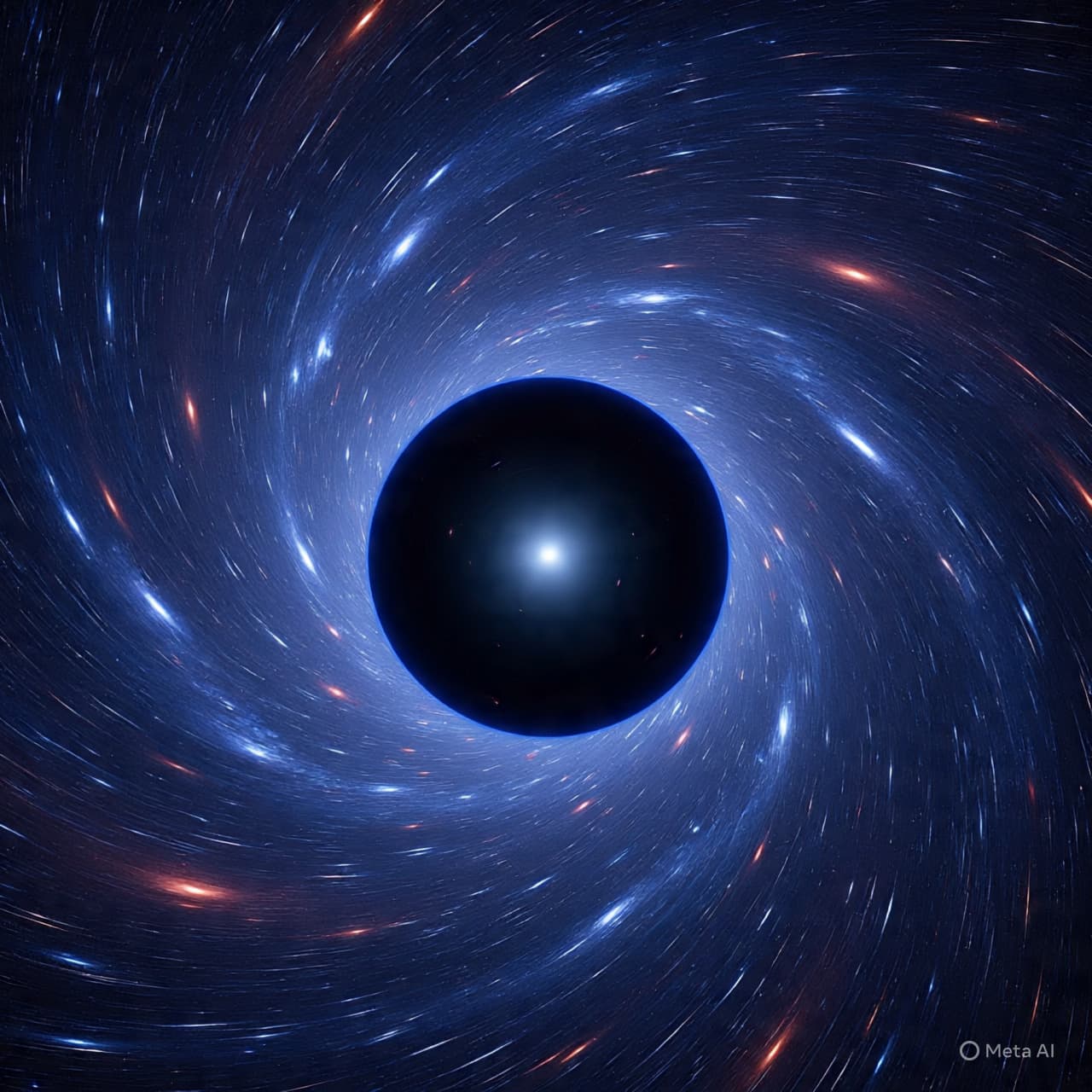
AI Image Disclaimer Graphics are AI-generated and intended for representation, not reality.
Sources Nature Science Scientific American New Scientist Space.com
Published by Banx Network. This article is part of the Banx decentralized media programme, powered by the BXE token on the XRP Ledger.