Planetary atmospheres are often imagined as delicate blankets surrounding distant worlds, yet their origins begin far deeper underground. Beneath mountains, oceans, and tectonic plates, the hidden chemistry of a planet’s mantle quietly shapes the air above it. Recent scientific research suggests that the path toward oxygen-rich atmospheres may depend not only on oxygen itself, but also on the behavior of certain companion elements buried deep within planetary interiors.
Researchers studying planetary formation and geochemistry have proposed that elements capable of bonding with oxygen inside a planet’s mantle may influence whether oxygen eventually accumulates in the atmosphere. These “oxygen’s friends,” as some scientists informally describe them, include compounds and minerals that affect how oxygen is stored, released, or chemically trapped within a planet over geological time.
Earth’s atmosphere did not always contain abundant oxygen. For much of the planet’s early history, oxygen levels remained extremely low despite volcanic activity and changing oceans. It was only after complex interactions between geology, chemistry, and biological activity that oxygen gradually accumulated in significant amounts.
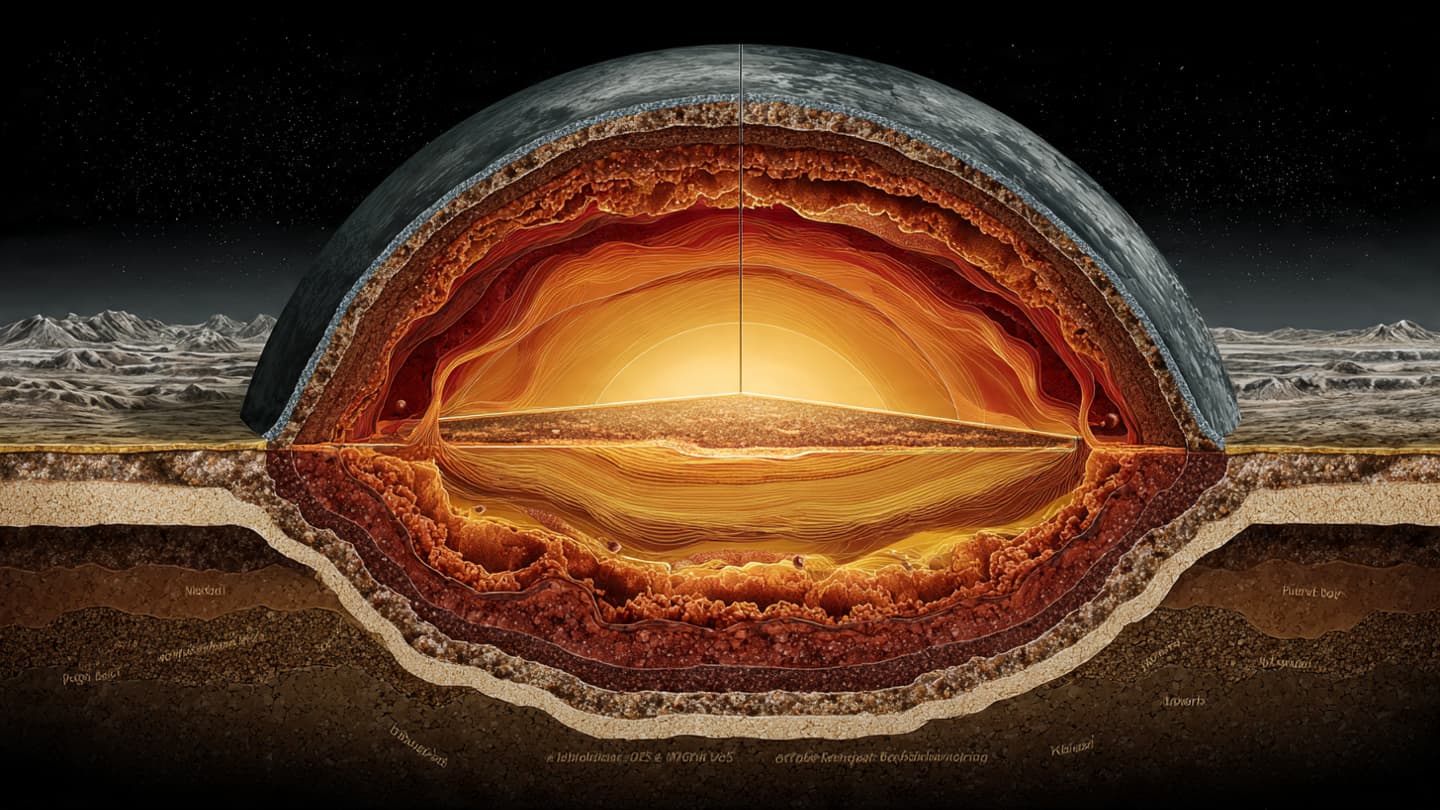
The new research suggests mantle chemistry may play a more important role in this process than previously understood. Certain elements within a planet’s interior can bind with iron and other compounds, reducing the tendency for oxygen to become locked away underground. This may allow more oxygen to remain available for atmospheric buildup over long timescales.
These findings are particularly important for astronomers searching for habitable exoplanets. Oxygen-rich atmospheres are often considered one possible indicator of biological activity, though scientists caution that oxygen alone does not automatically mean life exists. Understanding how planetary interiors influence atmospheres may help researchers better interpret observations of distant worlds.
Modern telescopes increasingly allow scientists to study the atmospheric composition of exoplanets orbiting other stars. As these observations improve, planetary models become essential for distinguishing between atmospheres shaped by geology and those potentially influenced by biology.
The study also reflects the growing connection between Earth science and astronomy. Processes occurring thousands of miles beneath a planet’s surface may ultimately determine whether its skies become breathable, toxic, or entirely barren. In this sense, planetary habitability begins not only in sunlight and oceans, but in deep geological balance.
Scientists involved in the research emphasize that planetary systems are extraordinarily complex. Atmospheres evolve through interactions involving volcanic activity, stellar radiation, oceans, chemical cycles, and sometimes life itself. Mantle chemistry represents one piece of a much larger puzzle researchers continue assembling carefully.
As astronomers search distant skies for planets resembling Earth, studies like these remind researchers that even the air surrounding a world may owe its existence to quiet reactions hidden far below the surface.
AI Image Disclaimer: Some illustrations accompanying this report were generated using AI to visualize planetary geological processes.
Sources: Nature Geoscience NASA Scientific American New Scientist Astrobiology Journal
Published by Banx Network. This article is part of the Banx decentralized media programme, powered by the BXE token on the XRP Ledger.