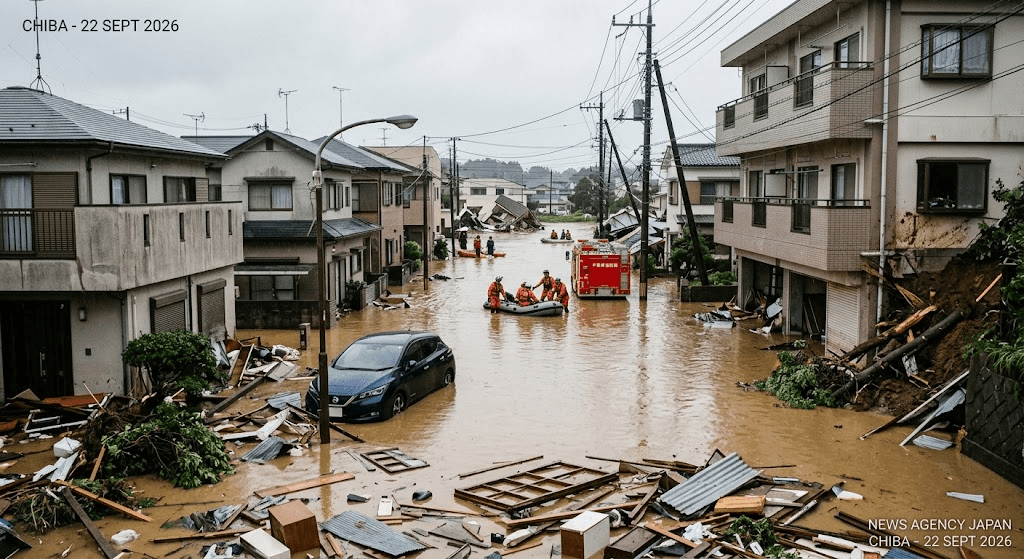
TOKYO, Japan — At least four people have been confirmed dead and several others remain missing after powerful Typhoon Dujuan battered eastern Japan, unleashing record-breaking rainfall, triggering catastrophic landslides, and causing widespread structural destruction across the Kanto region and surrounding island chains. Moving along the eastern Pacific coast with violent gusts reaching up to 198 km/h, the severe storm forced over 1.6 million residents to evacuate and left dozens of communities paralyzed.
Search and rescue operations were launched across Kanagawa and Chiba prefectures early on Tuesday morning following reports of residential collapses and mudslides burying homes. Emergency response teams and military personnel continue to navigate mud-strewn streets and overflowing rivers to reach trapped civilians.
The heavy downpours dumped unprecedented volumes of rain, with Oshima Island recording more than 832 mm over 48 hours—more than double its monthly September average. This torrential deluge saturated hillsides and triggered deadly landslides across eastern prefectures, where local emergency services confirmed four deaths, including a woman in her 60s killed when mud slammed into her home in Yokosuka, Kanagawa Prefecture, a worker in Sodegaura, Chiba, who was engulfed while attempting to clear debris, and two additional victims recovered from collapsed structures in Chiba Prefecture.
Meanwhile, at least six individuals remain unaccounted for as fire rescue crews and tactical police search through submerged neighborhoods and earth flows, while over 45,000 households across Chiba remain without electricity due to downed power lines and damaged utility infrastructure.
The severe weather forced widespread transit halts during a busy travel period. Japan Airlines and All Nippon Airways canceled over 270 domestic and international flights, primarily operating through Tokyo’s Haneda Airport, stranding roughly 40,000 passengers. Additionally, several local rail lines and regional expressways were closed due to standing floodwaters and low-lying underpass inundations.
Although Typhoon Dujuan began moving away into the Pacific on Tuesday morning, the Japan Meteorological Agency cautioned that the risk of secondary landslides and river overflowing remains elevated due to saturated soil levels across eastern Japan. Recovery crews continue work to restore basic power grid connections and clear vital transportation arteries.
Published by Banx Network. This article is part of the Banx decentralized media programme, powered by the BXE token on the XRP Ledger.