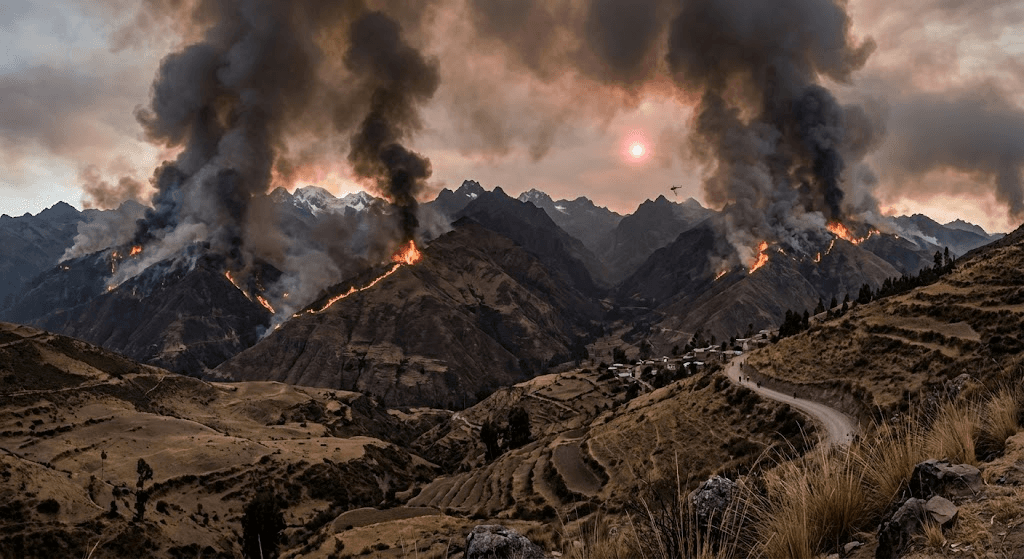
LIMA — Raging forest fires fueled by high temperatures, severe drought, and strong gusty winds have claimed at least 12 lives and left hundreds injured across Peru. Authorities reported that the rapid spread of the blazes has severely impacted rural communities, destroying thousands of hectares of crops and natural vegetation.
The National Emergency Operations Center (COEN) and Civil Defense officials confirmed casualties spread across multiple highland regions, including Cusco, Cajamarca, Apurímac, Pasco, and Puno. Most of the deceased were local farmers and residents who attempted to battle the encroaching flames to protect their homes and livestock.
Environmental experts attribute the extreme fire conditions to a massive heat dome and prolonged dry spells linked to regional weather phenomena. The dry, brittle vegetation has allowed localized brush fires to escalate quickly into uncontrollable blazes, overwhelming local response capacity in remote Andean valleys.
Firefighters, military personnel, and volunteer rescue teams have been deployed to contain dozens of active fire fronts. In regions like Cusco and Junín, heavy smoke and difficult mountain terrain have complicated firefighting operations and air support efforts.
Beyond the loss of life, hundreds of households have been displaced or left homeless as entire agricultural plots and structures were consumed. Emergency services continue to distribute medical supplies, burn treatments, and relief aid to affected communities while urging residents to avoid agricultural burning practices during peak heat hours.
In response to the escalating crisis, the Peruvian government has evaluated declaring states of emergency in the worst-hit provinces to fast-track financial resources and mobilizes additional heavy machinery and specialized personnel. National authorities have coordinated closely with regional governors to streamline logistical support, ensuring that emergency relief funds and vital supplies reach isolated Andean communities cut off by heavy smoke and rugged terrain.
As meteorological agencies forecast continued dry conditions across the highlands, officials emphasize the urgent need for long-term climate resilience and stricter enforcement against illegal agricultural burning. Experts warn that rebuilding livelihoods for displaced families and restoring charred ecosystems will require sustained national and international cooperation to mitigate future ecological disasters.
Published by Banx Network. This article is part of the Banx decentralized media programme, powered by the BXE token on the XRP Ledger.