
Key Highlights
- Location:Idukki, India, where a deadly mudslide occurred.
- Impact:Homes buried and rescue operations initiated amid heavy rainfall.
- Response:Local and national agencies mobilized for rescue and relief efforts.
Idukki, India—A devastating mudslide struck the Adoormala area of Idukki, burying homes under tons of wet soil and debris. The incident occurred during a period of heavy monsoon rains, which have been relentless in the region. Eyewitnesses described the terrifying moment when the ridge fractured, unleashing a torrent of mud and boulders that obliterated residential structures in seconds. Families inside had little time to react as the earth swallowed their homes in total darkness.
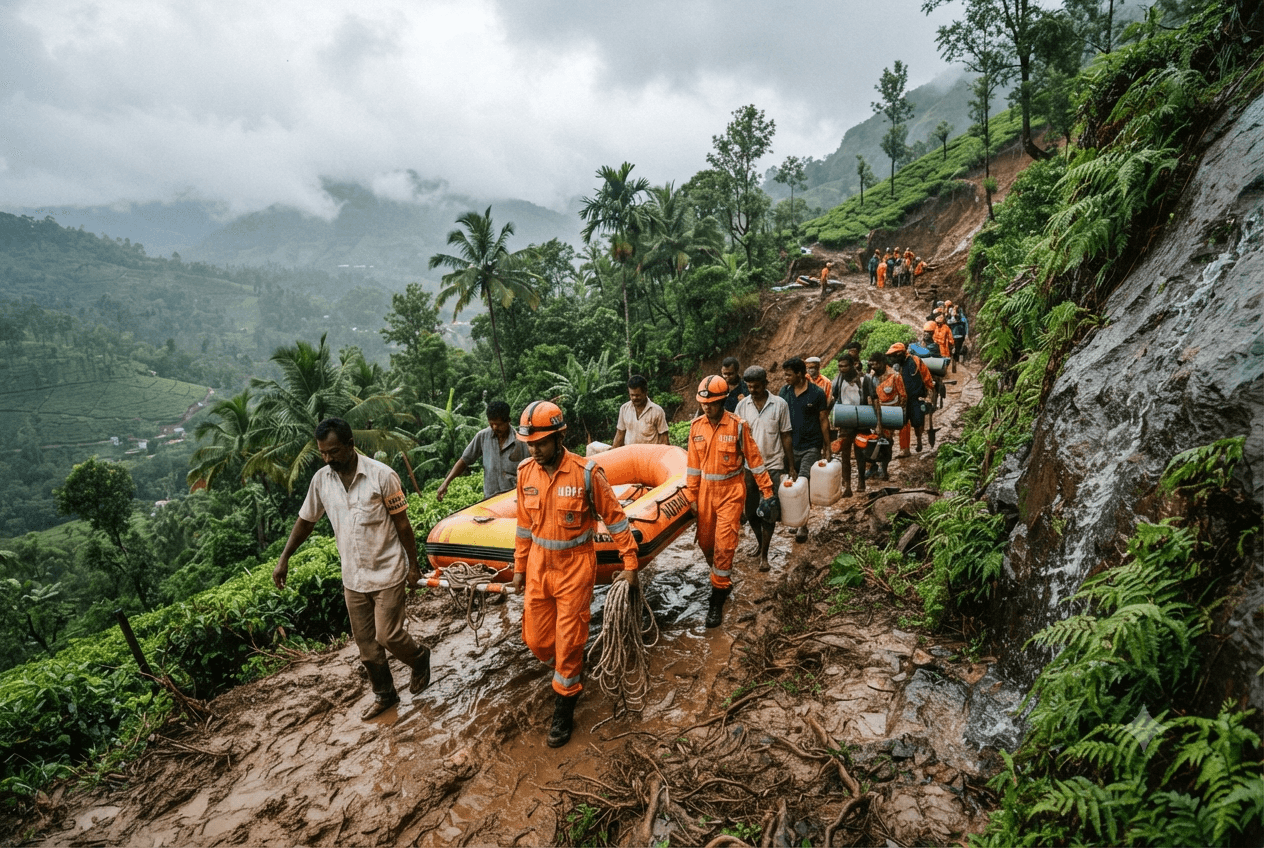
District officials confirmed that rescue operations commenced immediately, despite the treacherous weather conditions hampering efforts. Personnel from the National Disaster Response Force (NDRF) and local police were deployed to comb through the thick debris fields, searching for survivors. Those who were rescued recounted harrowing experiences, detailing how they narrowly escaped the disaster as their homes were engulfed.
Heavy excavators were brought in to navigate the narrow mountain tracks, assisting in the removal of massive tree trunks and granite boulders that blocked access routes. Communication lines were severed across the affected zone, forcing rescue teams to rely on satellite radios for coordination. Medical triage tents were established near the perimeter to treat injured survivors retrieved from the slide path, highlighting the urgent need for medical assistance in the aftermath of the disaster.
Local residents played a crucial role in the rescue efforts, organizing bucket brigades to assist professional responders working in the pouring rain. Authorities issued warnings that adjacent hillsides remain highly unstable due to ongoing precipitation and shifting subterranean water tables, prompting further evacuations for settlements situated directly beneath steep slopes. The situation remains precarious, with the risk of additional landslides looming.
Transport networks throughout the high ranges came to a complete standstill following multiple smaller debris flows. State transport buses were abandoned along roads blocked by fallen trees and fractured earth, complicating the logistics of rescue and relief operations. Road maintenance crews faced challenges as they labored with hand tools in areas where mechanical excavators could not fit, underscoring the severity of the situation.
In response to the disaster, the district administration established relief camps in nearby townships to house families displaced by the mudslide. Counselors were dispatched to assist relatives anxiously awaiting updates from the active excavation sites. Food and clean water distribution began under tight logistical constraints, as the community rallied to support those affected by the tragedy.
Search protocols will continue through the night, utilizing portable illumination towers brought in by utility trucks to ensure visibility in the dark. Officials maintain a strict perimeter around the unstable zone to protect auxiliary rescue workers, emphasizing the need for caution as they navigate the aftermath of this catastrophic event.
Published by Banx Network. This article is part of the Banx decentralized media programme, powered by the BXE token on the XRP Ledger.



