
Key Highlights
- Incident:A mining transport bus skidded off a mountain road in Chile, resulting in four fatalities.
- Rescue Efforts:Emergency teams recovered the bodies and provided aid to survivors suffering from hypothermia.
- Investigation:A formal safety inquiry has been launched into the circumstances surrounding the crash.
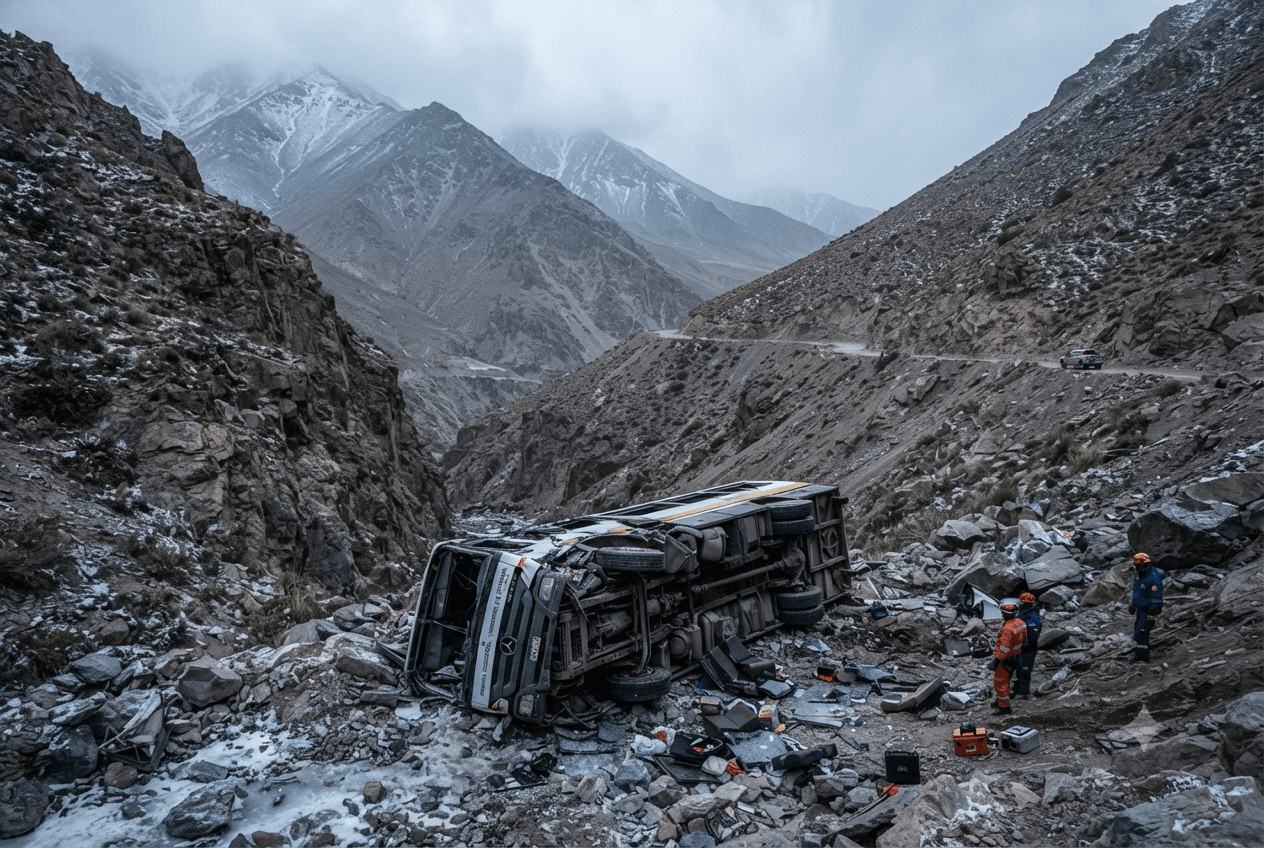
Antofagasta, Chile—On Monday morning, rescue teams recovered four bodies from a steep ravine after a mining transport bus skidded off an icy high-altitude mountain road. The vehicle, which was carrying shift workers to a regional copper extraction facility, lost traction on a patch of black ice while navigating a treacherous freezing pass in the Atacama desert foothills. The bus veered across the unpaved shoulder and plunged down a rocky slope, ultimately coming to rest upside down. Emergency dispatchers received automatic distress signals from the vehicle's onboard telemetry system, prompting a swift response from rescue teams.
Mining company rescue squads, along with regional fire department units, mobilized specialized high-angle extraction gear to reach the crash site. Rescuers rappelled down the freezing cliff face to access the crushed passenger cabin and extract trapped workers. Paramedics established a triage perimeter near the road ledge, administering emergency aid to surviving miners suffering from severe hypothermia and trauma. Ambulances transported the wounded down the mountain pass to regional medical centers under police escort, highlighting the urgency of the situation.
In the wake of the tragedy, mining union representatives criticized management for dispatching transport vehicles before winter road salting and maintenance operations were completed. They argued that the safety of workers should have been prioritized, especially given the extreme weather conditions. In response, regional labor inspectors opened a formal safety inquiry into operating protocols during high-altitude weather events, aiming to prevent similar incidents in the future.
Corporate executives expressed deep condolences to the families of the victims and pledged full cooperation with the ongoing judicial accident investigation. Forensic teams transferred the recovered remains to the municipal morgue for formal identification, ensuring that the victims' families would receive closure.
As recovery operations continued, the mountain highway remained restricted to heavy-duty four-wheel-drive vehicles equipped with snow chains. Heavy tow trucks were deployed to hoist the bus chassis from the ravine as afternoon temperatures hovered near freezing. Government transport ministers announced mandatory winter tire compliance audits across all northern mining transit routes, emphasizing the need for stricter safety measures in light of this tragic event.
Investigators are examining vehicle tachograph data and meteorological logs to determine the exact speed and road friction coefficients at the time of the skid. This analysis will be crucial in understanding the factors that contributed to the accident and ensuring accountability moving forward.
Published by Banx Network. This article is part of the Banx decentralized media programme, powered by the BXE token on the XRP Ledger.



