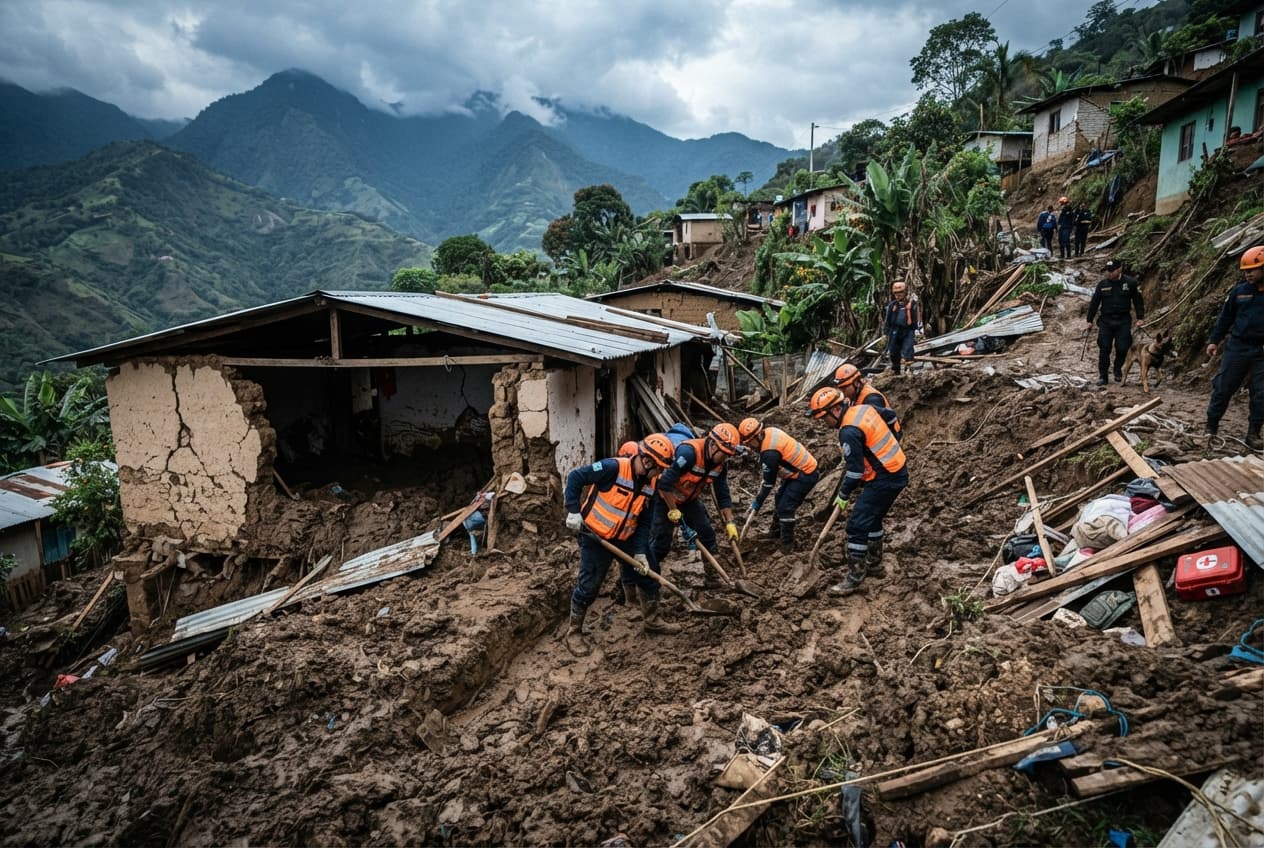
Guatemala City, Guatemala—Heavy seasonal rains triggered a series of deadly mudslides across mountainous regions of Guatemala on September 28, 2026, leaving four villagers dead and burying multiple residential structures beneath tons of wet earth. Unrelenting downpours over consecutive days destabilized steep hillside slopes, causing sudden earth movements that caught sleeping families unaware during the early morning hours. National coordinator for disaster reduction officials confirmed that rescue personnel are utilizing hand tools and canine units to search through unstable debris.
In rural Alta Verapaz, a massive wall of mud detached from a saturated ridge line, obliterating two adobe homes and blocking a vital local transit route. Local volunteer firefighters recovered four bodies from the wreckage before secondary slope movements forced a temporary suspension of excavation work. Community leader Esteban Morales noted that continuous rainfall makes operating heavy machinery in the steep ravine extremely hazardous for rescue squads.
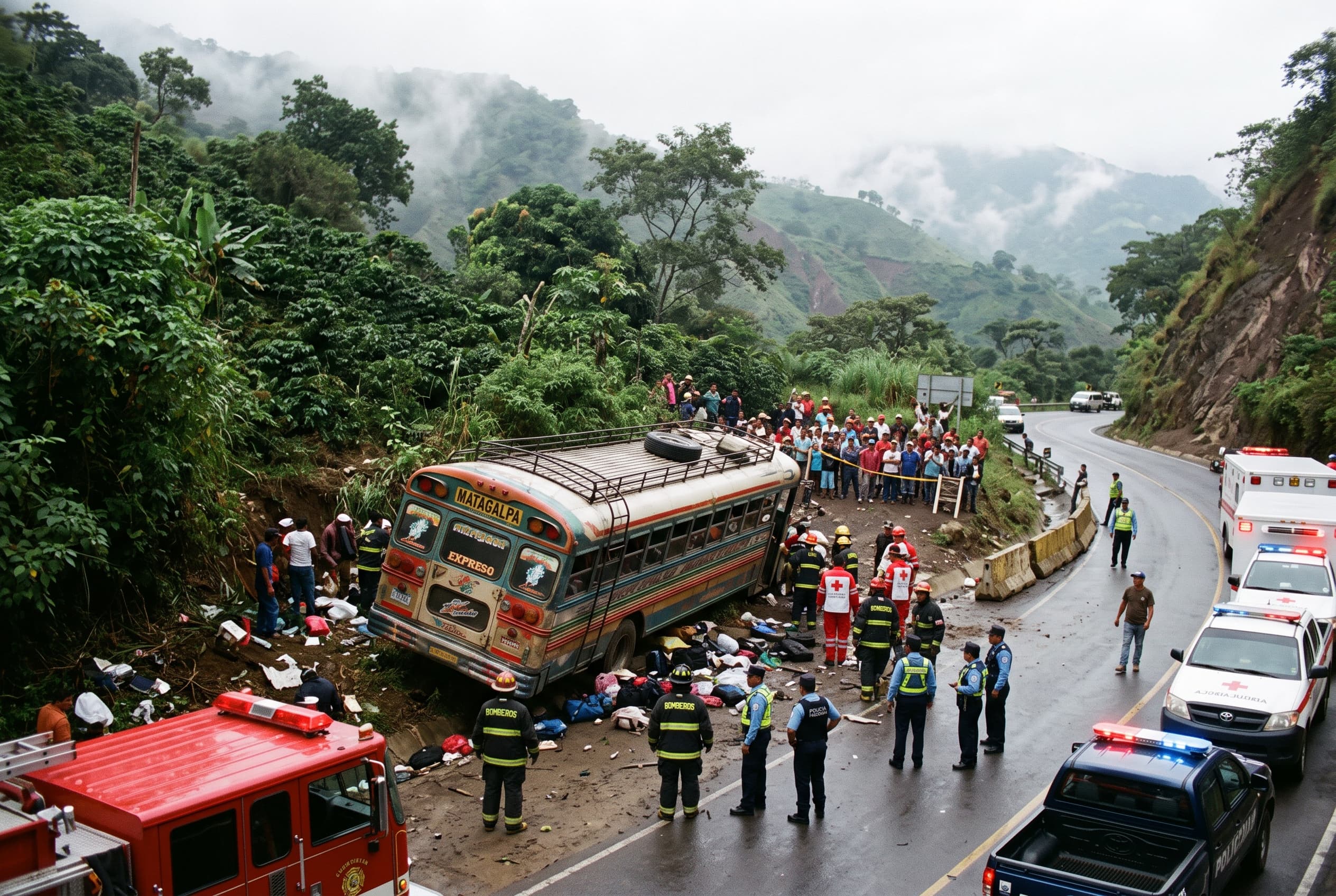
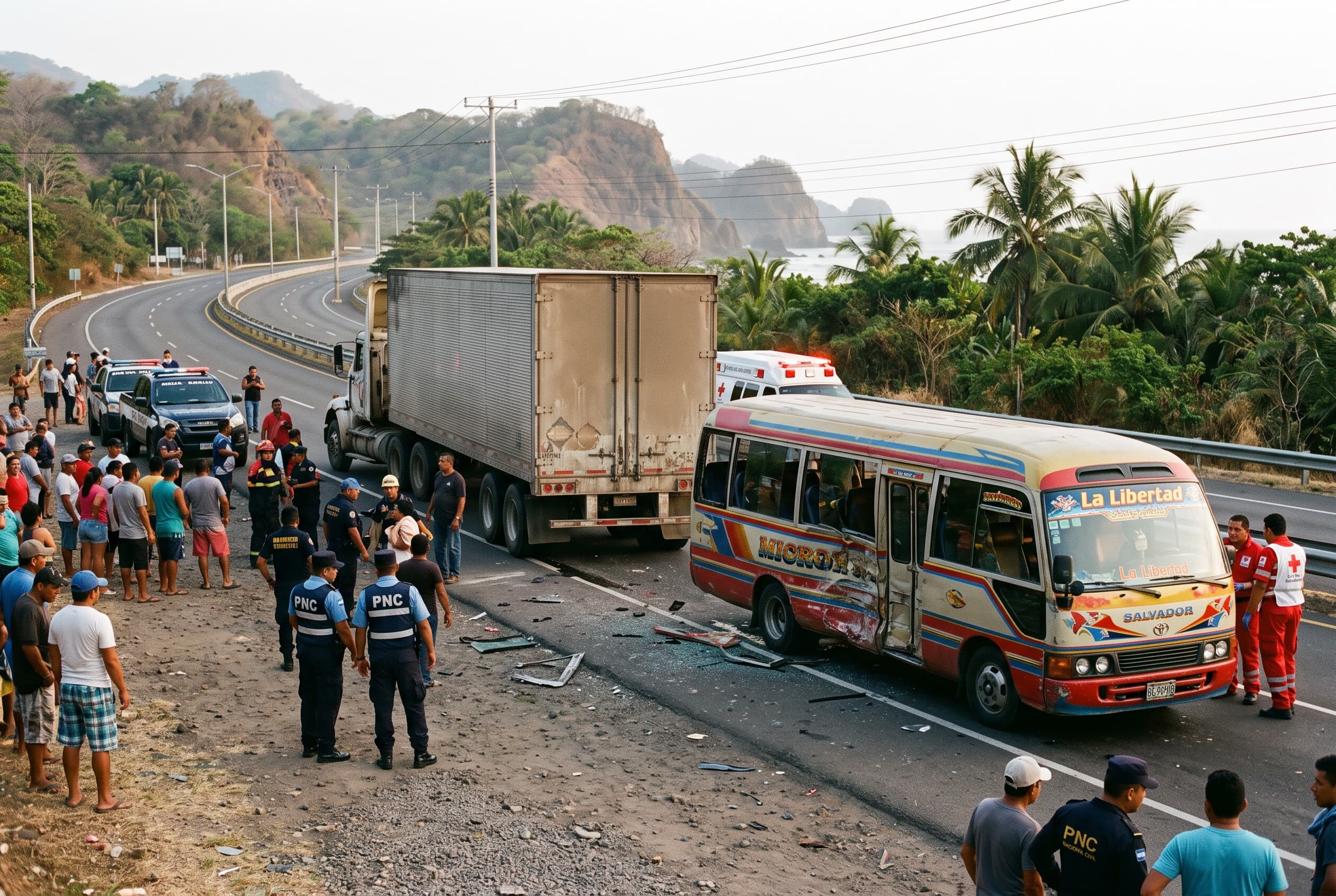
Transportation networks across the northern highlands remain severely fractured after numerous landslides covered asphalt roadways with thick layers of rock and clay. Intercity bus transit and commercial cargo shipments ground to a complete halt, stranding travelers and perishable produce trucks. Ministry of Communications work crews deployed front-end loaders to clear priority transit lanes connecting regional market towns.
Emergency shelters established inside municipal school buildings accommodated dozens of families evacuated from high-risk hillside sectors. Civil protection workers distributed wool blankets, dry clothing, and packaged food rations to shivering evacuees sheltered in crowded classrooms. Public health nurses administered tetanus shots and distributed water purification tablets to prevent potential hygiene outbreaks.
Agricultural plots situated along steep mountain terraces suffered widespread destruction as sliding earth scoured topsoil down into swollen river channels. Local farming families lost their entire corn and bean harvests ahead of the autumn collection cycle, compounding rural economic distress. Agrarian extension officers warned of high risks for secondary food insecurity across isolated highland settlements.
Meteorological radar tracking indicates that moisture plumes originating from both the Pacific and Caribbean basins will sustain heavy precipitation across the country. Soil saturation indices remain at maximum capacity, leaving virtually all upland communities vulnerable to sudden slope failures. Regional authorities maintained red alert warnings for twelve departments experiencing severe weather impacts.
Power transmission lines in rural districts experienced widespread failures following utility pole collapses and falling tree branches. Emergency hospital facilities in regional centers switched to backup diesel generators to maintain continuous surgical operations. Fuel supplies for these generators remain constrained due to blocked road connections into provincial hubs.
Search and rescue operations continue under difficult weather conditions as night falls over the mountainous disaster zone. Command coordinators evaluate aerial reconnaissance reports to identify newly formed landslide scars threatening downstream settlements. Relief logistics teams prepare for extended operations focused on sheltering displaced populations and restoring basic access.
Published by Banx Network. This article is part of the Banx decentralized media programme, powered by the BXE token on the XRP Ledger.