
Key Highlights
- Eight fatalities confirmed after a head-on collision between a truck and a minibus.
- Emergency services responded quickly, treating survivors at the scene.
- Investigators cite driver fatigue and unsafe passing as contributing factors.
Lima, Peru—Emergency medical services confirmed eight fatalities on Monday morning following a catastrophic head-on collision between a heavy freight truck and a passenger minibus. The high-speed impact occurred along a desolate stretch of the coastal highway during early morning transit hours. Both vehicles sustained extensive front-end damage, crushing the passenger compartment of the smaller transport completely. Debris scattered across both asphalt lanes, halting all commercial traffic.
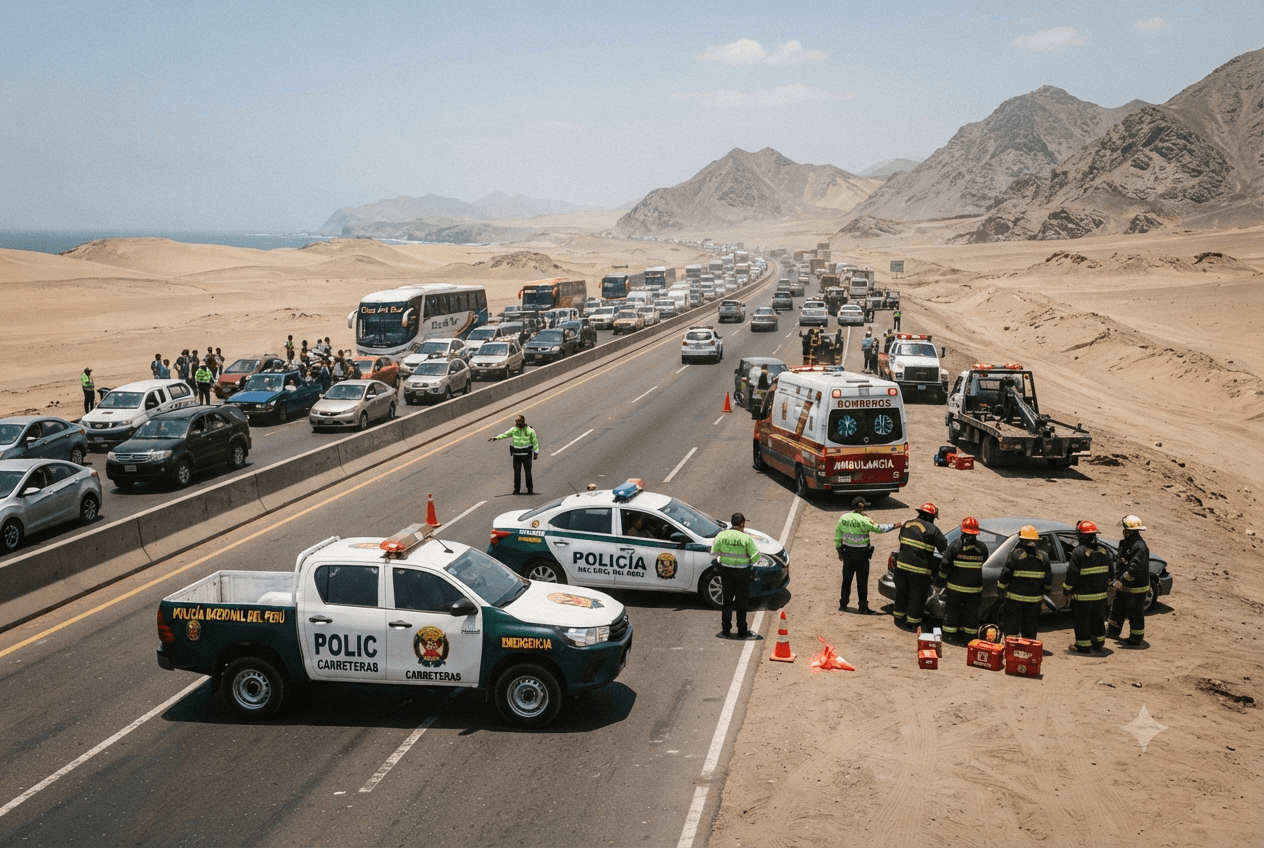
Highway patrol officers and volunteer firefighters arrived at the crash scene within minutes of the emergency call. Rescue workers used heavy hydraulic spreaders to pry open the mangled metal doors of the minibus. Paramedics established a triage perimeter on the road shoulder to treat surviving passengers with severe traumatic injuries. Ambulances transferred the wounded to regional hospitals under police escort, highlighting the urgency of the situation.
Preliminary investigations by transport inspectors noted that driver fatigue and unsafe passing maneuvers contributed to the catastrophic impact. The freight truck crossed into the opposing lane while attempting to overtake a slower cargo carrier. Investigators examined extensive skid marks burned into the asphalt surface over a fifty-meter stretch, providing crucial evidence of the truck's speed and control prior to the collision. Local transportation unions renewed demands for mandatory dual-lane physical barriers along the national highway corridor to prevent similar tragedies in the future.
Public prosecutors cordoned off the crash zone to allow forensic teams to document vehicle positions and collect digital evidence. Tow trucks arrived by midday to hoist the wreckage off the asphalt and restore partial traffic flow. Stranded motorists formed massive queues stretching for miles in both directions under the desert sun. Highway authorities implemented alternating lane bypasses to alleviate the severe congestion, demonstrating the logistical challenges faced in the aftermath of the crash.
Regional medical examiners initiated formal identification procedures for the victims at the municipal forensic center. Distraught relatives gathered outside the morgue demanding immediate release of the remains. Local government representatives promised financial assistance to cover funeral expenses for the families of the deceased, reflecting the community's commitment to support those affected by the tragedy. Transport ministry officials scheduled an urgent safety review session for commercial freight operators to address the systemic issues highlighted by this incident.
Commercial freight associations defended their drivers while acknowledging the extreme pressures of meeting strict delivery schedules. Independent road safety advocates criticized the lack of automated speed enforcement cameras along the coastal desert route, calling for immediate reforms to enhance safety measures. Police patrols intensified radar checkpoints to curb excessive speeding among heavy transport vehicles, indicating a proactive approach to prevent future accidents. Investigators continued interviewing surviving passengers recovering in intensive care units, seeking to gather more insights into the events leading up to the crash.
National police commanders announced an expanded highway safety campaign targeting aggressive driving and uninspected transport vehicles. Maintenance crews repaired damaged guardrails and cleared shattered glass from the roadway shoulders, emphasizing the need for immediate infrastructure improvements. Transport ministry directors highlighted that systemic infrastructure upgrades remain underfunded in the national budget, raising concerns about long-term safety on the highways. The investigation into criminal negligence remains active under the supervision of local prosecutors, ensuring accountability for the tragic loss of life.
Evening traffic slowly normalized as highway crews completed final cleanup operations along the asphalt corridor. Police checkpoints remained active to monitor vehicle speeds as night descended over the desert landscape. Transport ministry officials pledged to release preliminary accident reconstruction findings within the week, providing transparency to the public. Relatives of the victims prepared for memorial services across their home provinces, marking a somber moment for the community as they mourn the loss of their loved ones.
Published by Banx Network. This article is part of the Banx decentralized media programme, powered by the BXE token on the XRP Ledger.



