Seville, Spain—Record-breaking cloudbursts triggered violent flash flooding across southern municipal districts at 04:00 CEST Sunday, generating rapid torrents that swept away dozens of vehicles and left four motorists dead. Dry ravine beds transformed into roaring mud rivers within minutes, overflowing bank perimeters and pouring onto regional highways. Emergency dispatchers logged hundreds of desperate calls from drivers trapped inside vehicles being carried away by surging floodwaters.
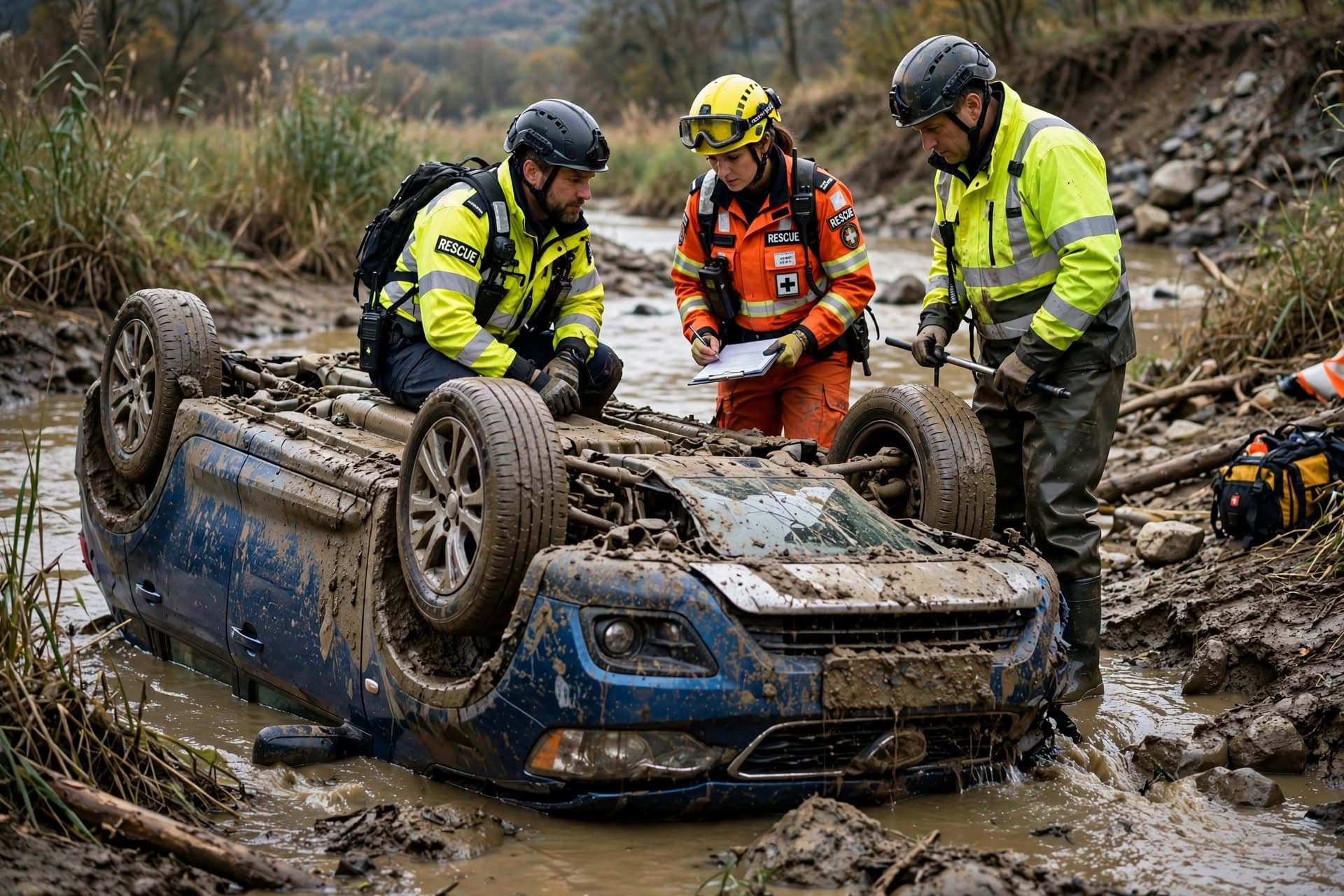
Civil protection teams and military emergency units deployed helicopter crews and high-clearance rescue trucks to extract survivors clinging to bridge railings and submerged car roofs. Emergency divers located three victims trapped inside crushed vehicles deposited in a ravine two miles downstream from a main highway junction. Search teams recovered a fourth body near a flooded agricultural bypass road late Sunday morning.
The sudden floodwaters caused extensive structural damage across several towns, piling overturned automobiles against building facades and destroying bridge supports. Main rail lines connecting regional capitals were suspended after mudslides covered track beds and washed away signaling infrastructure. Municipal power grids failed across five districts as floodwaters submerged electrical sub-stations, leaving tens of thousands without electricity.
Local business owners spent the morning pushing thick brown mud out of ground-floor shopfronts while assessing heavy inventory losses. Agricultural producers reported severe crop damage across citrus groves and vegetable fields submerged under standing floodwaters. Emergency crews operated heavy bulldozers to clear piles of debris, mud, and wrecked vehicles blocking primary access roads for emergency vehicles. Andalusia Regional Emergency Services Coordinator Carmen Lomas briefed media representatives at a command post in Seville late Sunday afternoon. "We experienced an extraordinary volume of localized rainfall that overwhelmed all natural drainage channels within minutes," Lomas stated. "Our search and rescue units are continuing technical sweeps of all affected riverbeds to ensure no additional vehicles remain unaccounted for."
Community leaders expressed deep frustration over municipal warning systems, noting that cell phone emergency alerts were issued after floodwaters had already inundated highway corridors. Infrastructure experts called for urgent upgrades to regional storm drainage networks to handle increasingly violent weather events. Regional government leaders promised immediate financial assistance packages for affected municipalities and families.
Coroner vehicles transferred the remains of the four victims to the regional legal medicine institute for formal identification procedures. Heavy cranes lifted crushed vehicles out of muddy river channels, allowing forensic teams to verify no passengers remained trapped inside. National weather agencies maintained yellow and orange alert levels across neighboring eastern provinces as the storm system moved slowly along the coast. Emergency service personnel maintained active search grids along riverbanks into Sunday evening using thermal imaging drones and search dogs. Highway maintenance teams worked around the clock to repair eroded road shoulders and clear mud deposits before reopening lanes to traffic. The regional emergency lockdown remains active as weather radar tracks secondary rain bands moving across the territory.
Published by Banx Network. This article is part of the Banx decentralized media programme, powered by the BXE token on the XRP Ledger.