
Key Highlights
- Date of Attack:July 9, 2026, marked by a series of airstrikes.
- Casualties:Multiple civilian deaths reported, with many trapped under rubble.
- Humanitarian Crisis:Access to aid severely restricted in affected areas.
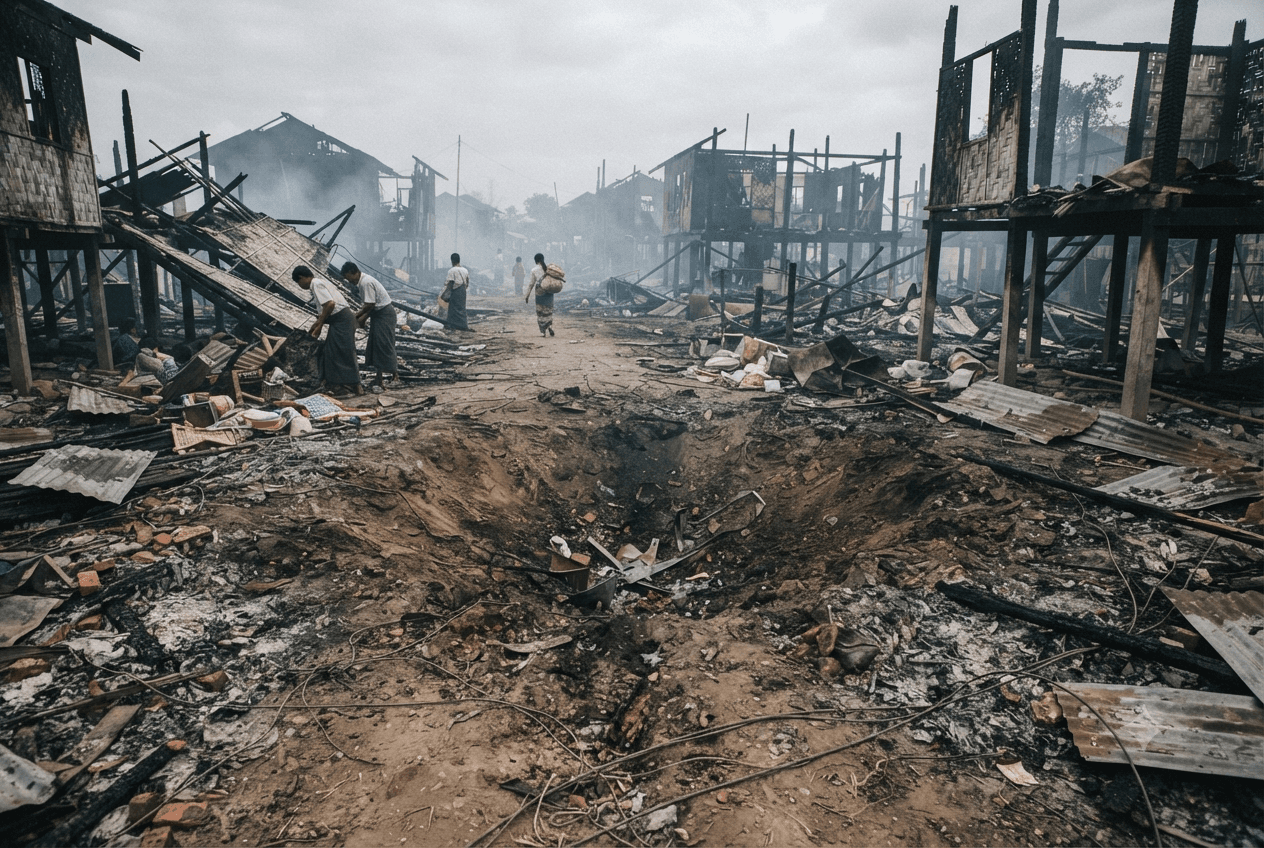
Rakhine State, Myanmar—On July 9, 2026, military jets launched a series of lethal airstrikes across northern Rakhine State, targeting multiple villages in a coordinated offensive. While the strikes were aimed at areas controlled by ethnic armed groups, they indiscriminately hit civilian-populated zones, leading to significant casualties. Local monitors report that several civilians have died, with many more trapped under the rubble of collapsed homes. The precision of these strikes appears to be aimed at destroying local infrastructure as much as targeting combatants.
The regional capital remains largely inaccessible to humanitarian aid groups following this escalation. Residents describe a terrifying atmosphere where the sound of engines precedes the sudden impact of ordnance. Many families were caught completely off guard as the jets made multiple passes over the valley. The scorched remains of several homes are still smoldering as rescuers attempt to search for survivors, highlighting the urgent need for assistance in the area.
The junta has intensified its air campaign as it continues to lose ground in land-based skirmishes. Unable to retake territory through infantry maneuvers, the military has shifted to an air-power-dependent doctrine. This strategy frequently ignores the distinction between military installations and civilian homes, leading to widespread destruction. Local leaders are documenting the impact sites as proof of the intentional targeting of non-military areas, which raises serious ethical concerns about the conduct of the military.
The wounded have been moved to makeshift field clinics, though these facilities are rapidly running out of basic anesthetic and antibiotics. Many victims are children who were inside their homes when the strikes occurred. The regional medical board has issued a desperate call for any assistance that can navigate the military-enforced blockades, but no response has been received from government offices. This lack of support exacerbates the humanitarian crisis unfolding in the region.
The destruction of these specific villages has effectively cut off the remaining residents from the rest of the state. Vital roads have been cratered by the blasts, and telecommunications towers were hit in a secondary wave of attacks. The psychological impact on the surviving population is profound, with many now refusing to leave their homes even as the threat of further strikes looms. The fear of additional airstrikes has created a climate of terror, forcing families to seek refuge in makeshift shelters.
International human rights observers have condemned the use of indiscriminate air power in densely populated zones. However, there has been no tangible move to stop the bombardment. The junta maintains that all airstrikes are precise and directed at military targets, yet evidence from the ground contradicts these claims, showing large-scale damage to schools and marketplaces. This discrepancy raises questions about the military's accountability and the international community's response to such violations.
This latest round of strikes fits into a broader pattern of military aggression aimed at curbing the influence of ethnic armed groups. By destroying the economic and social fabric of the state, the military hopes to break the resolve of the local population. However, this strategy appears to have done little to diminish resistance, instead fostering a deeper sense of resentment among the affected communities. The military remains committed to its air-heavy approach despite international pressure, with no indication that the commander in charge intends to scale back the frequency of sorties. The situation on the ground remains trapped in a cycle of fire and reconstruction, leaving villagers to hide in makeshift tunnels, waiting for the sound of engines to pass.
Published by Banx Network. This article is part of the Banx decentralized media programme, powered by the BXE token on the XRP Ledger.



