
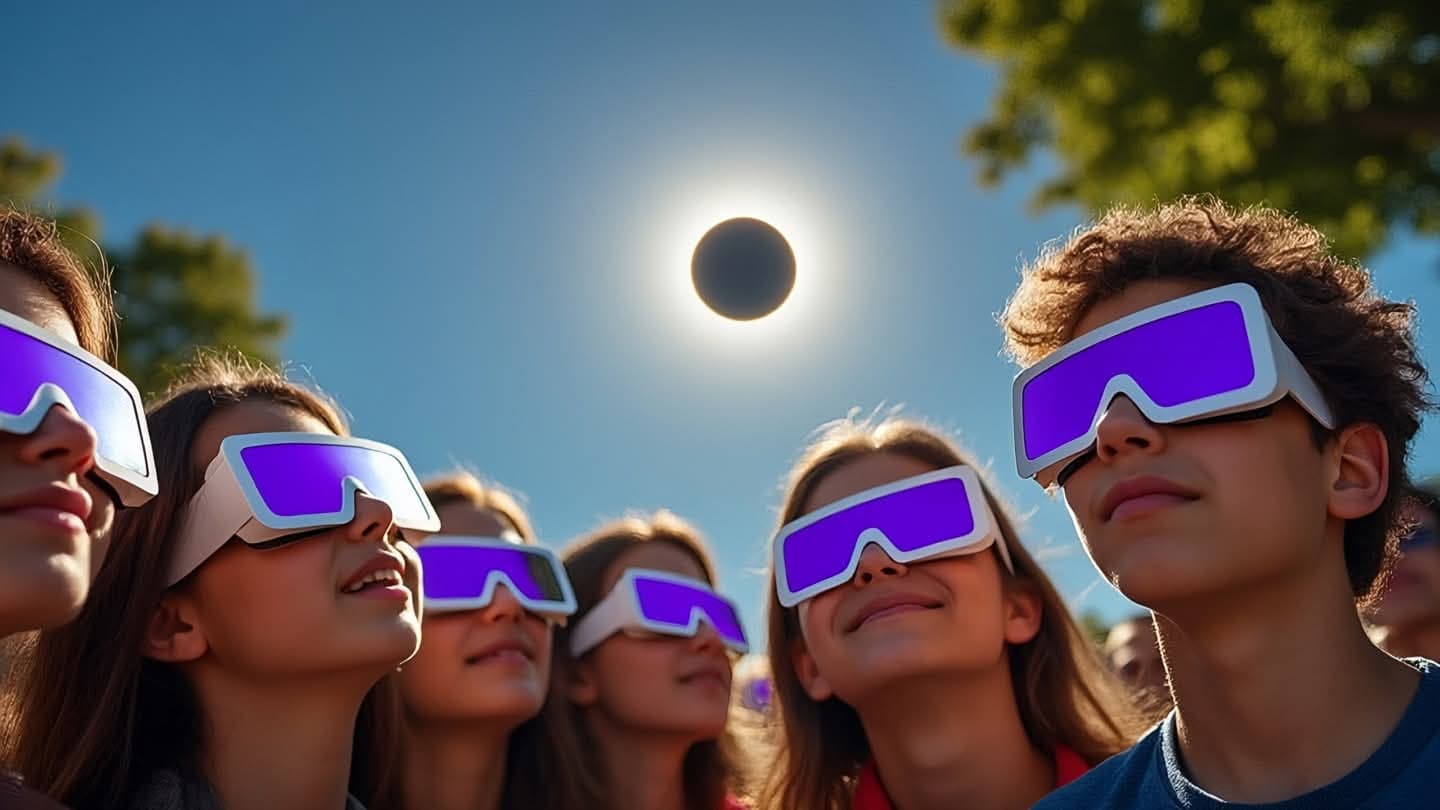
When the moon slips between the Earth and the sun, it creates a silence that feels almost sacred. In August 2026, millions of people across Europe gathered to witness a rare solar eclipse, a celestial dance that transformed the daytime sky into a twilight scene. From the rugged coasts of Iceland to the historic streets of Spain, the event united diverse cultures in a shared moment of awe. This spectacle invites reflection on the power of natural phenomena to transcend borders and bring people together. It is a moment where the ordinary becomes extraordinary.
The path of totality crossed several key locations, including parts of the United Kingdom, Iceland, and northern Spain. In these regions, the sun was completely obscured, revealing the corona in a breathtaking display of white light against a darkened sky. Totality brings wonder. Darkness reveals light.
In cities like London and Madrid, public viewing events were organized in parks and squares. Large screens and telescopes with proper filters allowed safe observation for thousands who did not have personal equipment. Community facilitates access. Safety ensures enjoyment.
For many, the eclipse was a once-in-a-lifetime experience. The sudden drop in temperature and the unusual behavior of animals added to the surreal atmosphere. Nature responds to change. Instinct recognizes shift.
Social media buzzed with images and videos, capturing the reaction of crowds as the shadow passed. These digital memories serve as a testament to the collective excitement and the global reach of the event. Connection spreads joy. Memory preserves moment.
Scientific teams also took advantage of the eclipse to conduct research on the solar corona and atmospheric changes. Their work adds to our understanding of the sun’s influence on Earth. Science benefits from spectacle. Data follows wonder.
Millions across Europe, including in Spain, the UK, and Iceland, witnessed a rare solar eclipse in August 2026. The event fostered community engagement and scientific interest, highlighting the universal appeal of astronomical phenomena. The hope is for continued public enthusiasm for future celestial events.
AI Image Disclaimer: The images provided are AI-generated to visually represent the social and astronomical aspects of the story.
Sources: BBC News The Guardian European Space Agency
Published by Banx Network. This article is part of the Banx decentralized media programme, powered by the BXE token on the XRP Ledger.



