A staggering $1.2 trillion. That’s the estimated value locked across various decentralized finance protocols, many of which are theoretically governed by Decentralized Autonomous Organizations, or DAOs. But let’s be honest: what does “governed” really mean when a handful of powerful token holders often dictate terms? It’s a question that, frankly, keeps me up at night, especially when I see the breathless, almost religious, fervor surrounding these structures. This isn’t just about understanding what a DAO is; it’s about dissecting its practical reality against its utopian promise of true DAO decentralization. Call me skeptical, but the numbers often tell a different story than the hype.
Look, the concept of collective ownership isn’t new. We’ve been talking about distributed decision-making for decades, long before Satoshi Nakamoto’s whitepaper. What’s different now is the technological scaffolding: smart contracts, blockchain-based voting, and token-weighted proposals. Yet, the data tells a sobering story. Messari’s Q4 2023 report, published in January 2024, for instance, highlighted that over 70% of major DeFi DAOs still see voter participation rates below 10% for most proposals. That’s not exactly a picture of vibrant, engaged democracy, is it? It suggests a significant disconnect between the ideal of a truly decentralized autonomous organization and the current, often apathetic, reality of DAO governance.
This isn’t just about low engagement; it’s fundamentally about concentrated power. A CoinDesk analysis from late last year revealed that in many top DAOs, the top 1% of token holders control upwards of 50% of the voting power. This isn’t DAO decentralization; it’s a new form of oligarchy, dressed up in blockchain rhetoric. We saw similar patterns in early joint-stock companies, where a few powerful shareholders dictated terms, often to the detriment of smaller investors. The technology changed, but human nature, it seems, hasn’t. The view from Singapore, where regulators are increasingly scrutinizing these structures, looks quite different from the utopian vision often painted in online forums.
What strikes me about this data is the persistent narrative that DAOs inherently lead to more equitable governance. That’s a nice story, a comforting bedtime tale for crypto enthusiasts, but the numbers don’t lie. It reminds me of the early internet’s promise of universal access and democratized information. While it certainly opened doors, it also created new gatekeepers and power centers. We’re witnessing the same dynamic play out with these decentralized autonomous organizations, where the promise of a flat hierarchy often gives way to a familiar power law distribution.
And here’s the thing: the operational complexities are staggering. Who is ultimately responsible when something goes wrong? When a protocol exploit drains millions, as we’ve seen too many times—a Bloomberg report from March 12, 2024, documented over $300 million lost to various hacks and rug pulls in Q1 alone—who faces the music? The answer is often nobody, or at least, no single, identifiable entity. This lack of clear accountability is a non-negotiable hurdle for institutional adoption and, more importantly, for protecting retail investors. It’s a question that goes beyond merely understanding what a DAO is; it delves into legal liability and consumer protection, directly impacting the viability of true DAO decentralization.
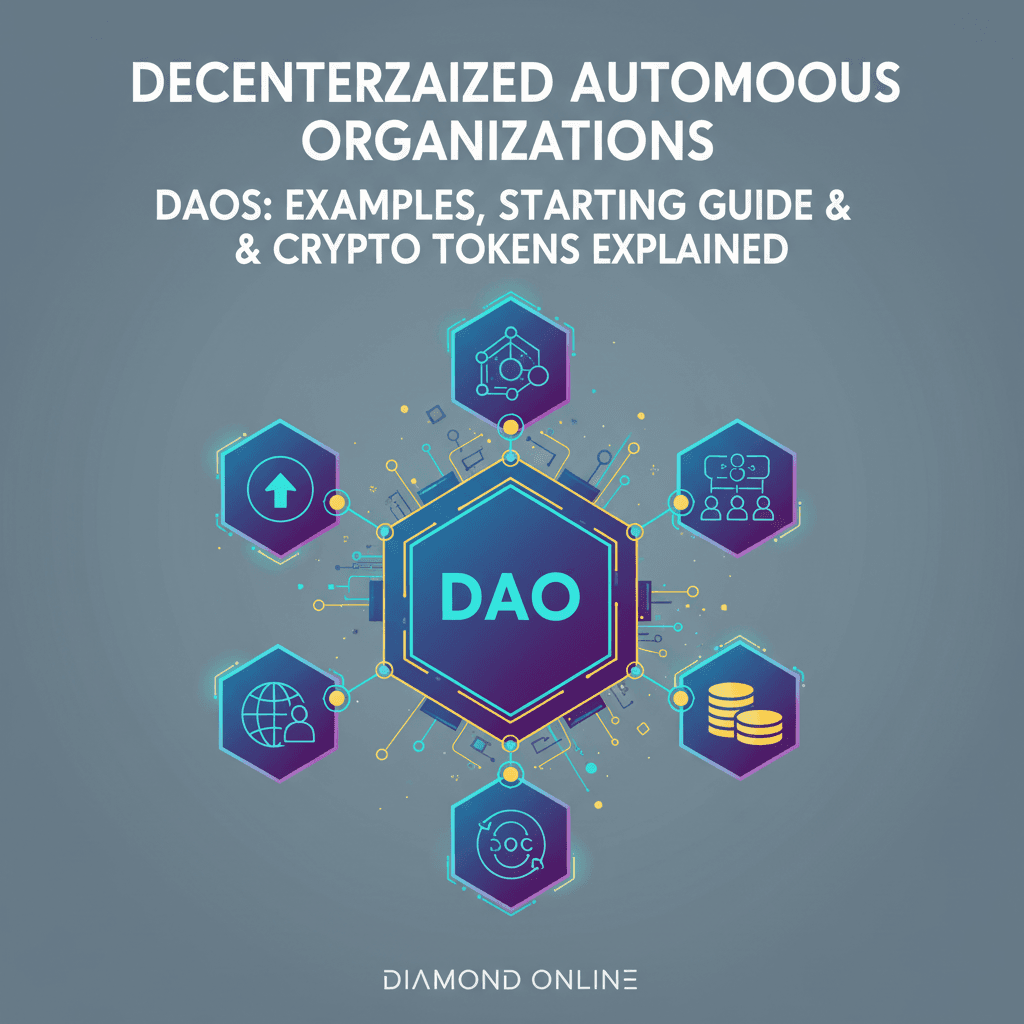
Some argue that the current state is merely a phase, an evolutionary step towards true decentralization. Perhaps. But how long can we afford to wait for this evolution when real money is running scared from poorly governed projects? The Japanese financial press, for example, is increasingly asking pointed questions about the legal and operational frameworks of these entities, reflecting a global trend of heightened regulatory interest. Publications like Diamond Online, which recently published an article titled “DAO(分散型自律組織)とは?事例や始め方、仮想通貨銘柄をわかりやすく解説!”, are moving beyond basic explanations to deeper questions of utility and risk. They’re not just asking “what is a DAO?” anymore; they’re asking “who is liable?” and “how do we protect users?” They want to know if DAO governance can truly deliver on its promises.
This isn’t to say the entire concept is flawed. The idea of community-driven development and collective ownership holds immense potential, particularly for open-source projects or public goods funding. Think of it as a digital cooperative, a new form of organizational structure. But we need to be honest about the current limitations. Without better mechanisms for broad participation, clearer legal structures, and robust accountability frameworks, many decentralized autonomous organizations risk becoming just another vehicle for concentrated power, albeit with a new technological veneer. The promise of a truly decentralized autonomous organization, and thus genuine DAO decentralization, remains just that—a promise.
So, what happens when the next major DAO-governed protocol faces a critical decision, and the vast majority of its stakeholders remain disengaged? Will the market finally demand more than just a whitepaper and a promise of decentralization? Or will we continue to confuse token distribution with genuine democratic governance, repeating the same mistakes of centralized systems under a different name? That’s the real question, isn’t it? The future of these digital organizations, these DAOs, hinges on how we answer it. I’ll admit, this one keeps me guessing.
Published by Banx Network. This article is part of the Banx decentralized media programme, powered by the BXE token on the XRP Ledger.