
Key Highlights
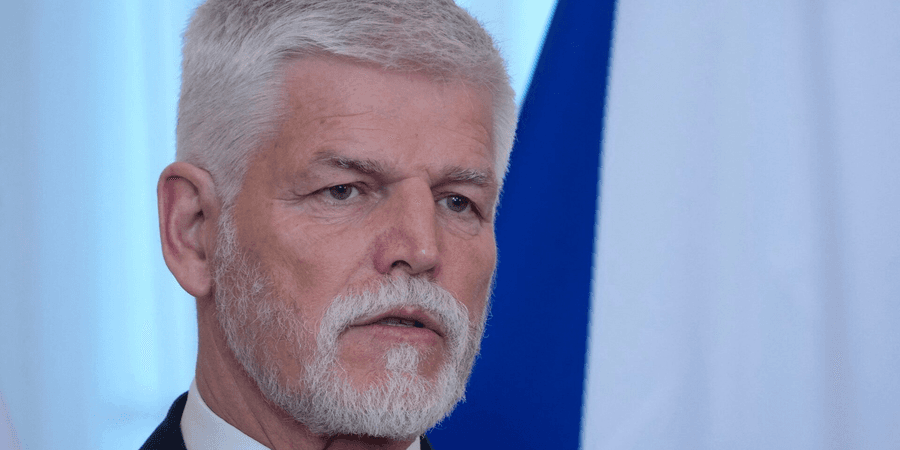
- Czech President Petr Pavel urges NATO to adopt a firmer stance against Russia's provocations.
- Pavel suggests measures including cutting off Russia's internet and disrupting banking systems.
- He warns that failure to respond decisively could lead to increased Russian aggression.
Czech President Petr Pavel has strongly urged NATO to take a firmer stance against Russia's provocations, emphasizing the necessity for the alliance to 'show its teeth.' In a recent interview with The Guardian, he outlined a range of potential responses, including cutting off Russia's internet, disrupting its banking systems, and even shooting down aircraft that infringe upon NATO airspace. These statements come amid escalating tensions in Eastern Europe, where the threat of Russian aggression remains a pressing concern.
As a former general and ex-chairman of NATO's Military Committee, Pavel brings significant military insight to the discussion, making him a prominent voice in the ongoing geopolitical landscape. He underscored the importance of a sufficiently decisive and potentially asymmetric response to counter Russian provocations. 'Otherwise, the Kremlin could escalate its actions,' he warned, highlighting the urgency of the situation.
Pavel expressed concern regarding the perceived lack of determination from the United States to maintain pressure on Russia, although he refrained from directly criticizing American leadership. He pointed out that after the illegal annexation of Crimea in 2014, Russia has adapted its approach, almost reaching the thresholds set by Article 5 of the NATO treaty, which states that an armed attack against one member is an attack against all. This adaptation poses a significant challenge for NATO's collective defense strategy.
'The Russian military leaders have noted the paralysis in NATO's decision-making,' Pavel stated, recalling how they have told him that their provocative actions occur simply because 'they can.' He warned that if NATO does not respond decisively to current provocations, Russia might increase its aggressions, further destabilizing the region.
Pavel argued that NATO cannot afford to be divided by its members' varying preferences for diplomatic solutions, especially when Russia shows no interest in such dialogue. He insists that 'Russia does not understand nice language; they mainly understand the language of power.' This assertion underscores the need for a unified and robust response from NATO to deter further Russian provocations.
Moreover, he highlighted the potential for 'asymmetric measures' that could effectively communicate to Moscow that aggressive behavior will have consequences. Suggestions such as disabling internet connections or disrupting banking operations could serve as powerful deterrents against further escalation.
In light of recent incidents where NATO jets have intercepted drones believed to be targeting Russian forces, Pavel's assertions regarding the necessity for a robust NATO response resonate amid growing concerns over ongoing military tensions in the region. The call for a stronger NATO stance reflects a broader recognition of the challenges posed by Russia's actions and the need for a cohesive strategy to address them effectively.
Published by Banx Network. This article is part of the Banx decentralized media programme, powered by the BXE token on the XRP Ledger.



