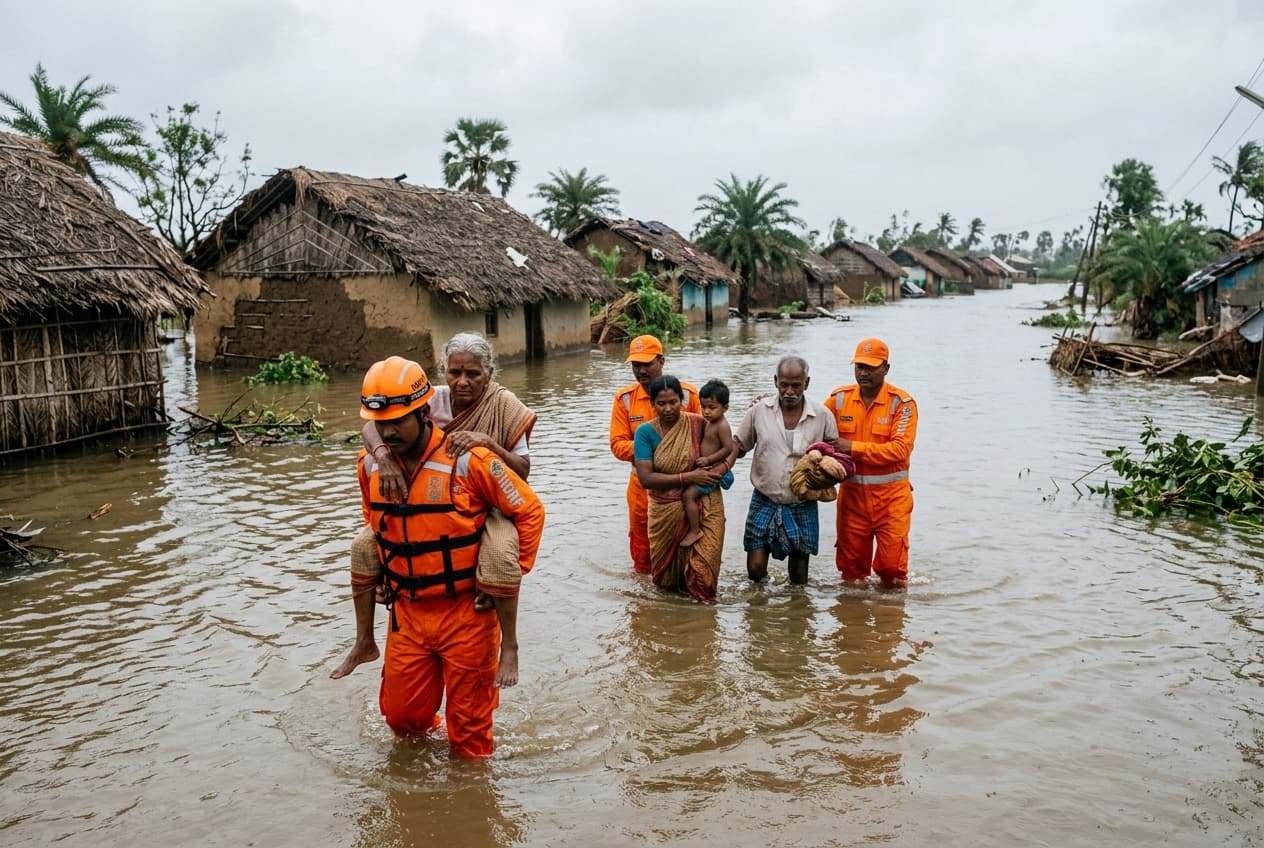
Kakinada, India— Cyclone Arnab slammed into the Andhra Pradesh coast at 4:30 a.m. on October 28, 2026, packing winds over 110 kmph and pushing a two-meter surge into fishing hamlets that had 12 hours to leave.
Officials said more than 40,000 people were shifted to 212 relief camps across Kakinada, Konaseema, and Visakhapatnam districts before landfall. The evacuation started late Monday when the India Meteorological Department upgraded the system to a severe cyclonic storm. Fishing boats were ordered ashore. Schools shut.
By mid-morning, the damage was clear. Thatched roofs were gone. Concrete power poles lay snapped across State Highway 42. In Uppada village, water entered 300 homes. "The sea came into our street at 5 a.m., we had only time to grab papers," said S. Ramesh, a fisherman sheltering at a government school in Kakinada. He said three boats were lost.
The state disaster management authority said the storm tore off the roofs of at least 1,200 houses and damaged standing paddy crop across 15,000 hectares. Power supply was cut to 86 villages after substations flooded. National Disaster Response Force teams used inflatable boats to reach cut-off pockets in Yanam. No deaths were confirmed by noon, but six fishermen were still listed as missing.
District Collector J. Nivas said teams were clearing fallen trees from the Kakinada-Yanam highway. "Our priority is to restore road access and drinking water," he said. He confirmed that medical teams had been deployed to all camps and that damage assessment would begin once winds dropped below 50 kmph. The administration called in Army engineers for two breached embankments.
The weather office said Arnab would weaken into a deep depression as it moved inland toward Telangana by evening, but warned of heavy rain above 200 mm in parts of East Godavari. Port operations at Kakinada Anchorage were suspended. Over 150 trains were cancelled or diverted, officials said. Control rooms reported 42 waterlogged urban wards.
At the Kakinada camp, women queued for rice and water packets. Children slept on plastic sheets. Volunteers said many families did not want to leave their homes until police forced the move late at night. That hesitation is common on this coast. People fear theft more than wind.
The state government said initial relief of 10,000 rupees per family would be released. Power restoration could take 48 hours in the worst-hit blocks. The cyclone track is now being reviewed to decide when people can return.
Published by Banx Network. This article is part of the Banx decentralized media programme, powered by the BXE token on the XRP Ledger.