
Key Highlights
- Russia's cultural outreach in Africa has expanded from four to thirty-four nations.
- Scholarships for African students in Russia have nearly tripled, fostering educational ties.
- Russian media outlets like Sputnik are establishing a presence in Africa, shaping narratives.
[Russia's Cultural Expansion in Africa]
In the cool morning light that drifts over the wide savannas and bustling streets of cities from Dakar to Johannesburg, there’s a sense of age-old rhythms persisting amid quiet change. Market stalls spill toward avenues lined with bougainvillea, and conversations in cafés and offices alike trace the arc of ambitions shaped by history and horizon alike. In this atmosphere — where the past and future seem to mingle in the warm air — another current is moving steadily, less visible than trade agreements or military pacts, yet woven into the very fabric of exchange: the soft, persistent pull of influence.
Across Africa, Russia’s presence has begun to assume contours shaped not only by diplomats and agreements but by subtler threads of culture, education, and belief. In recent years, the Russian Orthodox Church — once a distant institution to most Africans — has spread its reach rapidly, moving from four African nations to at least thirty-four, establishing hundreds of parishes and inviting local communities into spaces once reserved for war and trade. The expansion of clergy and religious communities across the continent reflects a deliberate embrace of faith-based engagement as part of a broader tapestry of relations, threading spiritual life into the texture of diplomatic ties.
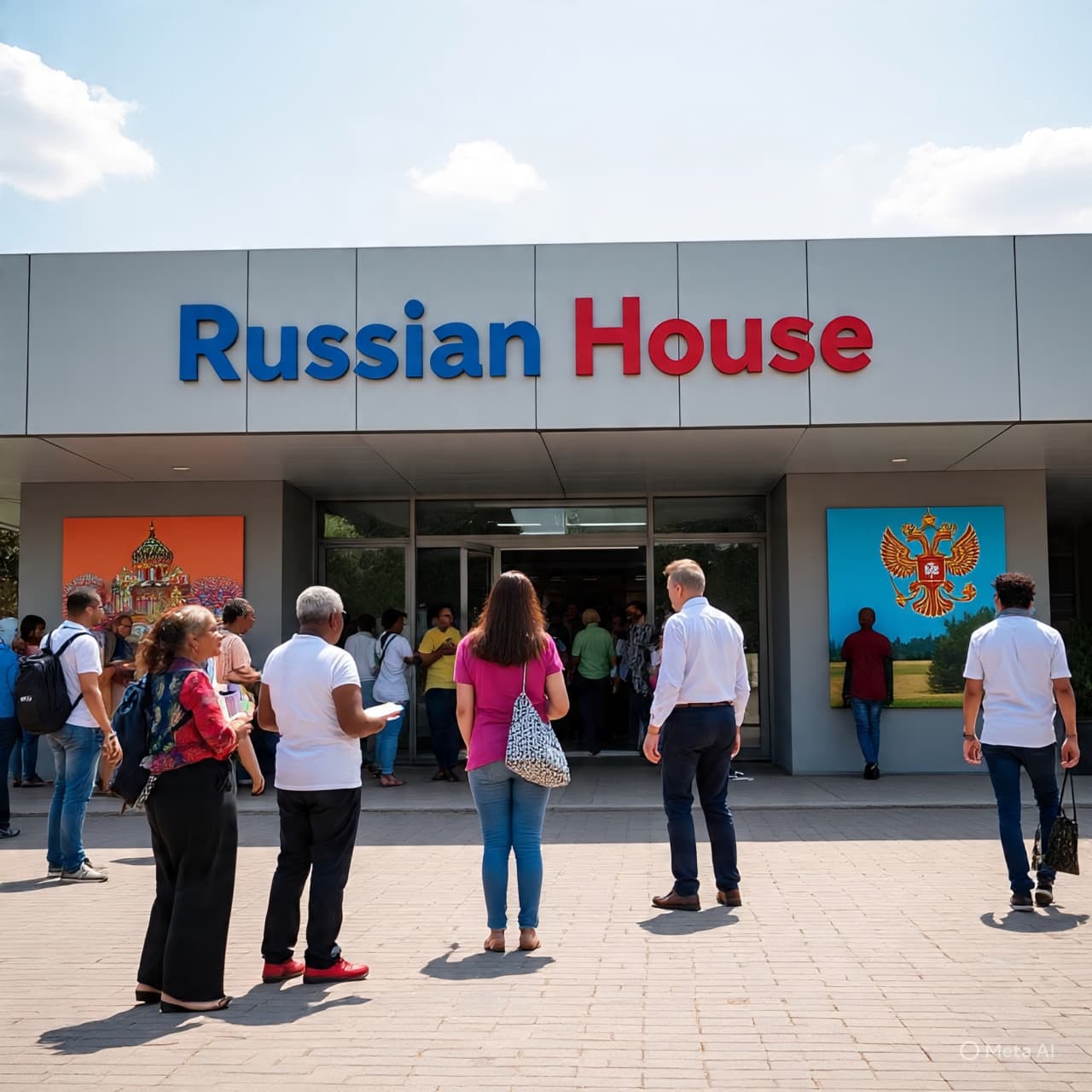
Beneath the domes and golden crosses of these outposts, a quiet narrative takes shape. Scholarships offered to African students have nearly tripled, with thousands now studying in Russian universities across fields as varied as engineering, medicine, and agriculture. These programs not only provide educational opportunity but foster familiarity with Russian language, culture, and perspectives among young leaders whose paths may one day guide national policy. In cultural centers known as Russian Houses, language courses and community programming invite local residents to trace the lines of another worldview into their own lives, shaping affinities that bridge oceans and histories.
Even state-run media has threaded its way into the African informational landscape: Sputnik and other outlets now maintain bureaus on the continent, offering narratives that mingle global events with voices shaped through a Moscow lens. In tandem with religious and cultural outreach, these media footprints help expand a presence that is as much about resonance and perception as it is about political alignment.
Yet in these quiet movements lie broader questions about the nature of influence and the meanings it carries. Where infrastructure and investment once defined the terms of engagement between nations, the subtle sway of soft power — through faith, education, and storytelling — suggests a longer, more patient approach to building connection. For Russia, whose economic reach in Africa remains modest compared with that of China or the European Union, these channels offer an alternative means of anchoring relationships in the daily lives of communities and cultures.
Across campuses in Nairobi, in places of worship in Cape Town, and in circles of discourse from Accra to Khartoum, these influences take on distinct shades. For some, they represent new horizons of opportunity and exchange; for others, they raise questions about the balance of narratives and the place of external voices in shaping local futures. Conversations ripple outward from the quiet halls of cultural centers to the vibrant chaos of urban streets, touching on identity, memory, and the weight of history in ways that refuse easy categorization.
And so, as the sun climbs over Africa’s wide plains and the rhythm of life swells in its familiar cadence, this expansion of soft power — unhurried yet persistent — unfolds not as a single stroke but as many. Its presence is felt in classrooms, in congregations, and in the marketplace of ideas where the continent’s own voices continue to shape what it means to stand, to speak, and to define a place in a changing world.
Published by Banx Network. This article is part of the Banx decentralized media programme, powered by the BXE token on the XRP Ledger.



