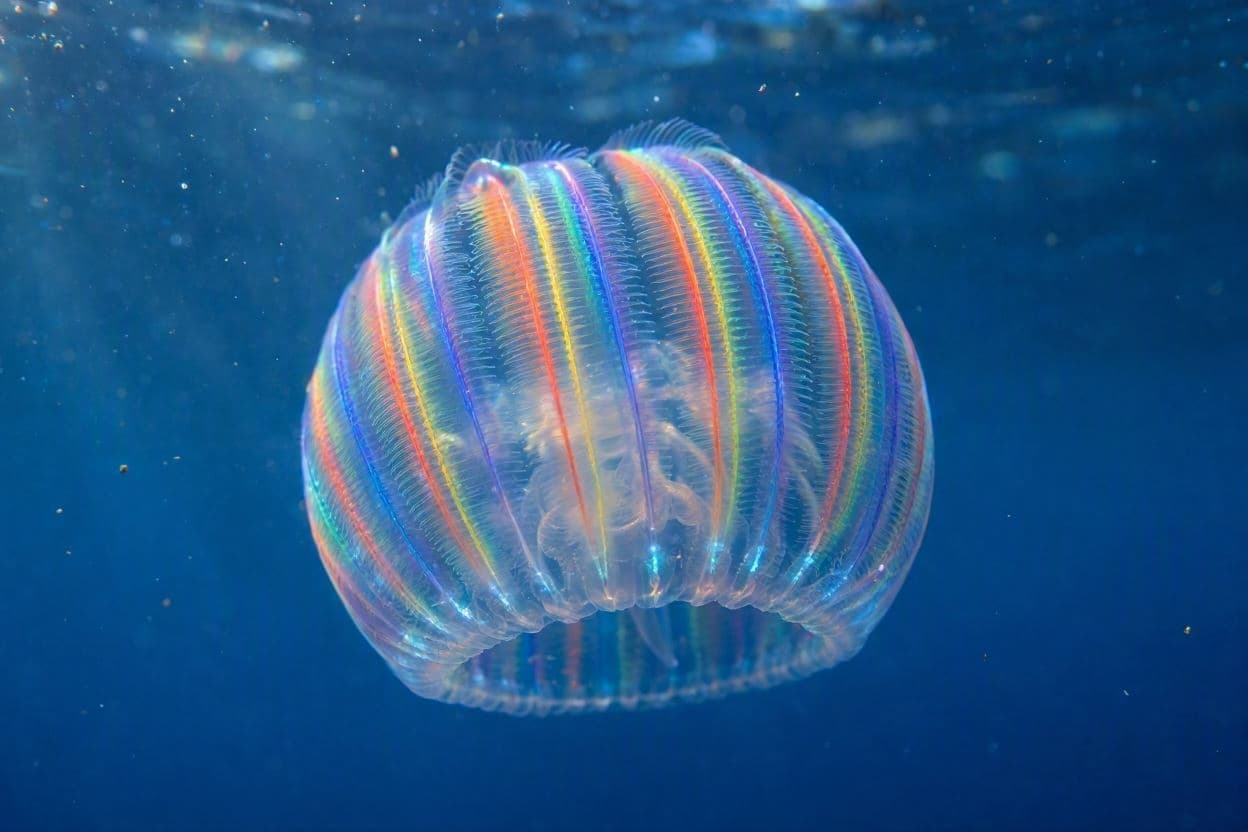
Drifting through the ocean’s depths, ctenophores, or comb jellies, move with a grace that seems almost otherworldly. Their translucent bodies ripple with iridescent light, created by rows of cilia that beat in synchronized harmony. For centuries, these creatures were admired primarily for their aesthetic appeal, often mistaken for jellyfish due to their similar appearance. However, modern science is revealing that ctenophores are not just beautiful; they are biological wonders that challenge our understanding of animal evolution and neurobiology.
Unlike jellyfish, which belong to the phylum Cnidaria, ctenophores form their own distinct phylum, Ctenophora. Recent genomic studies suggest that they may be the earliest branch of the animal tree of life, predating even sponges. This placement has profound implications for how we view the origin of complex traits such as nerves and muscles. If ctenophores diverged before other animals, it suggests that these features may have evolved independently, a concept known as convergent evolution.
The nervous system of the ctenophore is particularly intriguing. While it lacks many of the neurotransmitters found in other animals, such as serotonin and dopamine, it still possesses a functional network of neurons. This unique architecture raises questions about the fundamental requirements for a nervous system. By studying how ctenophores process information and coordinate movement without these common chemicals, scientists can gain insights into the diversity of neural solutions in nature.
Ctenophores are also efficient predators, using sticky cells called colloblasts to capture prey. These cells are unique to the phylum and represent a different evolutionary strategy compared to the stinging cells of jellyfish. This distinction highlights the adaptability of marine life and the various ways organisms have solved the problem of feeding in the open ocean. Their role in the food web is significant, influencing the populations of plankton and small fish.
Despite their importance, ctenophores remain understudied compared to other marine organisms. Their fragile bodies make them difficult to collect and maintain in laboratory settings. However, advances in imaging and genetic sequencing are making it easier to study these elusive creatures. Researchers are now able to observe their development and behavior in greater detail, uncovering secrets that have been hidden for millions of years.
The beauty of ctenophores serves as a gateway to deeper scientific inquiry. Their iridescent glow, caused by the diffraction of light through their cilia, is a physical phenomenon that captivates observers. But beneath this visual spectacle lies a complex biology that offers lessons in resilience and adaptation. They thrive in diverse environments, from polar seas to tropical waters, demonstrating remarkable versatility.
Understanding ctenophores also has practical implications. Some species are invasive, such as the Mnemiopsis leidyi, which has disrupted fisheries in the Black Sea and Caspian Sea. By learning more about their biology and ecology, scientists can develop better strategies for managing these invasions and protecting marine ecosystems. Knowledge is power, even in the delicate balance of ocean life.
As we continue to explore the oceans, ctenophores remind us that there is always more to discover. They are not just passive drifters but active participants in the marine world, with a history that stretches back to the dawn of animal life. In their quiet elegance, they hold the keys to understanding our own biological origins.
AI Image Disclaimer: The images accompanying this article are AI-generated artistic interpretations of ctenophores and are not actual underwater photographs.
Sources: Nature Scientific American Smithsonian Ocean
Published by Banx Network. This article is part of the Banx decentralized media programme, powered by the BXE token on the XRP Ledger.