

Key Highlights
- Date of Incident:July 16, 2026, during a severe storm.
- Location:Sindempart sector, Coquimbo, Chile.
- Casualties:No fatalities reported, but several injuries occurred.
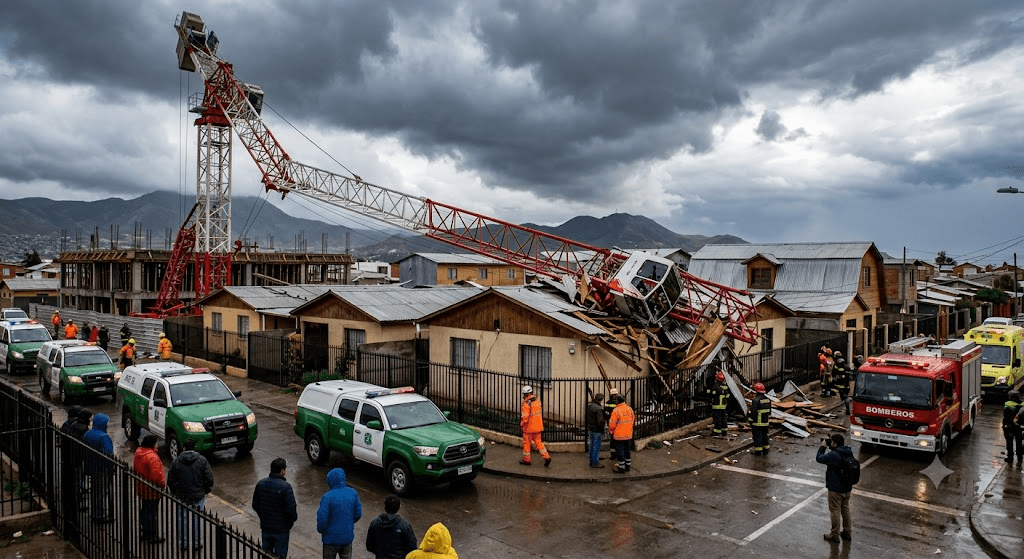
COQUIMBO, CHILE — A terrifying scene unfolded in the coastal city of Coquimbo on Thursday, July 16, 2026, when a massive construction tower crane collapsed under the force of relentless gale-force winds, crushing multiple residential homes and vehicles below.
The disaster took place in the Sindempart sector, specifically at the intersection of Carlos Condell and Ignacio Serrano streets, as an intense frontal system swept across ten regions of the country. Eyewitness footage captured the dramatic moment the towering steel jib and arm succumbed to fierce gusts, tilting violently before snapping and plummeting directly into a neighborhood condominium complex.
The sheer scale of the falling metal structure caused extensive destruction upon impact. At least four residential properties suffered severe structural damage, with heavy counterweights and metal beams ripping through roofs and walls. Several parked vehicles were flattened, and neighborhood power lines were severed, plunging the immediate vicinity into an immediate blackout.
Miraculously, given the catastrophic nature of the collapse, no fatalities were reported. Emergency medical services responded rapidly to the scene, treating a local woman who sustained leg injuries, as well as a child who escaped with minor scratches. The quick response of medical personnel likely prevented more serious injuries from occurring.
The collapse coincided with an extraordinarily powerful storm system battering Chile, bringing heavy downpours and blinding winds that locals reported reached up to 100 km/h (≈60 mph). The harsh weather has triggered widespread regional disruptions, including localized flooding and severe transit delays. Many residents expressed their fears about the storm's impact on infrastructure, particularly in areas with ongoing construction.
However, local authorities are looking beyond just the weather for answers. The Mayor of Coquimbo announced that an official state investigation has been launched to look into whether proper safety protocols were followed at the construction site. Investigators will evaluate if the crane was properly put into "free slew"—a setting allowing it to rotate like a weather vane to minimize wind resistance—or if mechanical oversight played a role in the disaster. Meanwhile, the Chilean government has clarified that the private construction firm responsible for the site will be legally liable for the extensive damage caused to private property.
As the investigation unfolds, residents are left to grapple with the aftermath of the incident, questioning the safety measures in place at construction sites during extreme weather conditions. The community is rallying together to support those affected, while officials emphasize the need for stricter regulations to prevent such tragedies in the future.
Published by Banx Network. This article is part of the Banx decentralized media programme, powered by the BXE token on the XRP Ledger.




