

Key Highlights
- A British tourist is in critical condition following a Hantavirus outbreak on the MV Hondius cruise ship.
- The outbreak has resulted in three fatalities, including an elderly couple.
- Health authorities are conducting contact tracing in Johannesburg to monitor potential secondary exposure.
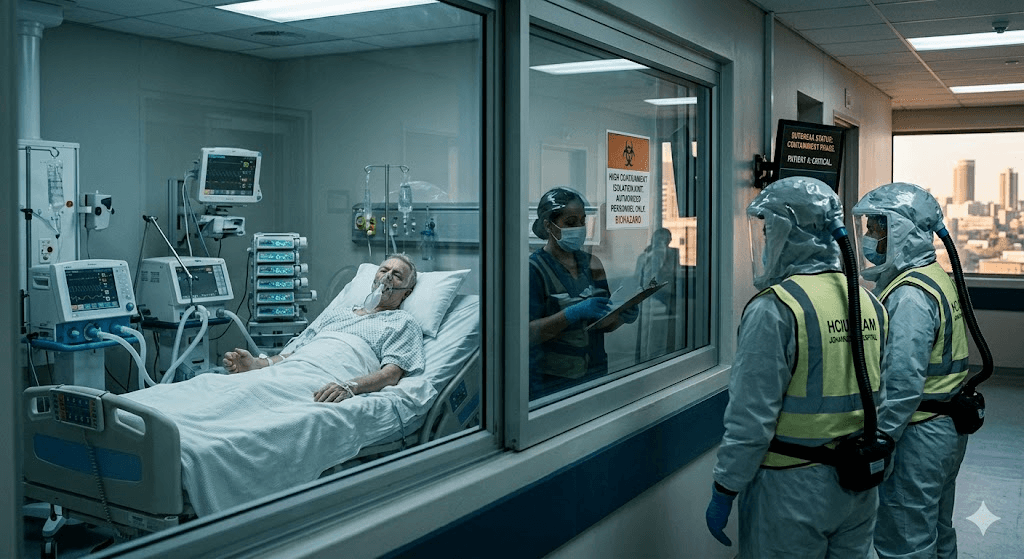
A British tourist is currently in critical condition in a Johannesburg intensive care unit following a suspected Hantavirus outbreak aboard a luxury expedition cruise ship. The incident has already claimed the lives of three people, including an elderly couple, and left several others seriously ill as the vessel crossed the Atlantic.
The outbreak occurred on the MV Hondius, a polar expedition ship operated by the Dutch company Oceanwide Expeditions. The vessel was traveling from Ushuaia, Argentina, toward Cape Verde with approximately 150 tourists and 70 crew members on board when the respiratory illness began to spread. Reports indicate that the ship was nearing Saint Helena when the first fatalities occurred.
According to the World Health Organization (WHO), the outbreak associated with the ship involves one laboratory-confirmed case of Hantavirus and five additional suspected cases. The fatalities include a 70-year-old male passenger who passed away while the vessel was near Saint Helena, and his 69-year-old wife, who died in a Johannesburg hospital following a medical evacuation. A third death has also been linked to the outbreak while the ship was in transit, highlighting the severity of the situation.
The 69-year-old British national currently fighting for his life was evacuated to South Africa after falling ill near Ascension Island. Authorities from South Africa’s National Institute for Communicable Diseases are now conducting contact tracing in the Johannesburg region to monitor potential secondary exposure. This proactive measure aims to prevent further spread of the virus and ensure the safety of the public.
Hantaviruses are rare but potentially fatal respiratory diseases typically spread through contact with infected rodent droppings, urine, or saliva. While human-to-human transmission is rare, the WHO has noted it can occur with certain strains, such as the Andes virus, leading to severe pulmonary or renal syndromes. The symptoms can escalate quickly, making early detection and response critical.
"Rapid, coordinated action is critical to contain risks and protect public health," stated WHO chief Tedros Adhanom Ghebreyesus. His comments underscore the urgency of the situation as health officials work to manage the outbreak and provide care for those affected.
The MV Hondius is currently stationary off the port of Praia, Cape Verde, as local health officials assess two additional symptomatic crew members who may require urgent hospitalization. The UK Foreign Office has confirmed it is closely monitoring the situation and is in contact with both the cruise company and local authorities to support affected British nationals. This ongoing situation highlights the importance of vigilance in public health, especially in the context of international travel.
Published by Banx Network. This article is part of the Banx decentralized media programme, powered by the BXE token on the XRP Ledger.




