

Key Highlights
- Date of Conflict:The US and Israel launched Operation 'Epic Fury' against Iran on February 28, 2026.
- Ceasefire Agreement:A two-week ceasefire was established on April 7-8, 2026, reopening the Strait of Hormuz.
- Negotiation Participants:Key figures include US Vice President J.D. Vance and Iranian Parliament Speaker Mohammad Bagher Ghalibaf.
The conflict between the United States and Iran escalated dramatically on February 28, 2026, when the US and Israel initiated Operation 'Epic Fury.' This extensive aerial campaign aimed to dismantle Iran's nuclear and military capabilities, targeting key leaders, including Supreme Leader Ali Khamenei. In retaliation, Iran launched missile and drone strikes against American bases and Israeli interests, leading to significant casualties and economic disruption across the region. The Strait of Hormuz, a crucial channel for global oil transport, faced severe disruptions, causing energy prices to soar and resulting in widespread economic turmoil.
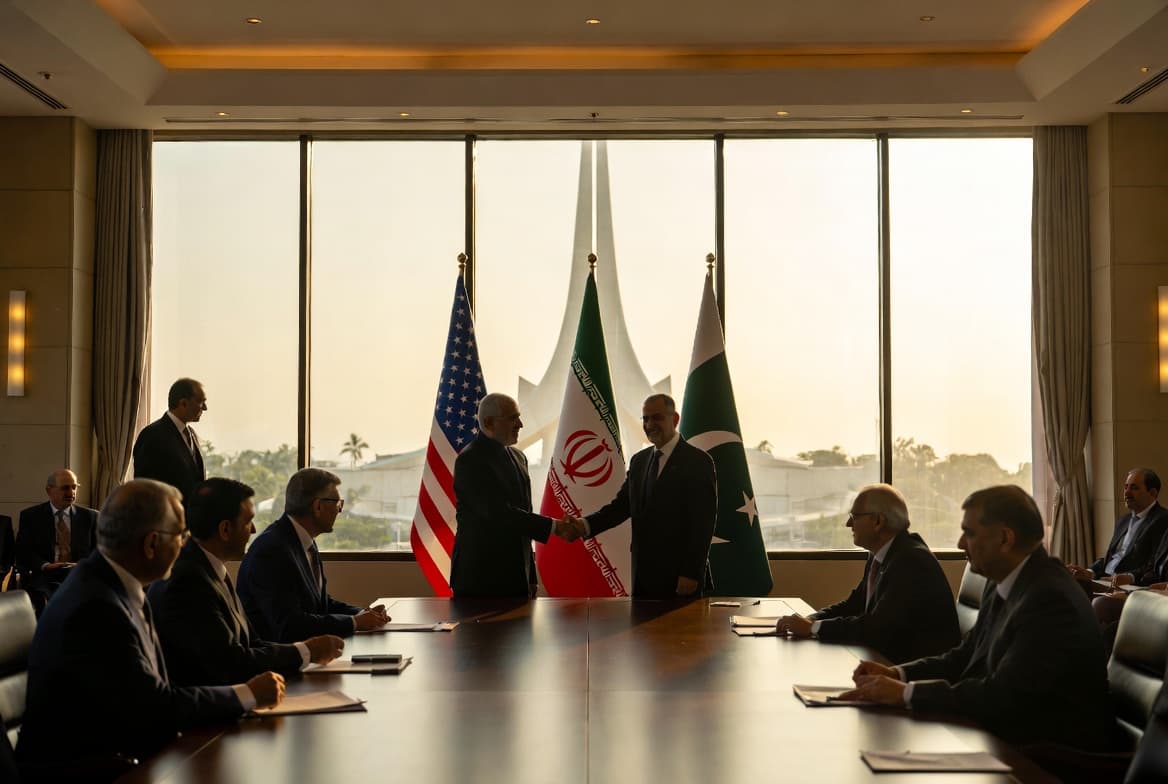
After weeks of intense conflict, a ceasefire was brokered on April 7-8, 2026. Both sides claimed victory, with the US asserting that its military objectives were met, while Iran celebrated its resilience and set forth conditions for any lasting peace, including the lifting of sanctions and rights to uranium enrichment. This ceasefire has opened the door for negotiations, with Pakistan stepping in as a mediator due to its unique position as a traditional ally of the US and a neighbor with strong ties to Iran.
Pakistan's Prime Minister Shehbaz Sharif and Chief of Army Staff Asim Munir have taken on pivotal roles in facilitating these negotiations. The streets of Islamabad are under heightened security, with a public holiday declared to ensure the safety of the delegations involved in the talks. The negotiations are seen as a critical opportunity to address the underlying issues that have fueled decades of tension between the two nations.
The American delegation is led by Vice President J.D. Vance, accompanied by special envoy Steve Witkoff and Jared Kushner, who has been a key advisor to former President Donald Trump. President Trump has expressed optimism about the talks, indicating a willingness to engage in constructive dialogue. On the Iranian side, Parliament Speaker Mohammad Bagher Ghalibaf and Foreign Minister Abbas Araghchi are leading the discussions, with Iran insisting on preconditions such as the unfreezing of assets and an end to Israeli attacks in Lebanon.
The stakes of these negotiations are incredibly high, focusing on several critical issues: the consolidation of the ceasefire, limits on Iran's nuclear program in exchange for lifting sanctions, and regional security dynamics, including the control of the Strait of Hormuz. The discussions also touch on humanitarian aid and post-conflict stabilization efforts. However, significant gaps remain, particularly regarding Iran's demand for a diplomatic victory and the US's insistence on guarantees against future threats.
Analysts view these negotiations as a historic opportunity for de-escalation, with the potential to reshape the geopolitical landscape of the Middle East. Success could lead to lower oil prices and foster new regional diplomacy. Conversely, the risks of failure are substantial, given the deep mistrust between the parties and external pressures, particularly from Israel and hardline factions within both Tehran and Washington. The world is watching closely, with diplomats from Beijing to Brussels and Riyadh keenly aware that the outcome of these talks could either mark the end of a brief but devastating conflict or set the stage for a prolonged crisis.
As the negotiations unfold in Islamabad, the stakes could not be higher. This moment may define a new chapter in Middle Eastern diplomacy, with Pakistan playing a crucial role in facilitating dialogue that could lead to lasting peace in the region. The coming hours and days will be critical in determining the future of US-Iran relations and the broader geopolitical landscape.
Published by Banx Network. This article is part of the Banx decentralized media programme, powered by the BXE token on the XRP Ledger.




