
Key Highlights
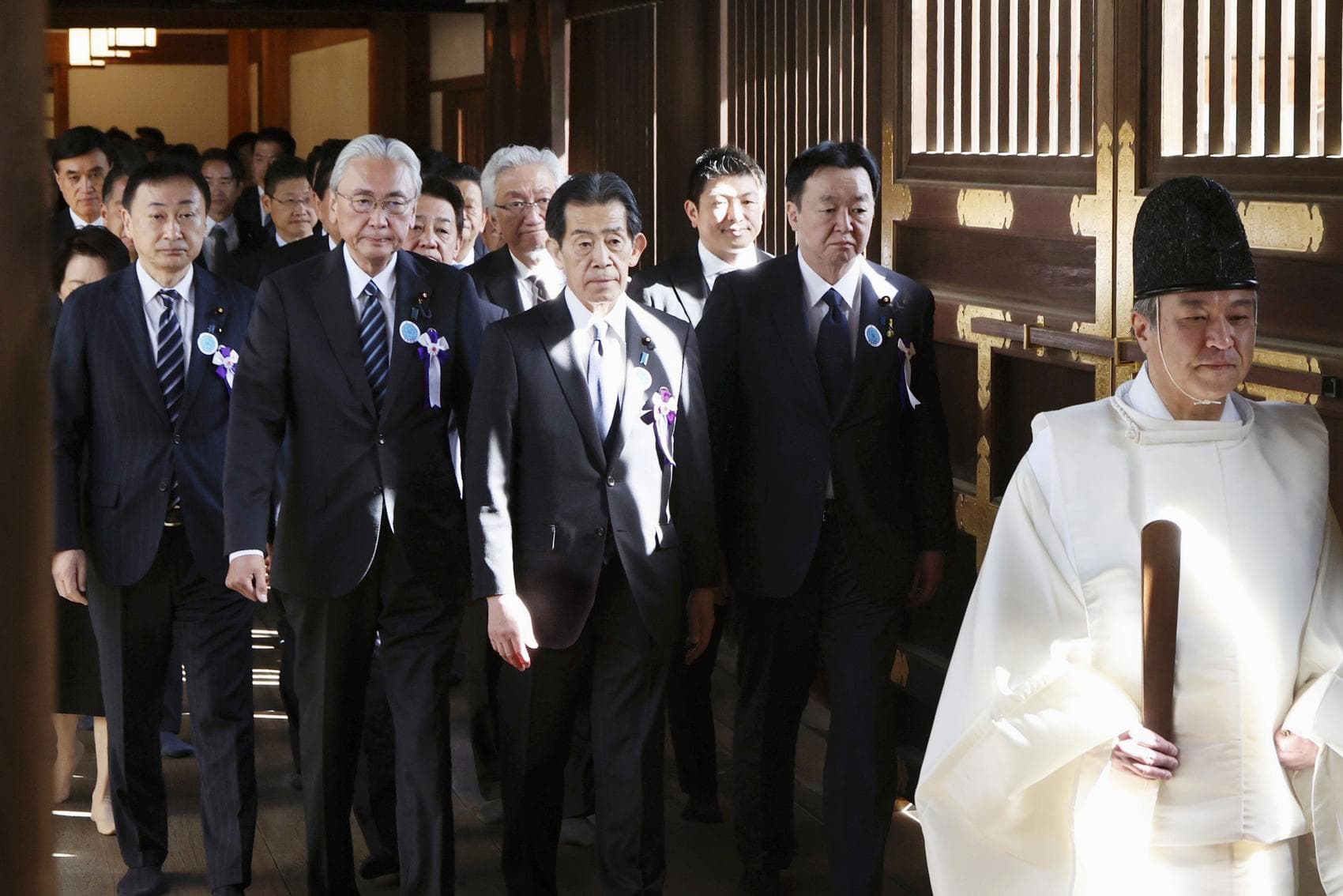
- Recent Visit:A cross-party group of Japanese lawmakers visited Yasukuni Shrine.
- Controversial Site:The shrine honors those who died in Japan’s wars, including war criminals.
- Regional Tensions:The visit has drawn criticism from China and South Korea.
A cross-party group of Japanese lawmakers recently visited the Yasukuni Shrine, a site that honors those who died in Japan’s wars, including convicted war criminals. This visit has reignited debates surrounding nationalism and the interpretation of Japan's military history, both domestically and internationally. The shrine, located in Tokyo, is often viewed as a controversial symbol of Japan’s militaristic past, as it commemorates individuals who participated in the conflicts that shaped the country’s identity.
Lawmakers from various parties aimed to pay their respects, highlighting their belief in honoring those who sacrificed their lives for the nation. However, this act has not been without its detractors. Critics argue that such visits can be seen as a form of political endorsement of Japan's militaristic history and a lack of acknowledgment for wartime atrocities. The visit has drawn sharp criticism from neighboring countries, particularly China and South Korea, where the historical memories of Japanese wartime aggression remain a sensitive issue.
Supporters of the visit contend that honoring the dead is a matter of national integrity and remembrance. They emphasize that the individuals commemorated at Yasukuni should not be conflated with the actions of the military leadership during the war. This perspective reflects a broader debate within Japan about how to reconcile its past with its present identity.
The shrine visit has also sparked discussions about the implications for Japan's foreign relations. As tensions rise in the region, the actions of these lawmakers may complicate diplomatic efforts with countries that suffered during Japan's wartime expansion. The visit underscores the ongoing struggle within Japan regarding its historical narrative and the challenges the government faces in navigating relationships with its neighbors.
As the lawmakers’ actions prompt discussions about reconciliation and historical memory, the implications for Japan's diplomacy and domestic politics continue to unfold. The visit to Yasukuni Shrine serves as a reminder of the complexities surrounding national identity and the interpretation of history in a region still grappling with the legacies of war.
Published by Banx Network. This article is part of the Banx decentralized media programme, powered by the BXE token on the XRP Ledger.



