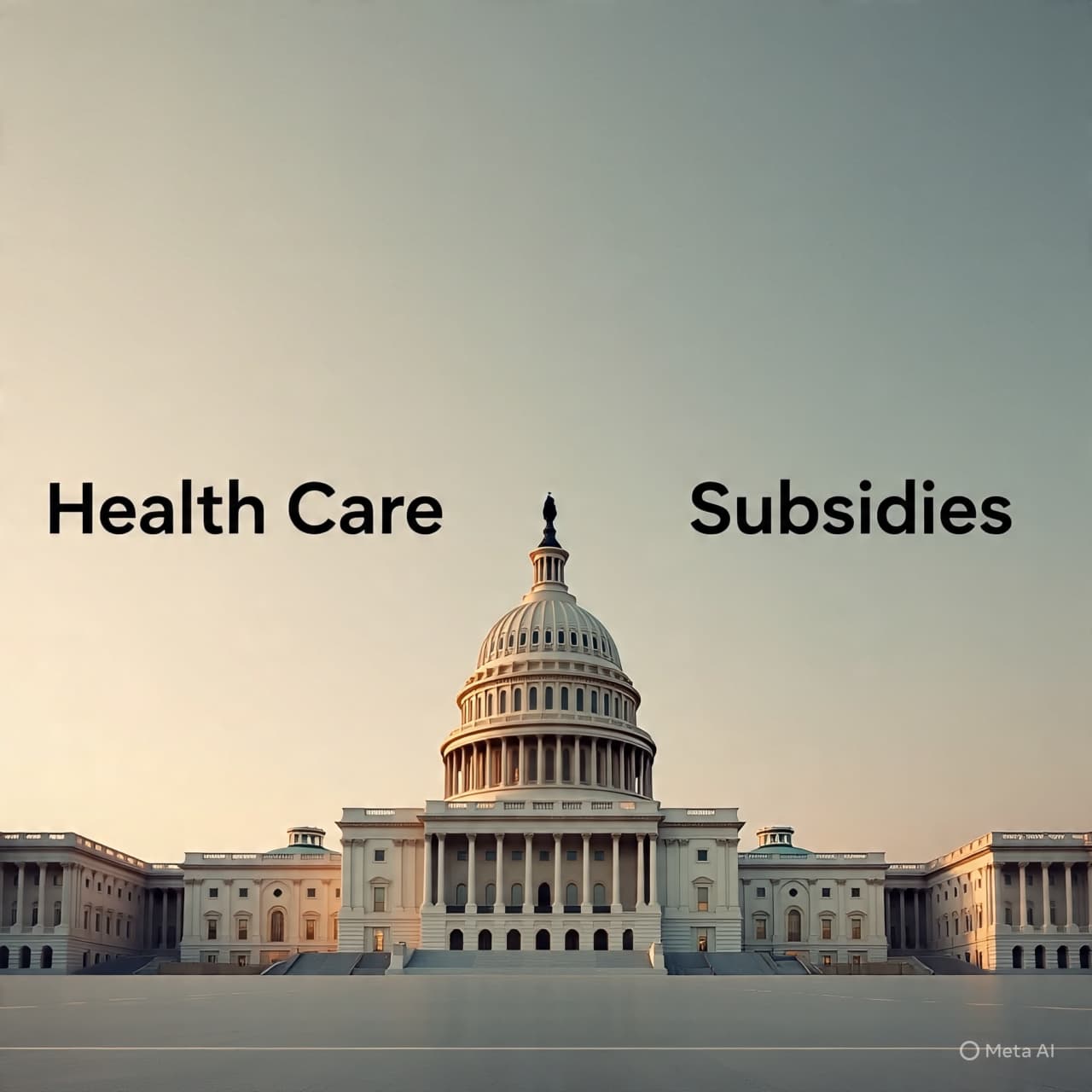
In the delicate interplay between public policy and everyday life, few issues strike as close to home as access to health care — the promise that a serious illness need not become a financial crisis. In recent weeks, that promise has teetered on uncertainty, where the words of leaders carry consequences felt not in capitals alone, but in kitchen tables and doctor’s offices across the nation. At the centre of this unfolding moment is a decision that could shape coverage for millions: President Donald Trump has said he might veto legislation designed to extend health insurance subsidies under the Affordable Care Act (ACA).
These federal subsidies, often described simply as Obamacare premium credits, help reduce the cost of health insurance for Americans buying coverage on the ACA marketplace. They were originally expanded during the Covid‑era to make insurance more affordable, and since then have provided a financial bridge for millions helping to keep monthly premiums within reach. But those enhanced credits expired at the end of 2025, setting the stage for steep increases in premiums unless lawmakers act.
In the face of that looming deadline, the Democratic‑backed bill to renew the subsidies cleared the Republican‑controlled House of Representatives late last week — with an unusual bipartisan twist as 17 Republicans joined Democrats in support. That bipartisan cooperation signaled rising concern about the impact of soaring premiums and the political cost of letting aid lapse just before open enrollment deadlines.
Yet on Sunday, President Trump cautioned that he might veto such a bill if it reached his desk, reflecting his long‑held scepticism toward the ACA and his broader approach to health care policy. Trump’s comments introduce fresh uncertainty into the debate, even as lawmakers race against time; the enrollment period for ACA plans runs until January 15. A veto threat now looms over negotiations, adding pressure on Congress to seek a deal that could satisfy competing priorities.
The stakes are high. Without renewed subsidies, health insurance premiums could climb sharply in 2026 — a burden millions of Americans would feel in their wallets. At the same time, the political terrain remains deeply divided: some Republican leaders and the White House argue that broad extensions of ACA subsidies amount to a continuation of a programme they have long opposed, while others in both parties stress that immediate relief is needed to protect constituents from unaffordable care costs.
As Congress weighs its next steps and the clock ticks toward enrollment deadlines, the debate over subsidies has become more than a technical fiscal issue: it is a telling illustration of how policy choices ripple through communities and how political calculations intersect with personal health security. Whether an extension emerges that can withstand presidential opposition — or whether negotiations yield a compromise — remains very much in flux.
AI Image Disclaimer “Visuals are created with AI tools and are not real photographs.”
Sources Reuters Bloomberg News Newsweek Yahoo News
Published by Banx Network. This article is part of the Banx decentralized media programme, powered by the BXE token on the XRP Ledger.