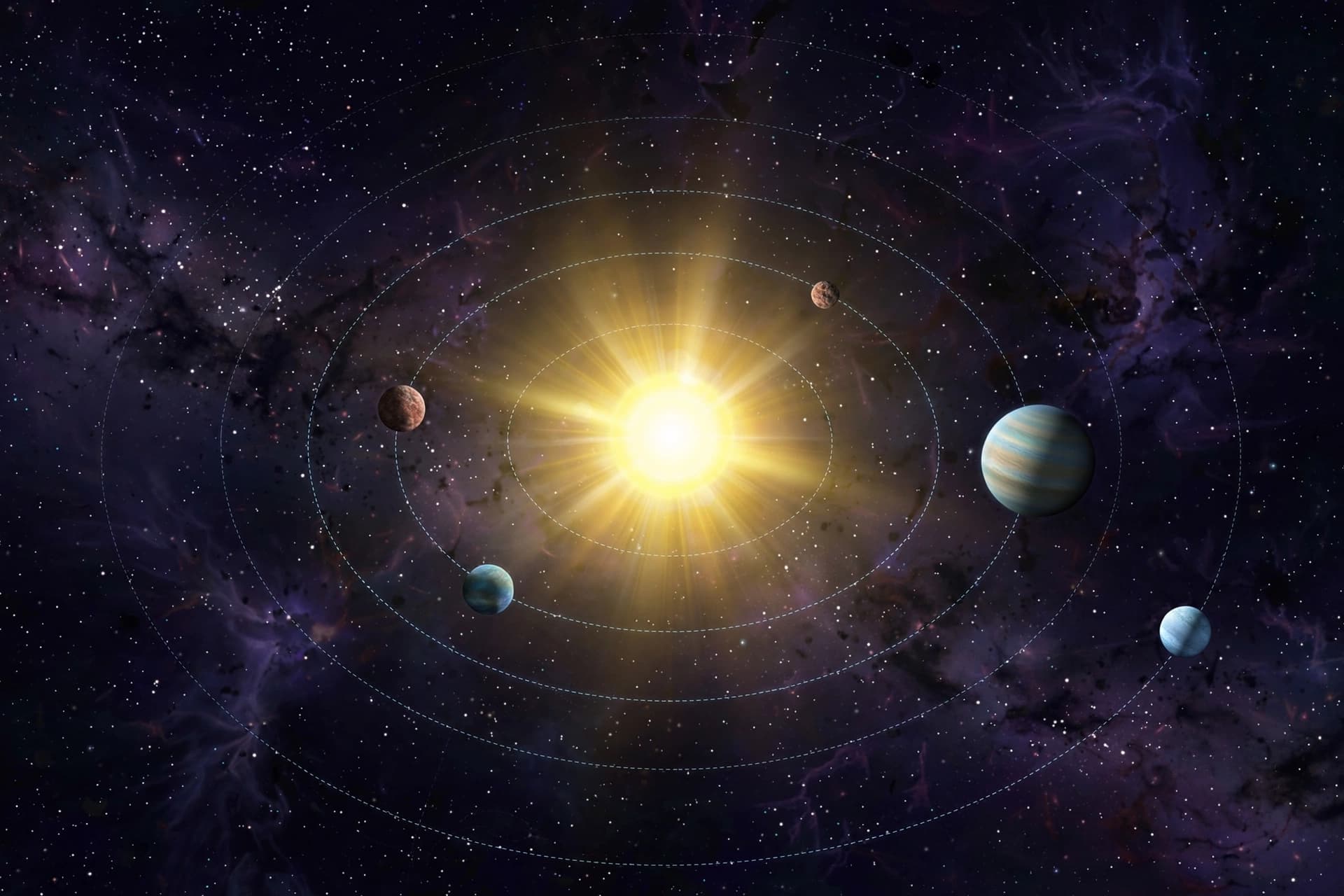
There is something quietly reassuring about the idea that the solar system is known—that its planets, their paths, and their companions have already been counted and named, like familiar constellations in a well-practiced sky. And yet, every so often, that sense of completeness softens. New discoveries arrive not as disruptions, but as gentle reminders that even in our cosmic neighborhood, there are still details waiting to be noticed.
In recent observations, astronomers have added to the growing family of moons orbiting both and , pushing their satellite counts to new record levels. These are not large, easily visible worlds, but small, often irregular bodies—objects that move quietly along distant, sometimes tilted paths, requiring careful observation to detect.
The process of finding such moons is less about sudden revelation and more about persistence. Using powerful telescopes and repeated imaging over time, astronomers track faint points of light against the backdrop of stars. What appears at first as a fleeting speck gradually resolves into a consistent orbit, confirming that it belongs not to the distant cosmos, but to the gravitational reach of a planet.
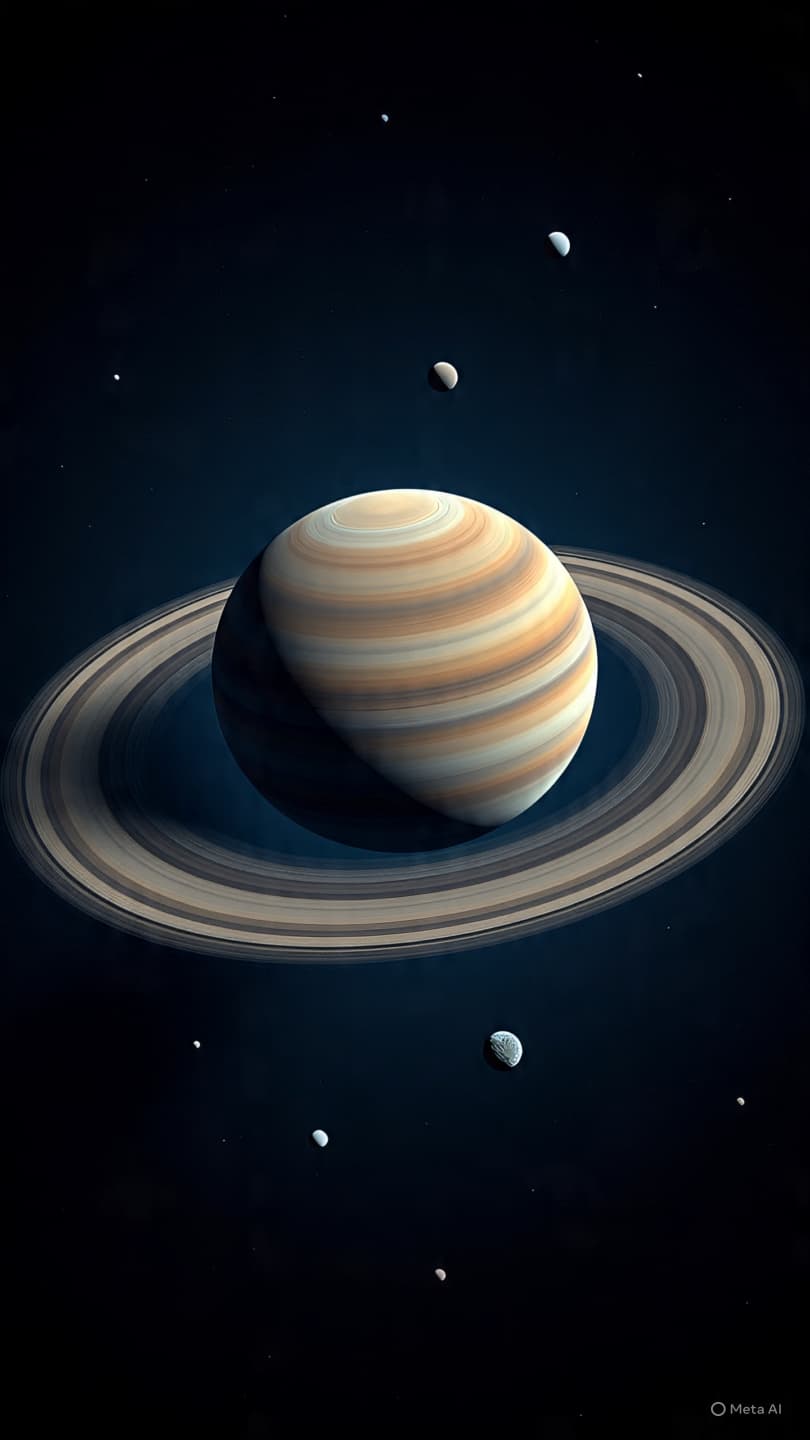
For , already known for its extensive system of rings and moons, the new additions further emphasize the complexity of its surroundings. Many of these newly identified satellites are thought to be remnants—fragments from past collisions or captured objects that have settled into orbit over long periods. Their irregular shapes and distant trajectories suggest histories shaped by interaction rather than formation alone.
, too, continues to reveal a crowded and dynamic environment. Its immense gravity acts as both anchor and collector, drawing in objects that may become temporary or long-term companions. The newly discovered moons add to a system that is already one of the most intricate in the solar system, where large, well-known moons coexist with a host of smaller, less conspicuous ones.
What is perhaps most striking is not the size or appearance of these moons, but what their growing numbers suggest. The outer regions of planetary systems are not empty margins, but active spaces where objects continue to move, interact, and occasionally reveal themselves under closer scrutiny. Each new satellite, however small, contributes to a more detailed understanding of how these systems evolve.
There is also a quiet shift in perspective that accompanies these discoveries. The idea of a “complete” inventory gives way to something more open-ended. Even in a region as well-studied as our solar system, there remains a margin of the unknown—a space where improved technology and patient observation can still uncover new members of familiar families.
The discoveries are made possible by advances in observational techniques, as well as collaborative efforts among astronomers who track and verify potential findings. It is a process that values precision and repetition, where confirmation often requires months or even years of data.
At the same time, these small moons raise questions about their origins. Were they once part of larger bodies, broken apart by collisions? Or were they captured from elsewhere, drawn in by the gravitational pull of giant planets? The answers are not always clear, but each new object provides another point of reference for scientists working to piece together the history of the solar system.
In a way, the expanding lists of moons around Saturn and Jupiter feel less like an accumulation and more like a gradual unveiling. The planets have not changed; rather, our ability to see them has improved. What was once hidden in the faint margins of observation is now becoming part of a clearer picture.
As astronomers continue their work, it is likely that even more moons will be identified, particularly around the outer planets where detection remains challenging. For now, the record-breaking counts serve as a quiet milestone—an indication of progress, but also of the work that remains.
And so, the solar system feels just a little larger, not in distance, but in detail. The familiar giants, Saturn and Jupiter, continue to reveal new companions, reminding us that even in the spaces we think we know, there are still small lights waiting to be counted.
AI Image Disclaimer Graphics are AI-generated and intended for representation, not reality.
Source Check (Credible Media Mentions)
BBC Reuters The Guardian NASA Space.com
Published by Banx Network. This article is part of the Banx decentralized media programme, powered by the BXE token on the XRP Ledger.