Article
Time has a quiet way of measuring what speeches cannot. It moves without banners or breaking headlines, marking anniversaries not with ceremony, but with numbers. Four years after Russia’s full-scale invasion of Ukraine began, the war is counted not only in days on a calendar, but in figures that attempt to hold the weight of human experience. Statistics, though precise, feel almost fragile against the enormity of what they represent.
In the early hours of February 2022, the world watched as Russian forces crossed Ukraine’s borders, igniting the largest land war in Europe since World War II. What many feared would be a brief and devastating campaign evolved instead into a grinding, prolonged conflict. Now, four years in, the numbers offer a stark ledger of endurance and loss.
Tens of thousands of soldiers on both sides are estimated to have been killed or wounded, though exact figures remain contested and politically sensitive. Civilian casualties number in the thousands, with entire neighborhoods reduced to rubble. According to international organizations and government estimates, millions of Ukrainians have been displaced—some internally, others seeking refuge across Europe and beyond. Cities such as Mariupol and Bakhmut have become shorthand for destruction, their names echoing in reports that detail shattered infrastructure and fractured communities.
The war has also redrawn demographic maps. More than six million Ukrainians have fled abroad at various points during the conflict, creating one of the largest refugee movements in modern European history. Neighboring countries such as Poland and Germany have absorbed significant numbers, reshaping social services, labor markets, and political debates.
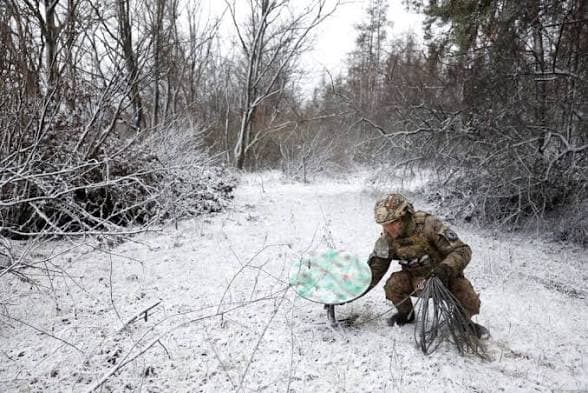
On the battlefield, the front lines have shifted incrementally, often measured in miles rather than sweeping advances. Ukraine’s counteroffensives reclaimed territory in some regions, while Russia consolidated control in others. The conflict has settled into a war of attrition, where drones, artillery, and trench warfare define the rhythm of daily combat. Billions of dollars in military aid from the United States and European allies have flowed into Ukraine, supplying advanced weapons systems, ammunition, and financial support to sustain the war effort.
Economically, the toll has spread far beyond Ukraine’s borders. Ukraine’s GDP contracted sharply in the first year of the invasion, though partial recovery has followed with international assistance. Russia has faced sweeping sanctions targeting banks, energy exports, and key industries, yet its economy has adapted in complex ways, rerouting trade and increasing state-driven production. Globally, energy markets and grain supplies felt immediate shockwaves, particularly in countries dependent on Black Sea exports.
Infrastructure losses in Ukraine are estimated in the hundreds of billions of dollars. Power plants, bridges, hospitals, and schools have been damaged or destroyed. Rebuilding costs continue to climb, even as fighting persists. The environmental impact—damaged dams, mined farmland, and industrial pollution—adds another layer of long-term consequence that will outlast the final shot.
Yet beyond the columns of figures lies something less measurable: resilience. Ukrainian society has adapted to blackouts and air raid sirens as part of daily life. Schools operate underground or online. Businesses reopen in battered districts. Meanwhile, in Russia, the war has reshaped public discourse, tightened political controls, and redirected national resources toward military production.
Four years in, the numbers do not offer closure. They do not predict an end. They simply mark the scale of what has unfolded: a conflict that has reshaped Europe’s security order, strained global alliances, and altered millions of lives.
As this anniversary passes, governments continue diplomatic efforts, military planning, and humanitarian support. Fighting remains active along multiple fronts. International aid packages are debated in parliaments. Reconstruction plans are drafted even as missiles fly. The war, measured in numbers, continues to write its next chapter in real time.
AI Image Disclaimer
Visuals are created with AI tools and are not real photographs.
Sources
1. Reuters
2. BBC News
3. The Associated Press
4. The New York Times
5. Financial Times
Published by Banx Network. This article is part of the Banx decentralized media programme, powered by the BXE token on the XRP Ledger.