There are moments in exploration that feel like dawn breaking gently over an unknown horizon. When humanity sends a machine to another world, we often imagine engineers on Earth as distant conductors, guiding every motion from millions of miles away. Yet, in the quiet challenge of navigating the rust-colored plains of Mars, something subtly transformative has unfolded—a shift not with explosive fanfare, but with thoughtful collaboration between human curiosity and artificial intelligence.
In recent work by NASA’s Jet Propulsion Laboratory, aided by technology from Anthropic, an AI known as Claude took on a role once reserved for expert rover planners. For decades, the Perseverance rover has traversed the rugged terrain of Jezero Crater through meticulously crafted routes plotted by teams on Earth. These routes—carefully spaced waypoints that steer the rover around hazards like jagged rocks and shifting sands—are essential to the safety of the mission, yet they require intensive planning cycles.
Nature often teaches us that adaptation comes not from abandoning what works, but from enhancing it with new tools. So it was with Claude, which was given access to high-resolution orbital images and elevation data that humans have long relied upon. From this information, the AI generated waypoints for the rover’s journey—essentially translating raw data into a thoughtful suggestion for where the robotic explorer might safely go next. Thus, on Dec. 8 and 10, 2025, Perseverance completed two drives across the Martian surface along routes conceived with Claude’s assistance.
This demonstration was not a relinquishing of human oversight. Engineers at JPL reviewed and verified the AI-generated instructions through rigorous simulation, checking hundreds of thousands of variables to ensure compatibility with the rover’s systems. The result was an unfolding of cooperation: human expertise guiding and grounding AI insight, each part reinforcing the other.
The choice to incorporate AI does more than shave hours off planning time. It speaks to a gradual evolution in how we think about autonomy in space. Because Mars is so distant that signals take minutes to traverse the void between planets, real-time control is impossible. Delegating aspects of route planning to machines capable of interpreting complex environmental data can free human planners to focus on scientific strategy and discovery.
As the sun sets on traditional methods of interplanetary navigation, it rises on an era in which thoughtful autonomy might become a trusted companion to human ingenuity. Approaches like this may enable future missions to venture further, gather more data, and operate with greater efficiency, whether on Mars, the Moon, or distant icy moons yet to be explored.
In recent statements, NASA leaders have characterized this collaboration with AI not as a replacement of human judgment, but as a carefully implemented step toward enhancing exploration capabilities. The success of the demonstration enriches the narrative of space exploration with another chapter—one that acknowledges both the value of human expertise and the potential of intelligent systems to assist in reaching ever farther frontiers.
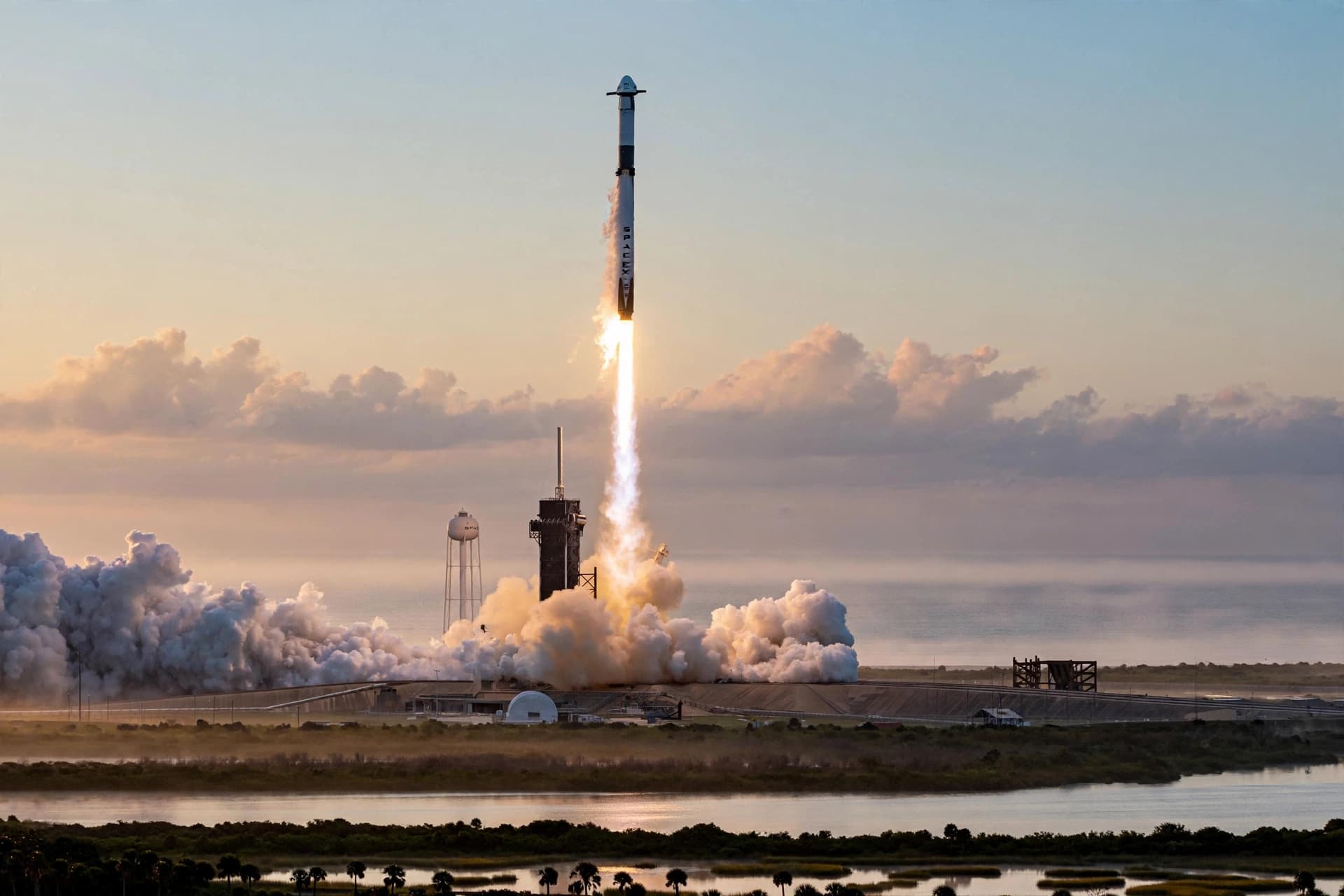
AI Image Disclaimer Visuals are created with AI tools and are not real photographs.
Sources NASA Jet Propulsion Laboratory EdTech Innovation Hub News The News.com.pk Times of India Anthropic feature page
Published by Banx Network. This article is part of the Banx decentralized media programme, powered by the BXE token on the XRP Ledger.