
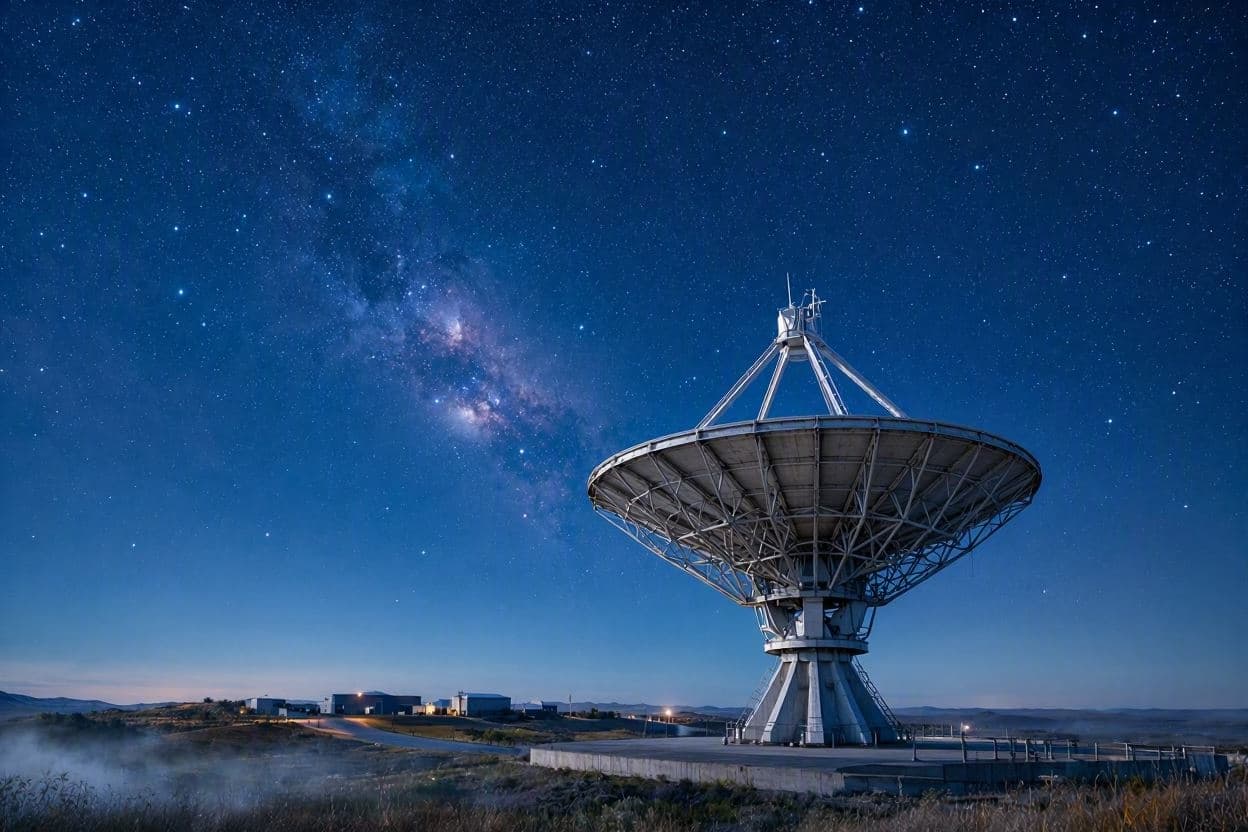
In the vast silence of the cosmos, the death of a star is not an end but a transformation, scattering the seeds of future worlds into the void. Recently, engineers testing a new telescope designed to map the universe in radio waves captured a faint, lingering echo of such a celestial event. This discovery invites reflection on the delicate interplay between technological innovation and cosmic history. It is a moment where human ingenuity allows us to witness the final whispers of a distant sun, bridging the gap between the present and the ancient past.
The instrument, part of the next generation of radio astronomy arrays, was undergoing calibration when it detected the subtle signal of a supernova remnant. These remnants are the expanding clouds of gas and dust left behind after a massive star explodes, enriching the interstellar medium with heavy elements. Dust becomes destiny. Explosion creates life.
Unlike optical telescopes that see visible light, this new array peers into the radio spectrum, revealing structures invisible to the naked eye. The faint aftermath captured during tests demonstrates the telescope’s sensitivity and potential for uncovering hidden aspects of the universe. Sensitivity reveals truth. Radio sees the unseen.
For astronomers, this early success validates years of development and engineering precision. It suggests that the telescope will be capable of mapping the distribution of neutral hydrogen and other key components of galactic evolution with unprecedented detail. Precision enables discovery. Technology expands vision.
The specific supernova remnant observed serves as a benchmark for future observations, helping scientists refine their models of stellar evolution and explosion dynamics. Each data point adds to our understanding of how stars live and die. Data builds knowledge. Models guide understanding.
As the telescope moves from testing to full operation, the astronomical community anticipates a wealth of new discoveries. From pulsars to distant galaxies, the instrument promises to reshape our view of the radio sky. Anticipation drives progress. Curiosity fuels science.
Tests of a new radio telescope successfully captured the faint signal of a supernova remnant, demonstrating the instrument’s high sensitivity and potential for future discoveries. The finding highlights the importance of advanced technology in exploring cosmic phenomena. The hope is for continued operational success and significant scientific contributions.
AI Image Disclaimer: The visual elements accompanying this report are AI-generated interpretations designed to reflect the astronomical and technological context of the story.
Sources: Nature Astronomy National Radio Astronomy Observatory Science Daily
Published by Banx Network. This article is part of the Banx decentralized media programme, powered by the BXE token on the XRP Ledger.



