
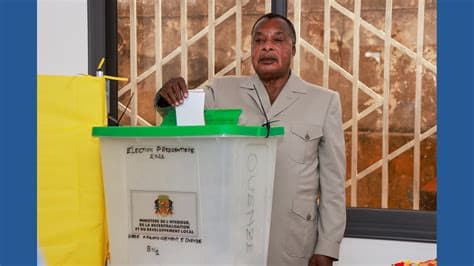
Key Highlights
- Election Result:Denis Sassou Nguesso re-elected with 94.82% of votes.
- Voter Turnout:Registered turnout was 84.65%.
- Opposition Response:Critics allege electoral manipulation and unfair practices.
Denis Sassou Nguesso has been re-elected as president of the Republic of the Congo, securing an overwhelming 94.82% of the votes in the recent election. This victory extends his rule to an unprecedented 47 years, having first assumed power in 1997. The election, which took place amid significant scrutiny, has raised eyebrows both domestically and internationally regarding its legitimacy.
The elections reported a registered voter turnout of 84.65%, a figure that reflects a high level of engagement among the electorate. However, the results have been met with skepticism from opposition parties and various international observers. Critics have pointed out that the electoral process was heavily controlled, with allegations of intimidation tactics employed against opposition candidates and a lack of equitable access to media coverage.
Mavoungou Zinga, Sassou Nguesso's closest rival, garnered only 1.48% of the votes, underscoring the stark contrast in support among candidates. The opposition coalition, known as the Alliance for Democratic Alternation, has voiced its concerns about the electoral integrity, emphasizing the need for transparency and adherence to democratic principles. They have indicated plans to contest the election results, further complicating the political landscape.
In the wake of the election, Sassou Nguesso has reiterated his commitment to national development and unity. He has called for cooperation among all political factions, despite the evident tensions. His administration has maintained strong international relationships, particularly with China and other regional allies, which may play a crucial role in shaping the country's future.
The aftermath of this election has ignited discussions about the state of democracy in the Republic of the Congo. Many citizens are expressing frustration over persistent economic issues, including high poverty rates and unemployment. As the political climate remains tense, the responses from both domestic opposition groups and the international community will be closely monitored, particularly regarding the integrity of the electoral process.
The implications of this election extend beyond immediate political outcomes, as they reflect broader concerns about governance and civil rights in the Republic of the Congo. The international community's reaction will be pivotal in determining the future trajectory of the country's political landscape, especially in light of ongoing economic challenges and calls for reform.
Published by Banx Network. This article is part of the Banx decentralized media programme, powered by the BXE token on the XRP Ledger.



