
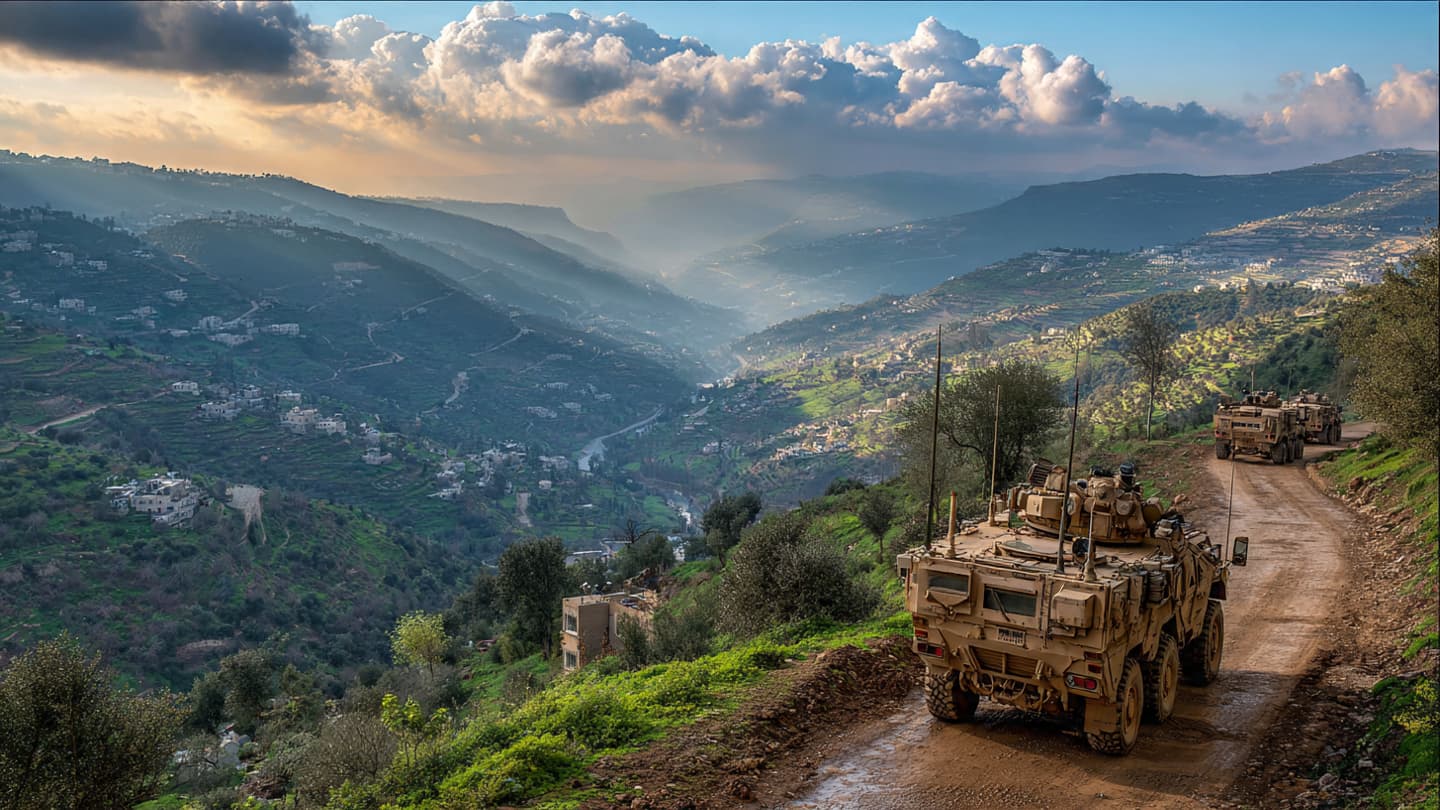
Conflict in the Middle East has often resembled a landscape where certainty remains difficult to hold for long. Military campaigns may alter borders, weaken networks, or shift political calculations, yet deeply rooted movements frequently survive through adaptation, ideology, and the support structures built over generations.
Israeli officials recently acknowledged the difficulty of completely eliminating Hezbollah’s weapons capabilities, reflecting the complex realities surrounding security operations in southern Lebanon and the broader regional balance of power. The remarks emerged amid ongoing tensions along the Israel-Lebanon border.
According to defense analysts, Hezbollah’s military infrastructure has developed over many years through extensive networks of tunnels, missile systems, and decentralized operations. This structure has made the group particularly resilient against conventional military campaigns.
Israeli military operations have intensified periodically following cross-border exchanges and regional escalation linked to wider Middle Eastern tensions. Officials in Tel Aviv continue emphasizing their commitment to reducing threats posed by armed groups operating near Israel’s northern frontier.
At the same time, observers noted that complete disarmament of non-state armed organizations is historically difficult in regions shaped by prolonged political conflict. Military pressure alone rarely resolves underlying ideological and geopolitical dynamics.
Hezbollah remains one of the most influential armed and political organizations in Lebanon, supported by Iran and deeply connected to regional power balances. Its role extends beyond military activity into Lebanese politics and social institutions.
International mediators have repeatedly urged restraint from both sides to avoid broader regional conflict. The border area between Israel and Lebanon has experienced recurring exchanges that risk expanding into wider confrontation if diplomatic efforts fail.
Security experts said Israel’s acknowledgment may reflect a more pragmatic public assessment rather than a shift in broader strategic objectives. Military operations, they explained, often focus on reducing operational capabilities rather than expecting absolute elimination.
Regional tensions involving Hezbollah, Israel, and Iran continue drawing close attention from global powers as diplomatic efforts seek to prevent further escalation across the Middle East.
Disclaimer: Visual illustrations in this report were produced using AI-generated imagery.
Sources: Reuters, BBC, Al Jazeera, The Times of Israel, AFP
Published by Banx Network. This article is part of the Banx decentralized media programme, powered by the BXE token on the XRP Ledger.
.jpg&w=3840&q=75 "Blake Lively Awarded $400,000 in Legal Fees After Justin Baldoni Lawsuit Dismissed")

