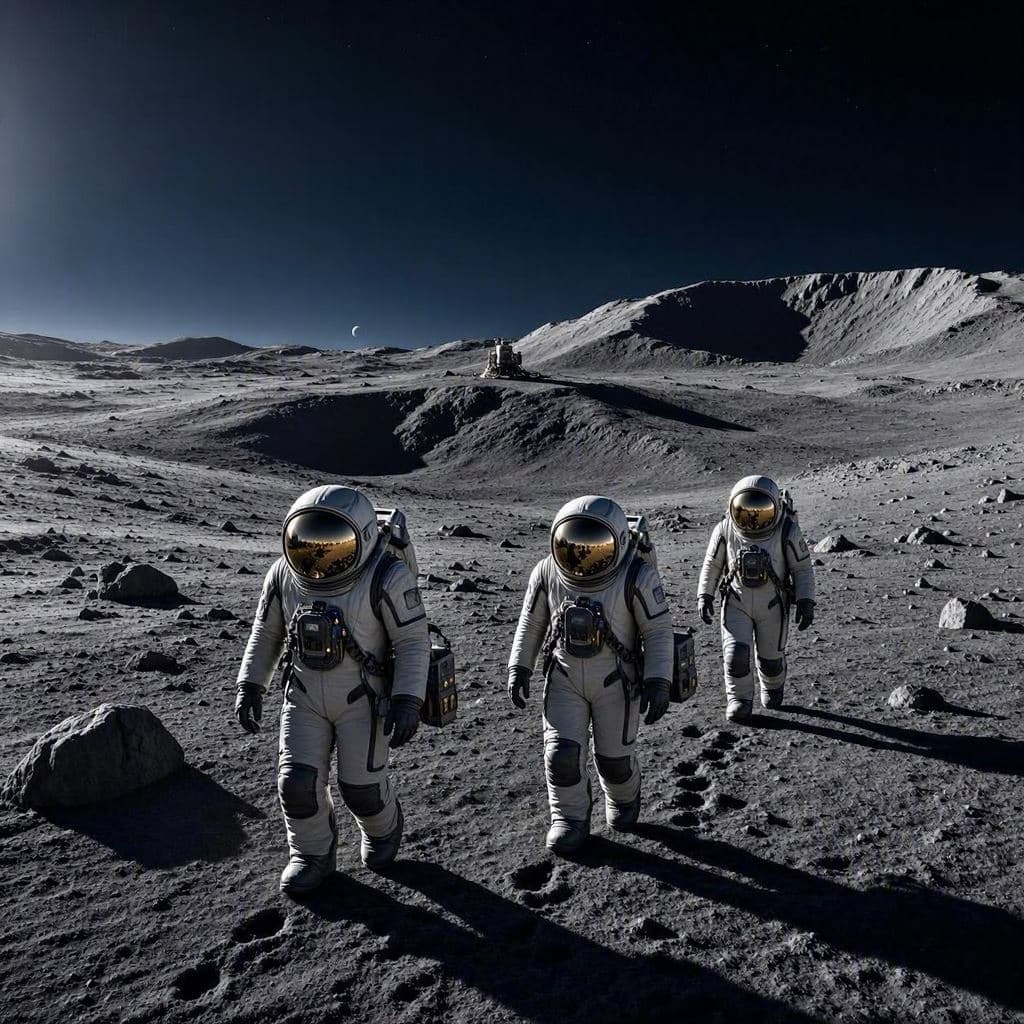
The moon has long been a silent companion to Earth, a celestial body that inspires wonder and challenges our technological limits. As NASA prepares to return humans to its surface for the first time in over half a century, the agency’s leadership expresses a steady confidence in the timeline. The Artemis 3 mission, scheduled for 2027, aims to land the first woman and person of color on the lunar south pole. This ambition invites reflection on the perseverance required for space exploration and the delicate balance between aspiration and engineering reality. It is a moment where history looks forward, guided by the lessons of the past.
NASA Administrator Bill Nelson has stated he is "extremely confident" that the mission will proceed as planned, despite previous delays and technical hurdles. Confidence builds momentum. Reality tests resolve.
The mission relies on the successful integration of several complex systems, including the Space Launch System rocket, the Orion spacecraft, and the Starship Human Landing System developed by SpaceX. Each component must perform flawlessly in the harsh environment of space. Integration demands precision. Space tolerates no error.
Critics and auditors have pointed out the risks associated with the tight schedule and the unproven nature of some technologies. However, NASA officials argue that rigorous testing and iterative development are mitigating these risks effectively. Testing reveals flaws. Iteration brings improvement.
For the international partners involved, including the European Space Agency and others, the Artemis program represents a new era of collaborative exploration. Shared goals foster unity and distribute the financial and technical burdens of such ambitious endeavors. Collaboration strengthens resolve. Unity achieves more.
The scientific potential of landing at the lunar south pole is immense, with the possibility of accessing water ice that could support future sustainable presence. This resource could be key to establishing a long-term base for deeper space missions. Water sustains life. Ice holds promise.
As the countdown continues, the world watches with a mix of anticipation and scrutiny. The success of Artemis 3 will not only mark a historic achievement but also validate the strategies used to get there. Success defines legacy. Strategy ensures survival.
NASA Administrator Bill Nelson has expressed strong confidence in the 2027 launch date for the Artemis 3 mission, which aims to return humans to the moon. The mission faces technical challenges but benefits from international collaboration and rigorous testing. The hope is for a safe and successful return to the lunar surface.
AI Image Disclaimer: The visual elements accompanying this report are AI-generated interpretations designed to reflect the aerospace and exploratory context of the story.
Sources: NASA SpaceNews Reuters The Verge
Published by Banx Network. This article is part of the Banx decentralized media programme, powered by the BXE token on the XRP Ledger.