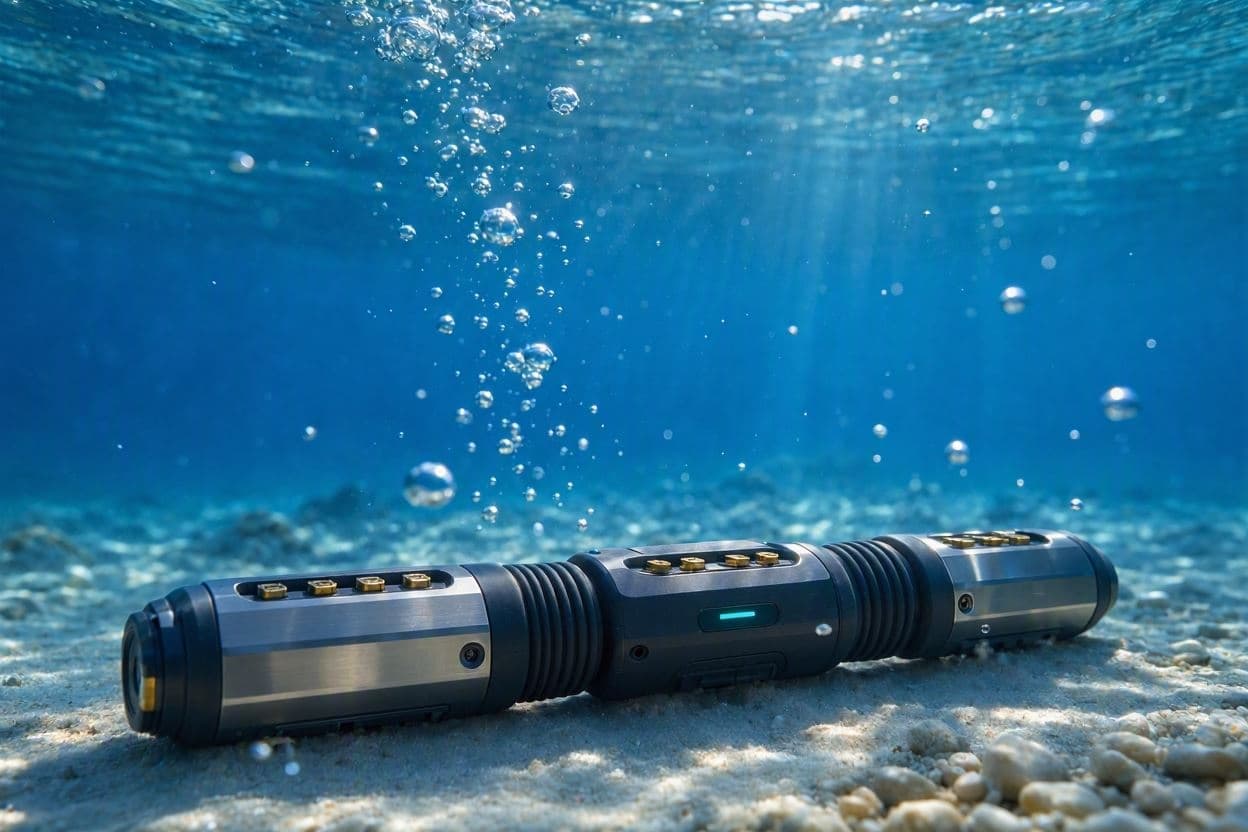
The ocean has long served as the planet’s silent partner in regulating climate, absorbing vast quantities of carbon dioxide from the atmosphere with a quiet, steady grace. Yet, as emissions rise, this natural buffer is reaching its limits, prompting scientists to look for ways to assist the sea in its vital work. A new development in electrochemical technology offers a promising path forward: a compact electrode system designed to enhance the ocean’s capacity to capture and store carbon, turning the waves themselves into a tool for climate mitigation.
Traditional methods of carbon capture often rely on large, energy-intensive industrial facilities that scrub CO2 from smokestacks or the air. These systems, while effective, are costly and difficult to scale. The new approach, however, leverages the natural chemistry of seawater. By passing an electric current through compact electrodes immersed in the ocean, the system accelerates the conversion of dissolved carbon dioxide into stable bicarbonate ions. This process not only removes CO2 but also helps counteract ocean acidification, offering a dual benefit for marine ecosystems.
The compact nature of the electrode system is its most significant innovation. Unlike massive industrial plants, these units can be deployed on existing offshore infrastructure, such as wind farms or oil platforms, or even on small, autonomous vessels. This modularity allows for flexible deployment in various marine environments, from coastal zones to the open sea. It transforms the concept of carbon capture from a centralized industrial operation into a distributed, scalable network.
Energy efficiency remains a critical challenge for any electrochemical process. The new system addresses this by optimizing the electrode materials and design to minimize power consumption. Researchers are exploring the use of renewable energy sources, such as solar or wind power generated offshore, to run the units. This synergy between renewable energy production and carbon removal creates a self-sustaining cycle that could significantly reduce the carbon footprint of the technology itself.
Early trials have shown promising results, with the system demonstrating high efficiency in converting dissolved CO2. However, scaling up from laboratory settings to real-world ocean conditions presents hurdles. Factors such as biofouling, where marine organisms grow on the equipment, and the corrosive nature of saltwater must be managed to ensure long-term durability. Engineers are developing protective coatings and maintenance protocols to address these practical challenges.
Environmental safety is another paramount concern. While the goal is to help the ocean, any intervention must be carefully monitored to ensure it does not disrupt local marine life or alter water chemistry in unintended ways. Rigorous environmental impact assessments are underway to verify that the increased bicarbonate levels remain within safe bounds for coral reefs, fish, and other marine organisms. Transparency and caution are guiding principles in this emerging field.
The potential impact of this technology is substantial. If deployed widely, compact electrode systems could remove millions of tons of carbon dioxide annually, contributing significantly to global climate goals. They offer a complementary solution to land-based capture methods, utilizing the vast surface area of the oceans without competing for terrestrial resources. It is a vision of harmony between technology and nature, where engineering supports ecological balance.
As research continues, the focus shifts to pilot projects and commercial viability. The journey from prototype to widespread adoption will require collaboration between scientists, engineers, policymakers, and industry stakeholders. But the promise is clear: by harnessing the power of the sea with gentle, efficient tools, we may find a sustainable way to heal the atmosphere, one electrode at a time.
AI Image Disclaimer: The visual elements in this article are AI-generated illustrations depicting underwater electrode systems and oceanic landscapes, designed to visualize the concept of marine carbon capture without showing proprietary technical diagrams.
Sources: Nature Communications, MIT Technology Review, ScienceDaily, Chemical & Engineering News
Published by Banx Network. This article is part of the Banx decentralized media programme, powered by the BXE token on the XRP Ledger.